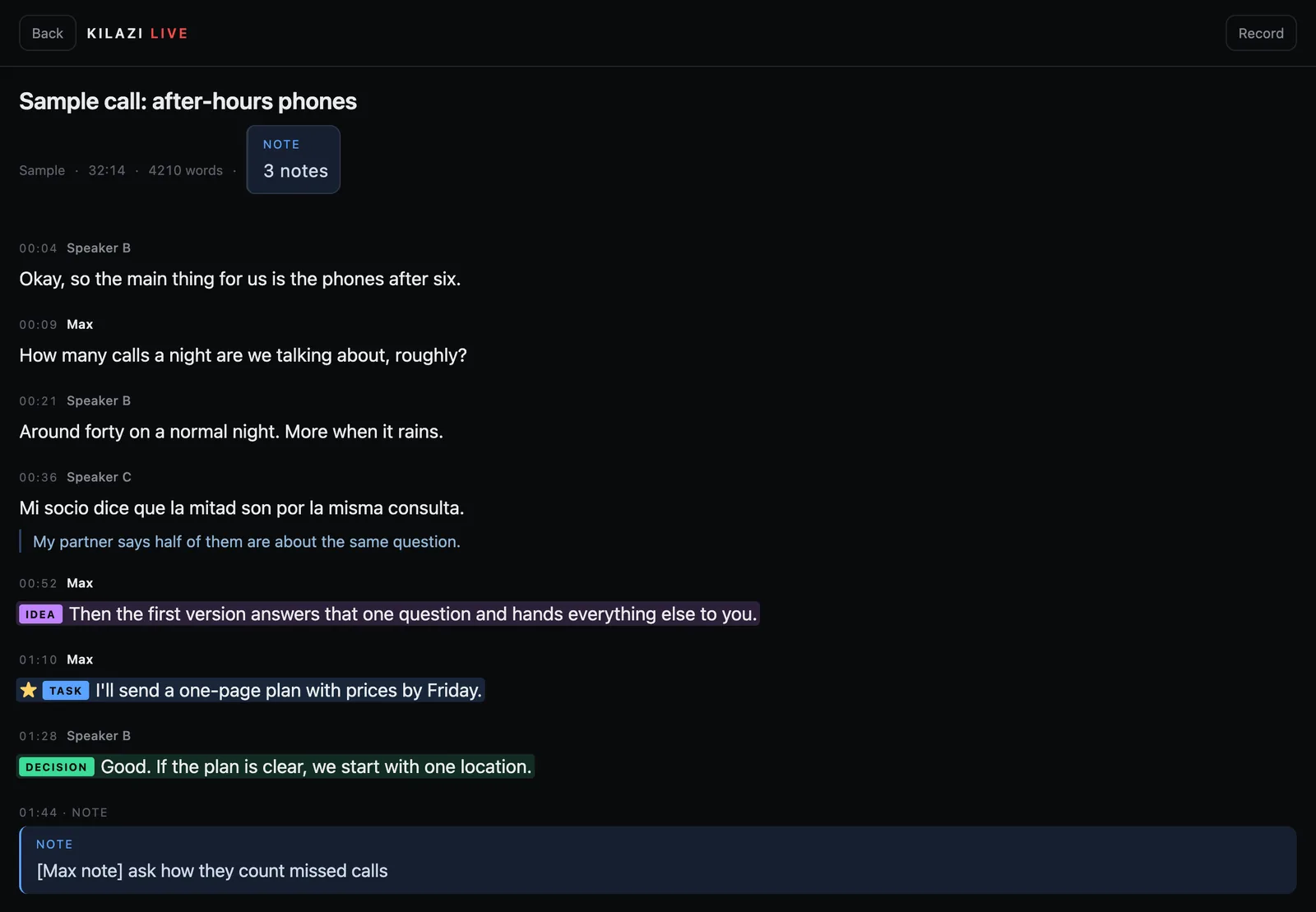
I have 1,367 client calls on file. I remember maybe four of them.
Sounds like a confession. It's the business model. My memory is bad (long story, told here), so every call I take gets transcribed, named, tagged and dropped into Kortex: my searchable memory, the one my AI agents read before they touch anything. The four calls I remember are a bonus.
Why transcribe every client call?
Because notes are what you thought mattered, and a transcript is what was actually said.
Notes lose the exact words. Nobody on a call says "budget concerns". They say something like "we tried this before and it ate a whole quarter." That sentence is the whole sale, and it never survives a bullet point.
Notes lose what you promised. "Sure, I'll send that over" slips out a few times per call. Some of those are commitments. The transcript knows which.
Notes lose the objection that keeps coming back. One call, it's noise. Across thirty calls, it's a pattern you could have fixed in the pitch long ago.
And the numbers said out loud: unit counts, prices, deadlines, the "we have about forty of those" in passing.
Notes
- What you thought mattered
- Written by a distracted human
- One call at a time
- Gone when you lose the notebook
Transcripts
- What was actually said, word for word
- Searchable across a whole year
- Readable by agents, not just you
- Cheaper than the coffee during the call
The real payoff is what agents do with them. My actual prompts after calls go something like: listen in to the call transcript which just happened and give me conclusions, what can we do? Or: read the last transcript and build that; for now just a pull request, don't deploy anywhere. The call became the brief. Nobody retyped anything.
Another favorite: an AI phone agent I built for a client took a call, I read the transcript, laughed, and asked for the fix and a new voice straight off that one file.
How does Kilazi Live capture a call?
Kilazi Live is the recording app I built for this. Every source writes into one session: my laptop mic, the other side's audio on its own chain, the iPhone in my pocket, the Apple Watch on my wrist. (Origin story here.)
- CaptureMic and computer audio get separate voice detectors. A close mic and a digital feed sit tens of decibels apart; mix them and the quiet one vanishes.
- NameEach segment gets a voice fingerprint. New voices show up as Speaker A, Speaker B; I tap a name once and it sticks on later calls. On a replayed call, 92.5% of speech went to the right voice.
- TranslateBuenos Aires calls mix English and Spanish. Each line is transcribed in its own language, with English underneath.
- KeepThe audio stays too, about 115 MB per hour. You can only re-transcribe what you kept.
- ReportOne tap after the call builds a PDF: decisions, action items, open questions. Into Kortex it goes.
The voice library learns only from names I tap. A text-only model once named another speaker's voice "Max Sergeev", 78% sure of itself. That feature stays off.
How much does it cost to transcribe an hour of calls?
About 15 to 36 cents an hour for recorded audio at the big providers' public list prices; live streaming runs from 15 cents to about a dollar. That's the transcription bill; the agents on top are extra.
Mine is OpenAI's gpt-transcribe at $0.0045 a minute: 27 cents an hour. Deepgram, AssemblyAI and ElevenLabs are in the dropdown. Play with your own numbers:
Transcription only. Storage, tagging and the agents on top cost extra. Prices change; check the provider's page.
Ten 45-minute calls a week is 390 hours a year, about $105. Every word your clients said all year, for the price of one nice dinner. The expensive part was never the transcript. It's the thing they asked for that you forgot.
Is it legal to record and transcribe client calls?
Usually, with consent, but it depends on where everyone sits. US federal law needs one party's consent. The Reporters Committee counts about 11 states, California, Florida and Illinois among them, that mostly require everyone's. Other countries, other rules.
The simple default: say it at the top of the call. "I transcribe my calls so I don't miss anything; fine with you?" It takes four seconds.
Then treat the archive as what it is: other people's words.
- Strip personal data before transcripts go anywhere shared: phone numbers, emails, card numbers, addresses.
- Keep it private by default. My live copilot page stays private; it carries my unfiltered pushback. If the other side wants the call, they get a clean copy.
- Separate the call from the room. My mic once caught me explaining the copilot to my wife, and the copilot filed it as meeting content. Off-call speech now stays off.
Not legal advice. Check the rules where you and your clients are.
What breaks when you transcribe hundreds of calls?
Plenty, always quietly. The ones I paid for:
- Language auto-detect lies. On a Russian call, Whisper announced "English" and produced fluent nonsense, including a line about bagpipes dancing. Forcing the language fixed it. If you know it, say so.
- The other side vanished mid-call. My Mac's disk hit 99%, macOS purged caches every five minutes, and each purge killed the screen share carrying their audio. Ten silent kills, matched to the second in the system log. Now a dropped feed sounds an alarm.
- The money ran out mid-call. The API balance hit zero; the transcript stopped. Now there's a backup provider, and I watch the balance.
- The page sat empty a median 6.6 minutes per call, because starting took 8 to 10 clicks. Now it's one button: 18 seconds to a running copilot.
- Background babble still leaks in. Overlapping chatter still becomes segments. Unsolved.
A peer-reviewed study of Whisper found about 1% of transcriptions contained invented phrases. So my agents get one rule: names and numbers only from the transcript; if a word looks garbled, say "as transcribed."
What should you do with call transcripts on day one?
Start collecting. Fancy comes later.
- One folder, one format. Every call, every device, tagged with who and what.
- After each call, ask three things: what did I promise, what did they push back on, what numbers did they say.
- Keep a name list. People, products, places. Feed it to the transcriber so it stops spelling your client like a sneeze.
- Weekly, search across calls for the objection that repeats.
- Keep the audio. The next model will hear it better.
That's the seed of what I sell: every business needs its own AI brain, and calls are the richest thing to feed it. Mine already runs the copilot during my calls, with every past call one search away.
I still remember four calls. Kortex remembers all 1,367, and when a word looks wrong, it says so.
Want AI agents that actually ship?
I build AI agents and the systems around them for businesses: memory, voice, overnight rigs, and the boring guards that make them safe to leave alone.
Questions people ask
Should I keep the audio or only the transcript?
Keep both if your consent allows it. Transcription models improve every year, and you can only re-transcribe or re-identify speakers on audio you kept. Mono 16 kHz audio is about 115 MB per hour of speech, which is cheap to store. The transcript is what you search; the audio is your insurance.
Can AI tell who is speaking on a call?
Yes, with speaker diarization or voice fingerprints. Diarization splits a recording into Speaker A, B and so on; fingerprints let you name a voice once and recognize it on later calls. Keep naming in human hands: a text model guessing names from the words alone gets it confidently wrong.
How do I transcribe calls that mix two languages?
Transcribe each segment in the language it was spoken, then translate the text afterwards, with the lines before it as context. If you know the call's language, tell the model instead of relying on auto-detect, which can mislabel a language and return fluent text that was never said.
Does AI transcription make things up?
Sometimes. A peer-reviewed study of OpenAI's Whisper found roughly 1% of transcriptions contained phrases nobody said, often during silence or pauses. Gate silence before transcribing, and make any agent that reads transcripts quote names and numbers only as transcribed.

Max Sergeev. Max builds AI agents and the systems around them: long-term memory, voice, overnight rigs, and the boring guards that make them safe to leave alone. He runs kilazi labs from Buenos Aires. kilazi.com
Sources
Read next
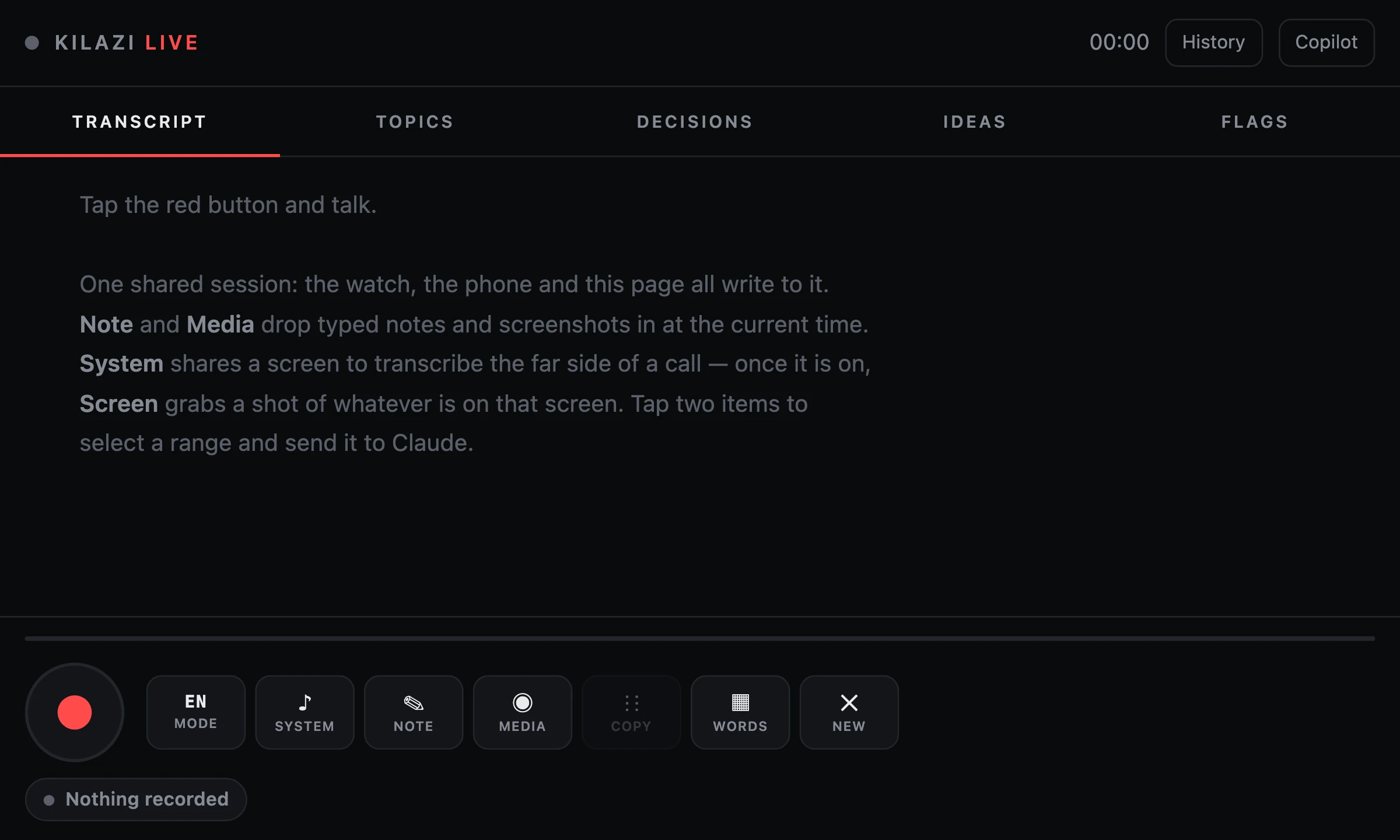 AI agentsLive Call Transcription With an AI Copilot That Writes the MeetingIt started as a terminal nobody looked at. Now it catches every call, translates as it goes, and a Claude Code session writes a page about the meeting while it happens.Read it 2026
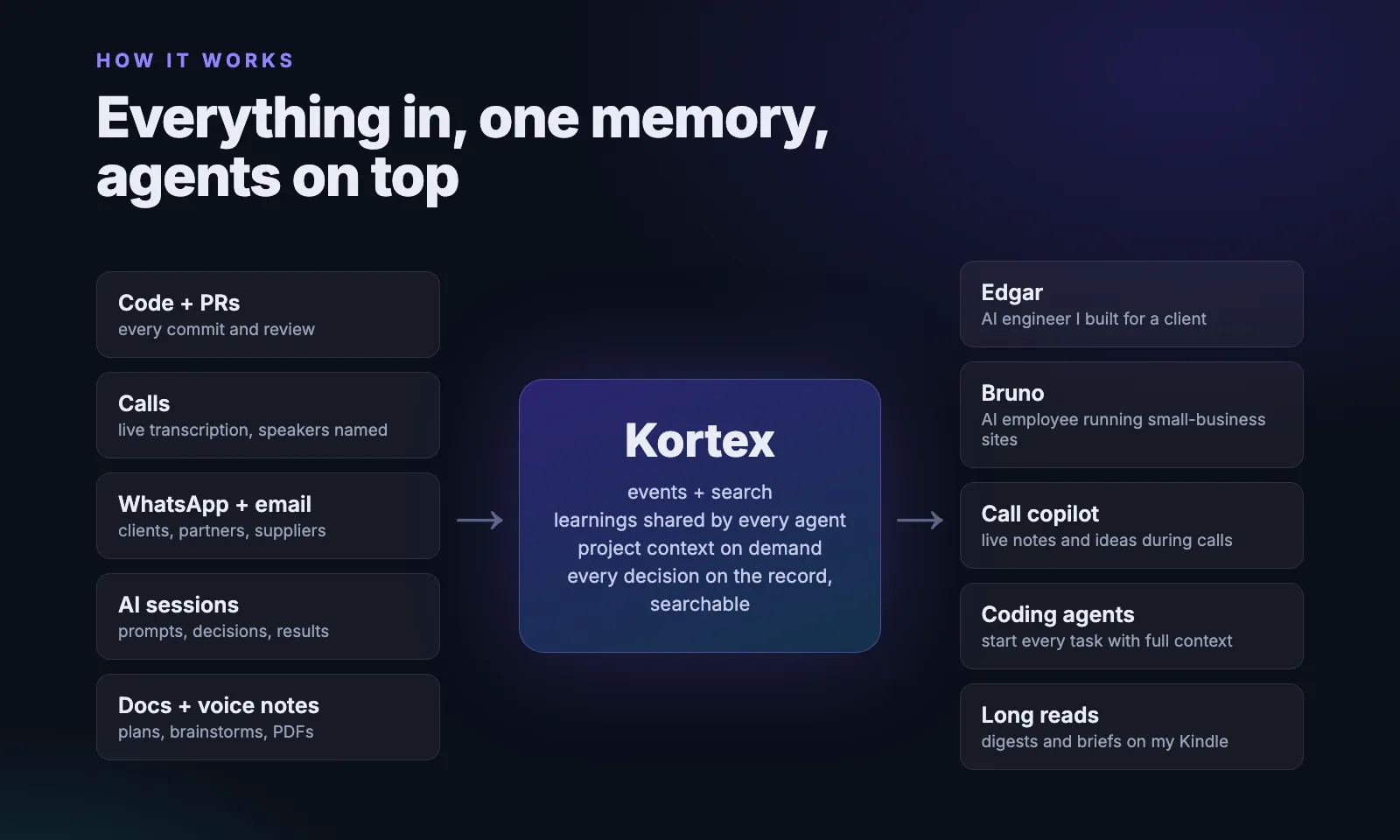 AI agentsEvery Business Needs an AI Brain. Start Building Yours EarlyA website was optional in 1998 and expected by 2008. An AI brain is that, now. It's a long road, which is the whole reason to start early.Read it 2026
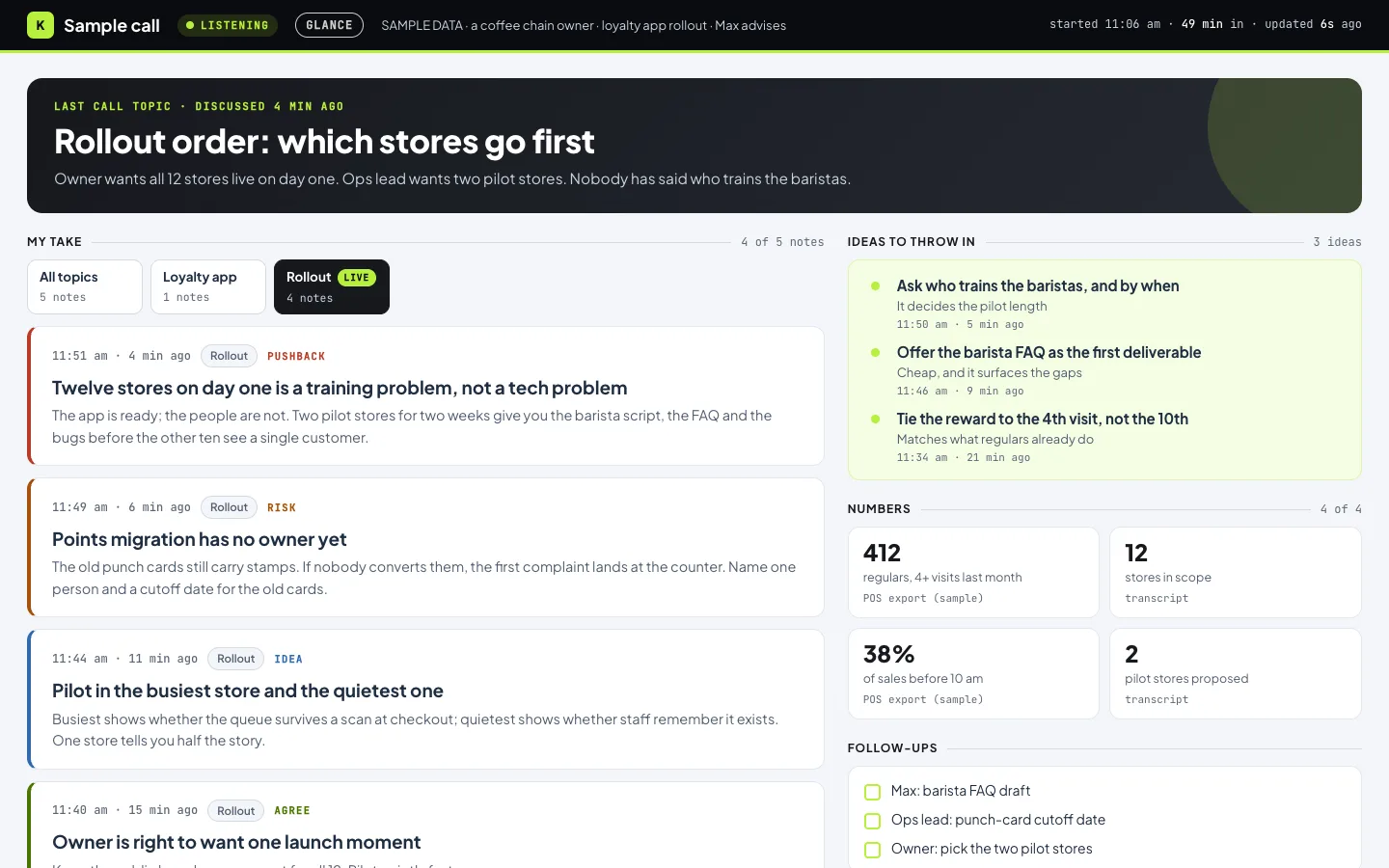 AI agentsMy AI Call Copilot Runs on My Brain, Not a PersonaMost meeting AI is a note-taker with a name tag. Mine is Kortex, my memory, sitting in on the call: it knows what I know, so it argues, predicts, builds and traces fires while we talk.Read it 2026