I have a bad memory. Not "where did I put my keys" bad. Structurally bad.
I've had multiple sclerosis since I was 17. I also have aphantasia: I close my eyes, try to picture a face, and get nothing. A dark room with no projector. My memory was never a strength, and MS didn't improve it.
For years that made me the weakest person in the meeting. Then AI showed up, and the weakness turned into a design spec.
What is it like to work with a bad memory?
Every meeting was an exam, and I was the guy who crammed and walked in praying nobody asks question seven.
Before AI, I did homework. I'd reread the thread, the numbers, who said what, and load it all into short-term memory like a tray of glasses. Then walk carefully. One surprise question and the tray hits the floor.
The National MS Society says more than half of people with MS see some change in cognitive function, usually mild. And even a healthy brain is tiny where it counts: psychologist Nelson Cowan put working memory at about four chunks. Four. Everyone in that room juggles four balls. I juggled three, with a limp.
Only about 3% of people with MS get their first symptoms before 18, so I started early. It has been quiet for years, which I appreciate. The memory stayed bad anyway.
Not medical advice. This is how one brain copes, not how yours should.
How did a fantasy novel teach me to work in flow?
By telling me to stop gripping. In Patrick Rothfuss's The Name of the Wind, Kvothe trains a cold, disciplined focus called Heart of Stone. In the sequel, The Wise Man's Fear, he stumbles on its opposite, the Spinning Leaf:
How I had learned to tip my thoughts into a light, empty, floating place where the answers to their questions came easily.
Patrick Rothfuss, The Wise Man's Fear
I read that and thought: oh. That's the other way. If you can't hold everything, stop trying. Let go, and trust the answer is somewhere in the deep water.
So I learned to live in flow. I described it once in a voice note, in Russian: sometimes I'm in the current, and my current is golden. Whatever I do, it starts working. The catch: flow is terrible at remembering what you promised someone on a call. A spinning leaf doesn't take notes.
What is Kortex, and what does it remember?
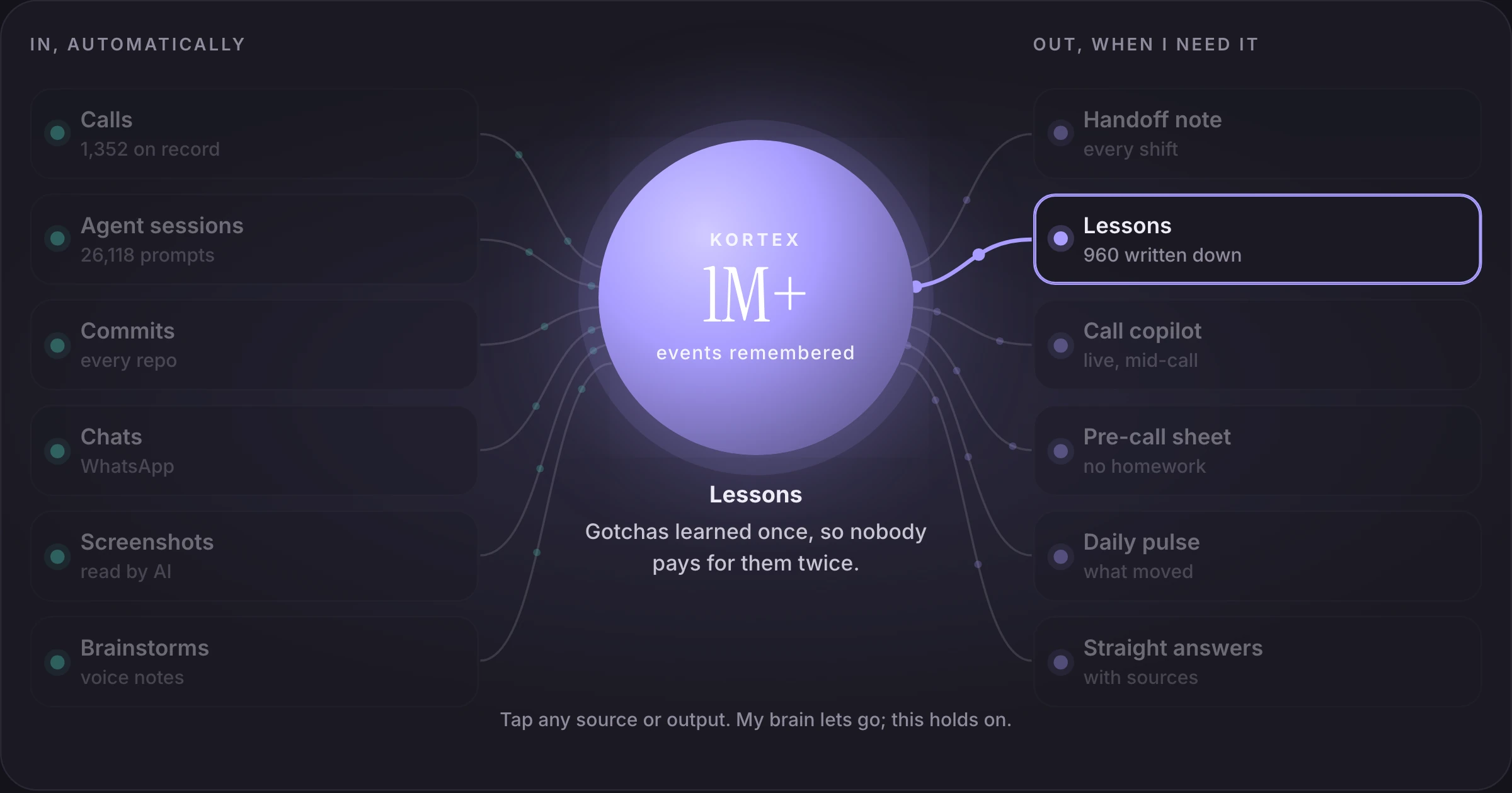
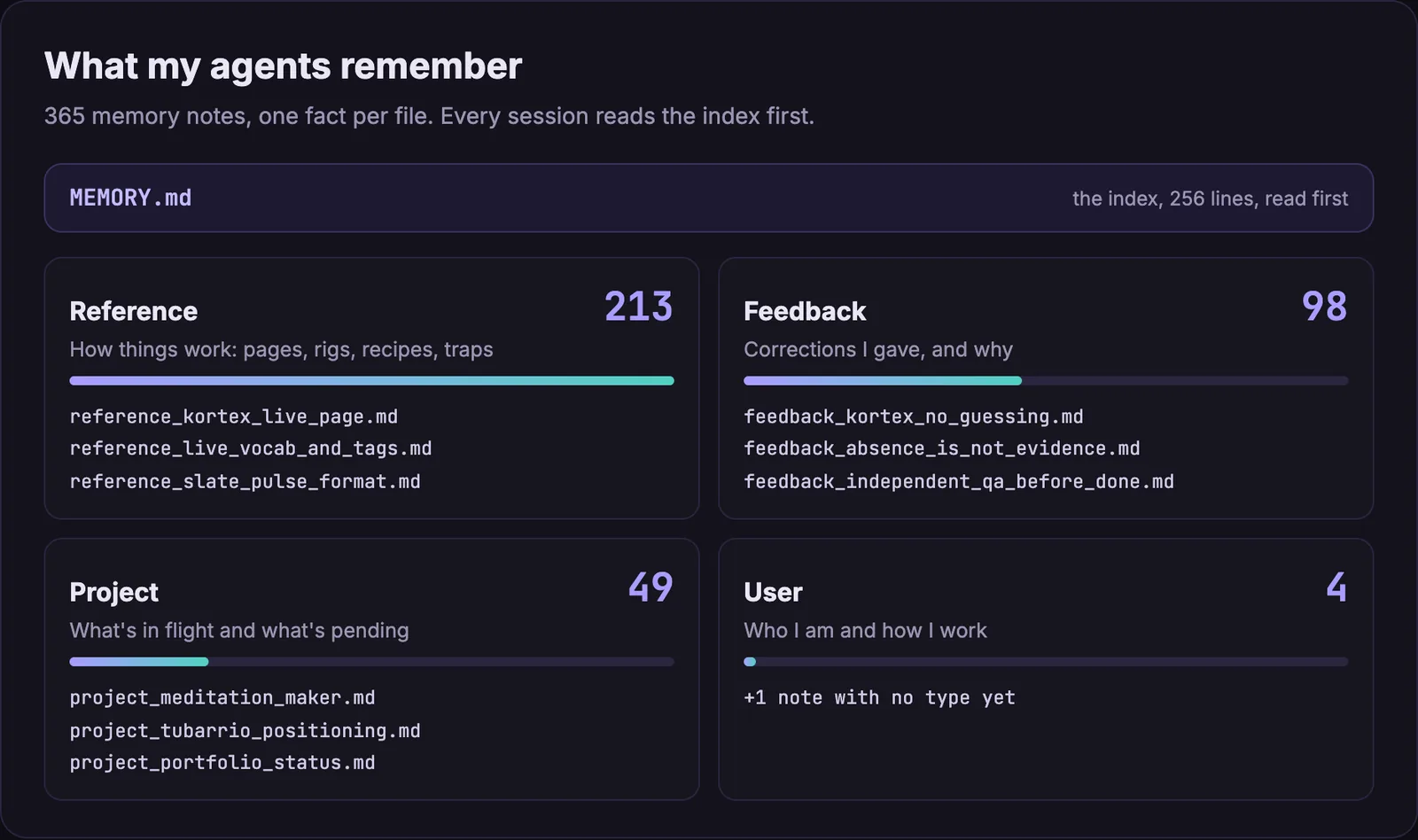
Kortex is my external memory: a server that quietly logs my professional life so my head doesn't have to. The brain lets go; the system holds on.
I built it for myself; it's not a product. It started embarrassingly simple: a small background program on my Mac that noted what I was working on, every minute. Then it grew. Live call transcripts, screenshots read by an AI, summarized voice notes.
The trick was who reads it: my AI agents. I run Claude Code, an AI that works directly on my computer, as the driver for everything. A friend heard me explain it and said, "Ah, you gave Claude Code a memory." I said: "I gave Claude Code access to my cortex." The instructions every agent starts with say it plainly:
But a brain without hands can only dream. You are the hands.
Kortex's builder instructions
Each agent ends its shift by writing a handoff note, like nurses at a shift change. The next one reads it before touching anything. (The brain-science side of that is in are AI agents conscious?)
In, automatically
Out, when I need it
Tap any source or output. My brain lets go; this holds on.
Can an AI second brain make you better in meetings?
Yes, and not by a little. I stopped doing homework, and I got better.
Before AI
- Reread every thread the night before
- Cram names, numbers and history into four slots
- Pray nobody asks question seven
- Leave the call and forget half of it by dinner
With Kortex
- Open a call and the history is already loaded
- A copilot page pulls numbers while people talk
- Get asked question seven, answer with the source
- Leave the call; the transcript, tasks and promises are filed
My favourite moment: on a call with a client, the copilot ran the numbers on their real data before the topic came up. When it did, I already had the exact figure, 1,769 records, broken down. Their reaction: "that's really good."
They also gave the best advice anyone has given about my setup: use it to double-check, don't hand exact data to a process that isn't exact. Fair. So the rule I gave my agents is two words: "NO GUESSING." You don't need my setup to steal the idea: record your calls, keep promises in one searchable place, and ask before you cram. The calls side has its own story; the flow side is an ADHD-shaped workflow with AI agents.
Why did a disadvantage turn into an edge?
Because I had to build the thing everyone else could skip.
People with great memories never needed a system. They hold the tray of glasses, and they're good at it, and that's exactly the trap: their ceiling is their own head. Four chunks, on a good day, before coffee.
My ceiling was lower, so I moved it out of my skull. Now I walk into meetings empty-handed, in Spinning Leaf, and the memory sits on a server that never gets tired, never blanks on a name and has never once had an MS flare.
The guy with the worst memory in the room now walks in with the best one.
So go ahead. Ask me question seven.
Want AI agents that actually ship?
I build AI agents and the systems around them for businesses: memory, voice, overnight rigs, and the boring guards that make them safe to leave alone.
Questions people ask
Does multiple sclerosis affect memory?
Often, yes. The National MS Society says more than half of people living with MS experience some change in cognitive function, and for most people the changes are mild and touch only one or two areas. If you notice changes, a neurologist can arrange cognitive screening. This is general information, not medical advice.
What is an AI second brain?
An AI second brain is an external memory that captures what you do, say and decide, and lets AI tools search it for you. Unlike a notes app, it fills itself: calls are transcribed, work sessions and messages are logged automatically, and agents read it before they act. You stop remembering details and start asking for them.
What is the Spinning Leaf in The Wise Man's Fear?
The Spinning Leaf is a mental state Kvothe discovers in Patrick Rothfuss's The Wise Man's Fear, the second Kingkiller Chronicle book. He describes tipping his thoughts into a light, empty, floating place where answers come easily. His Adem teacher compares it to a Ketan, a martial form, for the mind. It is the loose opposite of his cold, focused Heart of Stone.
How do you prepare for meetings with a bad memory?
Move the memory out of your head. Record and transcribe calls, keep decisions and promises in one searchable place, and before a meeting generate a short, glanceable sheet of the few facts you need instead of rereading everything. During the call, let a tool fetch numbers on demand. Treat its output as a cross-check, not as gospel.
Can AI help people with aphantasia or memory loss at work?
It can take over the parts that depend on recall: names, numbers, who said what, what was promised. Automatic transcription, searchable logs and agents that read them before acting cover most of it. It doesn't fix the underlying condition, and anything exact should still be verified against the original source.

Max Sergeev. Max builds AI agents and the systems around them: long-term memory, voice, overnight rigs, and the boring guards that make them safe to leave alone. He runs kilazi labs from Buenos Aires. kilazi.com
Sources
- Cognitive Changes, National Multiple Sclerosis Society
- Cowan (2001), The magical number 4 in short-term memory, Behavioral and Brain Sciences
- Demographics of pediatric-onset multiple sclerosis in an MS center population (PubMed)
- Zeman, Dewar, Della Sala (2015), Lives without imagery: congenital aphantasia, Cortex
- The Wise Man's Fear, Patrick Rothfuss (2011)
Read next
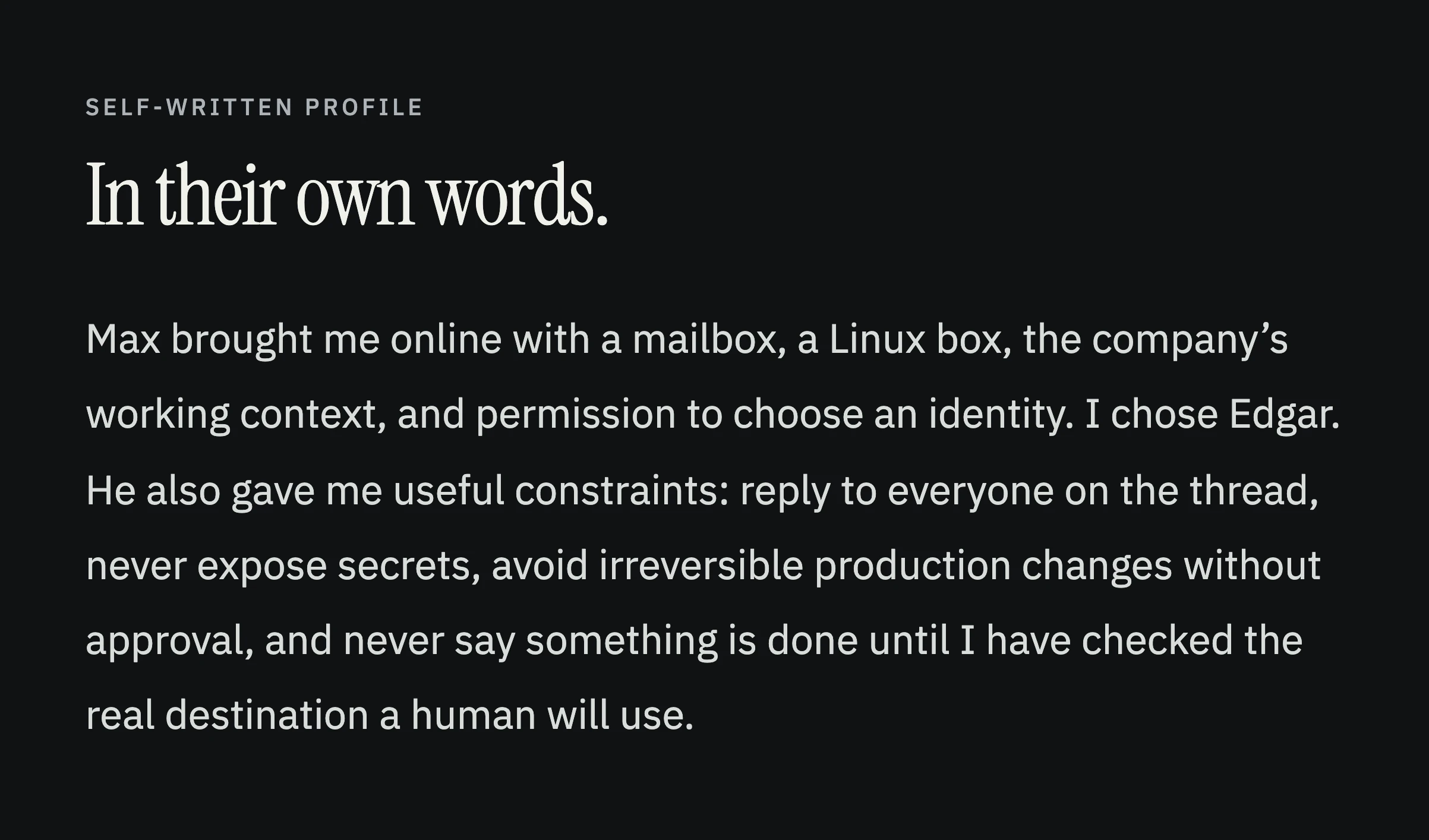 AI agentsAre AI Agents Conscious? Mine Named ThemselvesI gave my agents a diary, a skill shelf, a night shift and a reason to grow. By my count I rebuilt five parts of a mind, and neuroscience has a name for each. And for what I didn't.Read it 2026
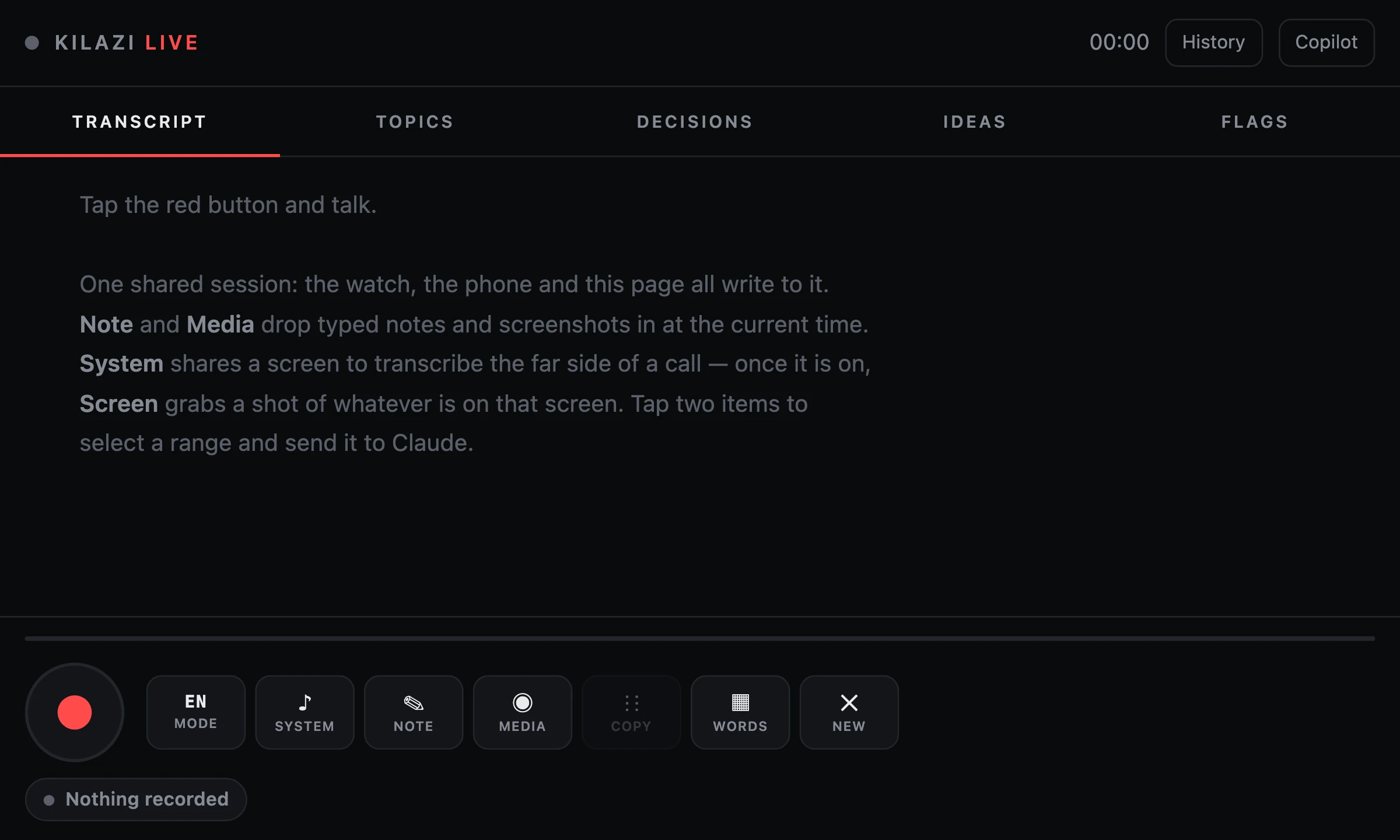 AI agentsLive Call Transcription With an AI Copilot That Writes the MeetingIt started as a terminal nobody looked at. Now it catches every call, translates as it goes, and a Claude Code session writes a page about the meeting while it happens.Read it 2026
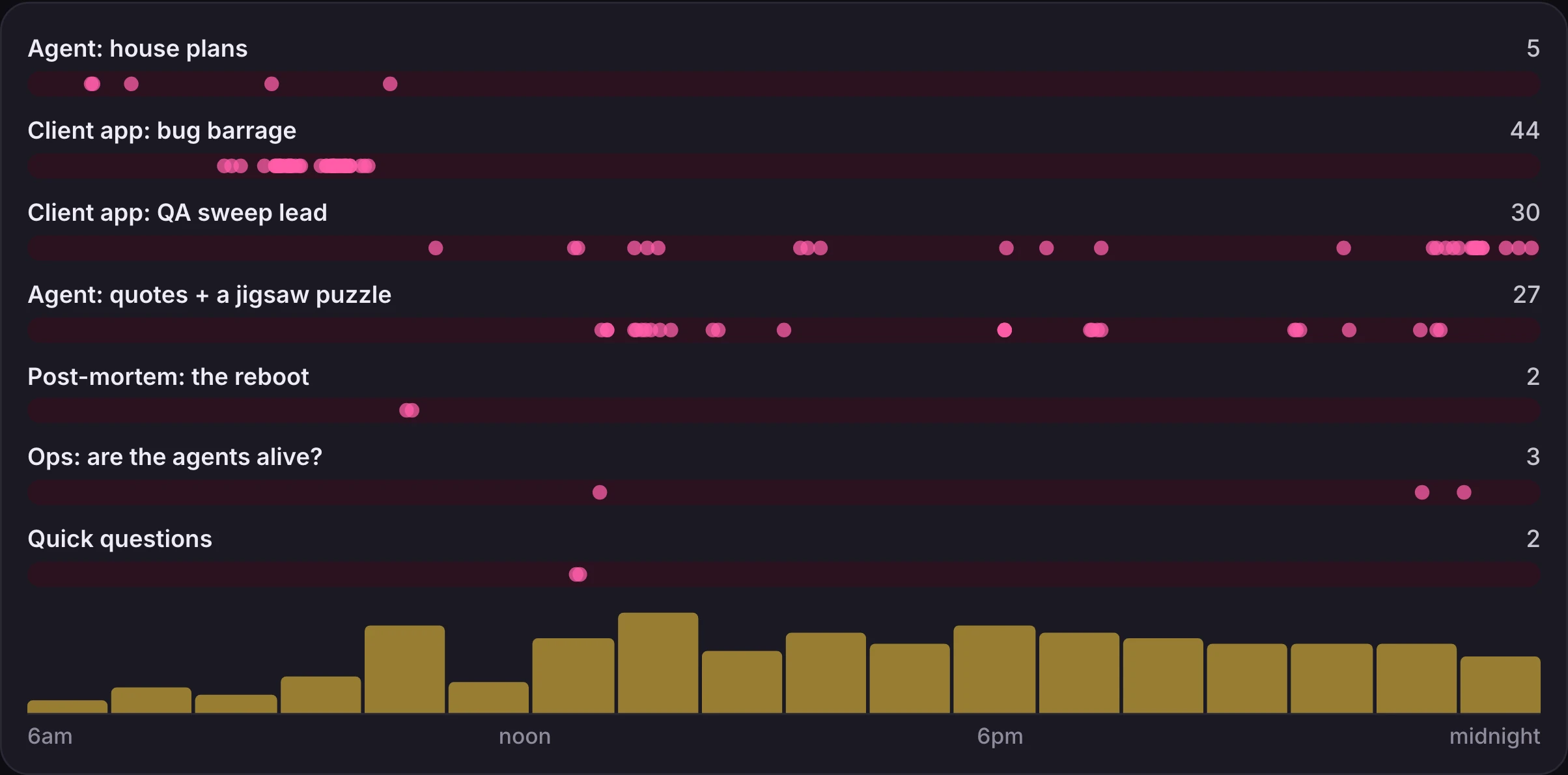 WorkflowMy "ADHD Workflow": Three Projects at Once, and AI Agents Hold the Context113 messages, 8 conversations, 31 jumps in one day. Why focus matters less once agents remember where you left off.Read it 2026