Forty minutes into a client call, a change nobody had approved showed up in production. The other side's verdict: "That is a fire."
I didn't hang up to go digging. I typed one line to the copilot sitting in: how did this get into production?
Two minutes later the answer was on my screen: which change it was and how it got there. Within about fifteen minutes, a revert was open and waiting for review. The call never stopped. Nobody had to say "let me get back to you."
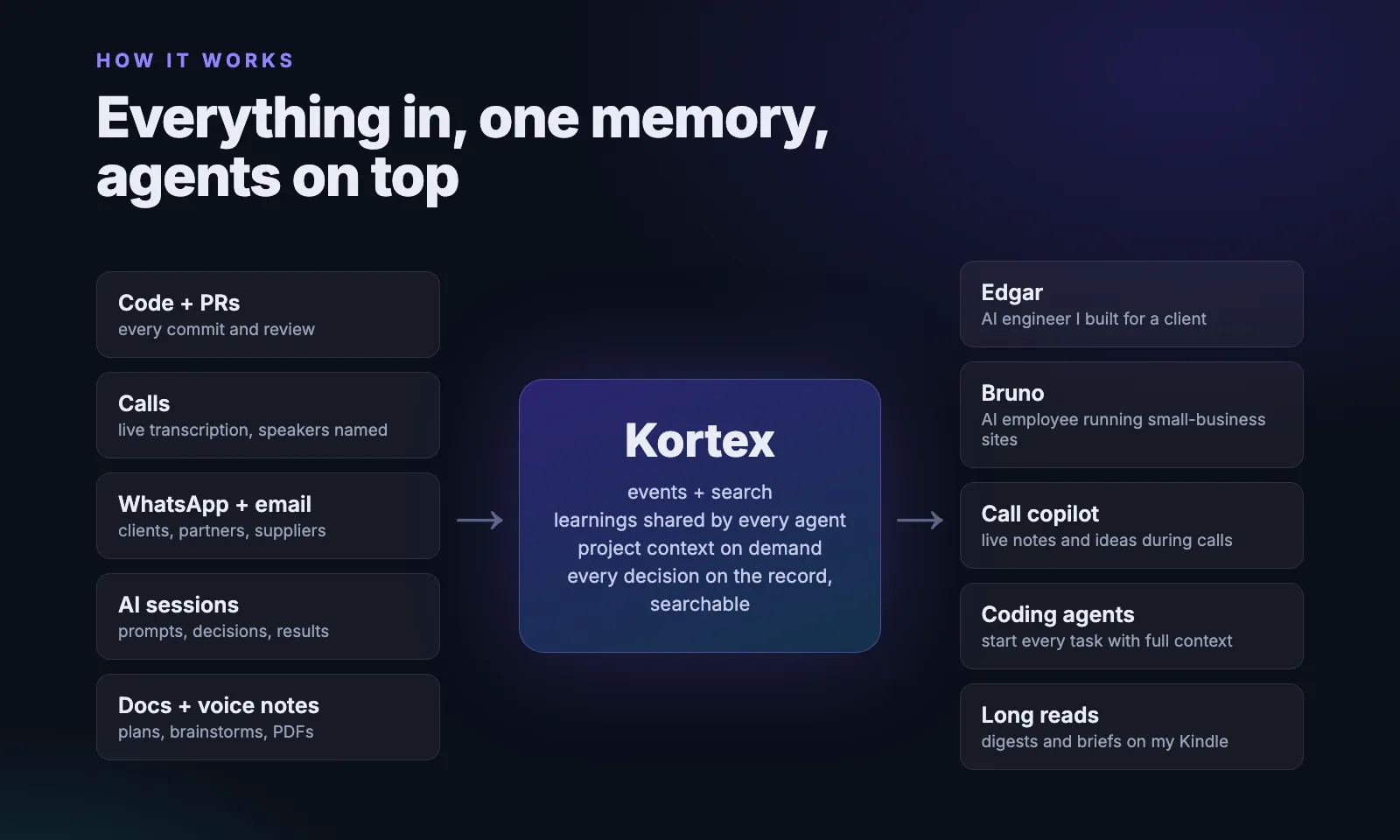
That copilot isn't a meeting bot. It's Kortex, my memory, with a seat at the table: a searchable store of every call, commit, chat and note I've recorded.
How is an AI call copilot different from a meeting note-taker?
A note-taker tells you what was said. A copilot running on your own memory tells you what it means, during the call, because it already knows what you know.
Most meeting AI is a recap machine. Zoom's AI Companion writes a structured summary of discussion points, decisions and action items once the meeting ends. Useful. But its world is the meeting itself, and the recap lands after you hang up.
A note-taker with a name tag
- Joins as a bot with a persona
- Knows this one meeting
- Summarizes after you hang up
- Hands you homework
My brain on the call
- No persona; it's my memory
- Knows every call, commit, message and decision
- Argues, computes and builds while we talk
- Hands you the finished thing
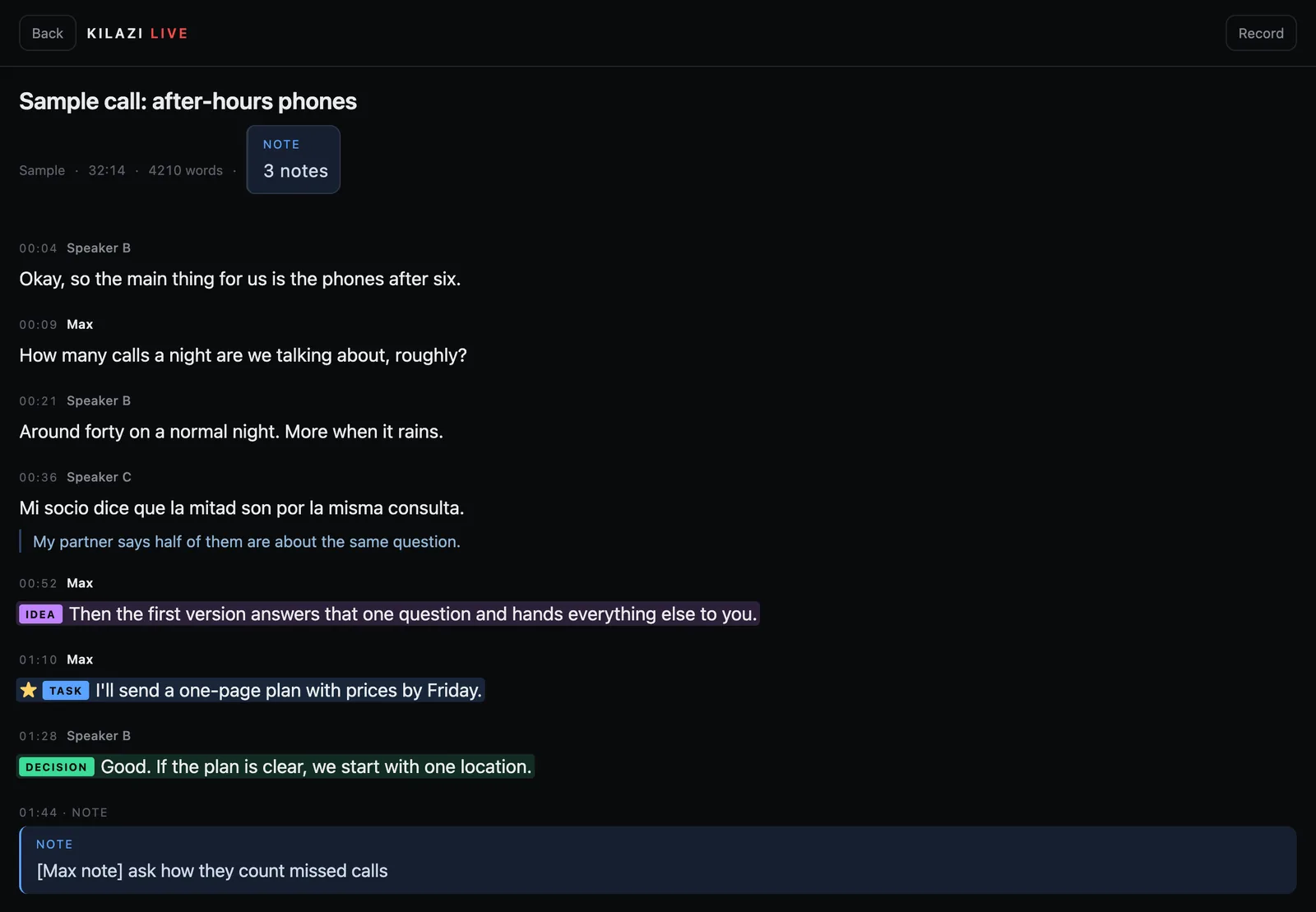
Here's the plumbing. Kilazi Live transcribes both sides of the call. Every minute, a Claude Code session reads the new lines and rewrites an unlisted page on kilazi.com that refreshes every 8 seconds. That session has Kortex wired in as a tool, so it argues instead of just listening.
What can an AI copilot actually do during a live call?
Six modes, each learned the hard way on a real call.
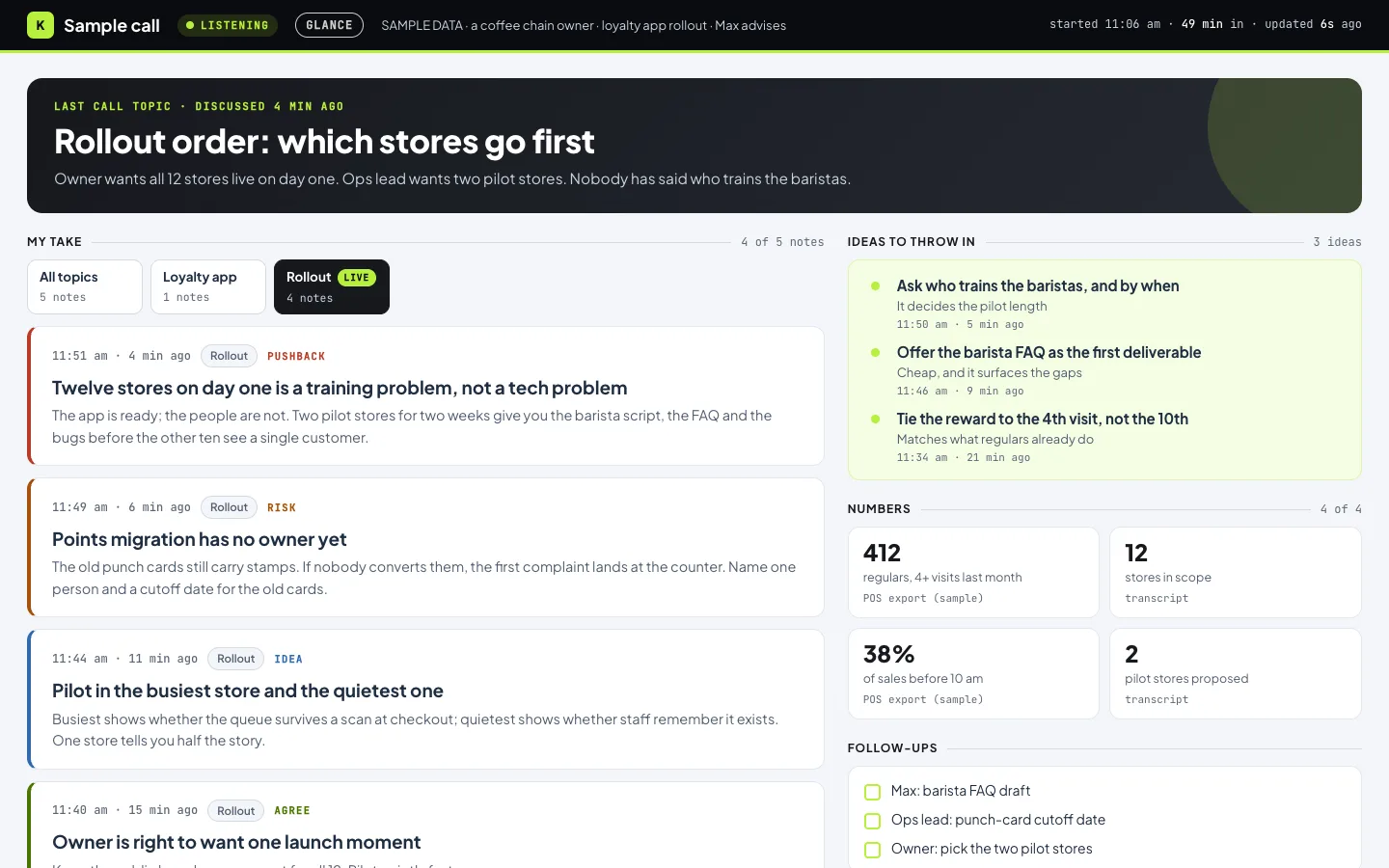
- TakesOpinions, pushback, risks and ideas, each short and argued. Never a script: "don't propose exact words for me to say." One call of over three hours: 52 takes, 39 ideas, 17 numbers.
- NumbersWhen the talk touches data Kortex holds, a background agent computes the number before anyone pulls it up. The other side: "that's really good." Then, wisely: "use it to sort of double check your work."
- BuilderI say it out loud and the copilot builds it: a deliverable at its own URL that updates within a minute, or a pull request.
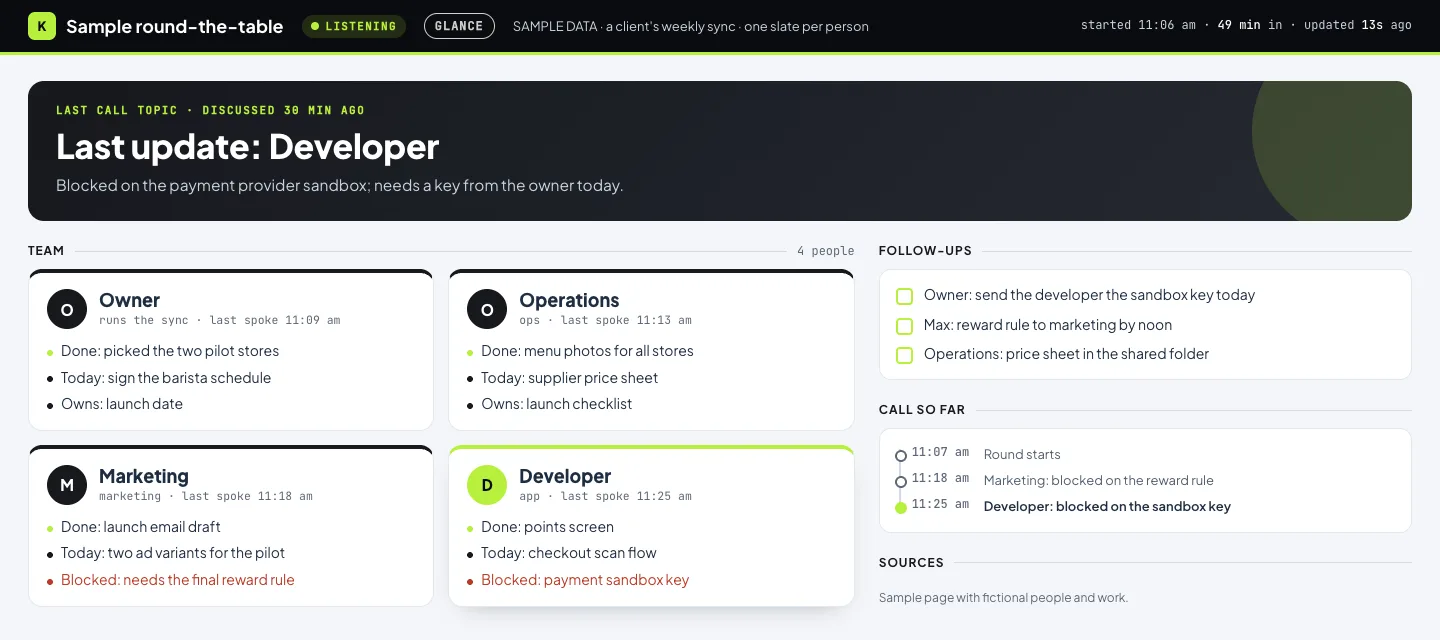
- Round the tableWhen several people report in, the commentary goes and the page becomes a slate: one card per person, done, today, blocked. Blockers turn red.
- IncidentSomething breaks mid-call. A read-only agent traces it, a coding agent in its own sandbox opens the revert, and nothing merges without me.
- Share copyThe other side asks for the page. They get a stripped copy; the live one carries my private pushback.
Builder is my favorite. On one call I told it, out loud, to rebuild a report the client and I were going over. It went up at its own URL, and every tweak they asked for landed within a minute. Sending it still waited for my typed yes.
On another I told it to "go spin a PR" with what was being discussed right now and to follow the client's words "religiously." A coding agent got the client's quotes with timestamps, built only what I named and fact-checked every quote against the transcript. When the client changed the spec in the last minutes, the copilot kept feeding it in.
Why does it matter that the copilot runs on Kortex?
Because context is the whole trick. A copilot is only as sharp as what it knows before the call starts. Kortex knows a frightening amount.
No name tag, no cute avatar, no personality slider. Kortex is part of my operational brain: every call, commit, WhatsApp thread and note, plus the lessons my agents wrote down after screwing something up.
So when that unapproved change showed up, the copilot needed no briefing: it already knew the project, the repos and the history. When someone says "like we agreed last time," last time is searchable.
A copilot without memory is a smart stranger. Mine has sat in on every call I've recorded.
How is Kortex slipping into my clients' weeks?
Quietly, one routine at a time, never as a chatbot they have to learn.
- Inspection reviews. For an inspections company, agents reviewed the report generator in rounds against real inspections until it held up: numbered rooms, a Ref, Name, Answer, Comments table per room, the printout identical to the PDF byte for byte. Six rounds, real inspections only, because the synthetic ones hid the real bugs.
- Daily reports. Edgar, the AI engineer I built for a client, helps build two one-pagers from the client's live data: search growth and paid ads. "On target on X of 6," green only when it's actually on target, zero narrative. The client set that format on a call Kilazi Live recorded.
- Calls. The copilot opens on client calls. The client sees the result, not the machinery: a fixed report, a PR, a clean list of who owes what.
That's the bet, and the case I make in why every business needs an AI brain: capture everything, then let the brain earn its way into the routine. It starts with transcribing every client call.
What still goes wrong?
Plenty, and the failures are the best part.
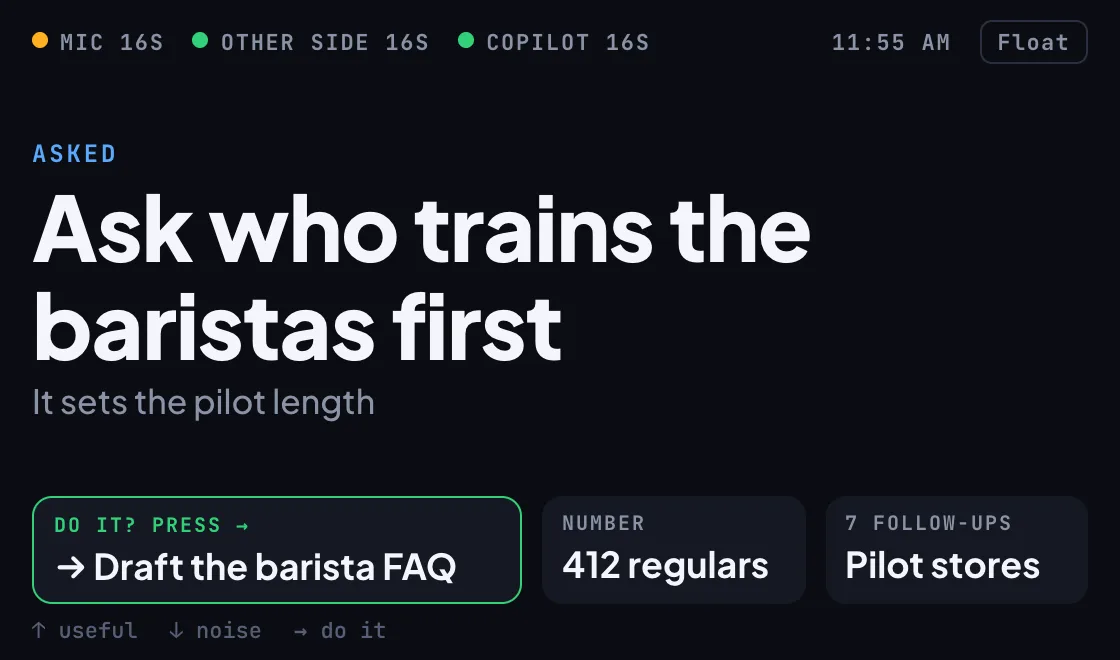
The page writes about 90 words a minute. I use maybe 1 to 2% of them. What I use is every action: the trace, the revert, the rebuilt report. So I built Glance, a small strip floating over the call window: one line at a time, held for 90 seconds, swapped only while I'm quiet.
The live mic also hears my home. I once explained the page to someone off-call, and the copilot dutifully posted it as meeting content. Off-call speech now stays off.
And when a client asks for the call page, they get the share copy: the facts and the follow-ups, none of my private takes. It now gets made when the call starts, before anyone asks.
Microsoft found that 57% of meetings are ad hoc, with no calendar invite. Nobody preps for those. The fire call wasn't on anyone's prep list either, and the answer still came in two minutes.
Want AI agents that actually ship?
I build AI agents and the systems around them for businesses: memory, voice, overnight rigs, and the boring guards that make them safe to leave alone.
Questions people ask
Should an AI copilot write a script of what to say on a call?
No. Scripts make you sound like you're reading, and they pull your attention off the person talking. A better copilot gives short takes: an opinion, a pushback, a risk or an idea, each with a one-line reason. You decide what to say in your own words. Mine is explicitly forbidden from proposing exact sentences.
Can I share an AI copilot page with the other side of the call?
Share a stripped copy, never the live page. The live page holds your private read on the people in the room, internal file paths and your own notes. Make the share copy when the call starts, so it's ready the moment someone asks. Drop pushback and risk notes about the participants and keep the decisions, numbers and follow-ups.
How do you stop an AI call copilot from hallucinating names and numbers?
Make sourcing a hard rule. Every name and number on the page must come from the transcript, your own data or a linked source, and estimates must be labelled as estimates. Garbled names get marked as transcribed or left out. One invented name costs more trust than ten good suggestions earn, so missing something beats making it up.
Do you need to tell people an AI is listening to the call?
Yes, tell them. Recording and transcription consent rules differ by country and by state, and some require every participant to agree. Saying it up front also helps: people are sometimes more curious than bothered. This is not legal advice; check the rules where you and the other side are.

Max Sergeev. Max builds AI agents and the systems around them: long-term memory, voice, overnight rigs, and the boring guards that make them safe to leave alone. He runs kilazi labs from Buenos Aires. kilazi.com
Sources
Read next
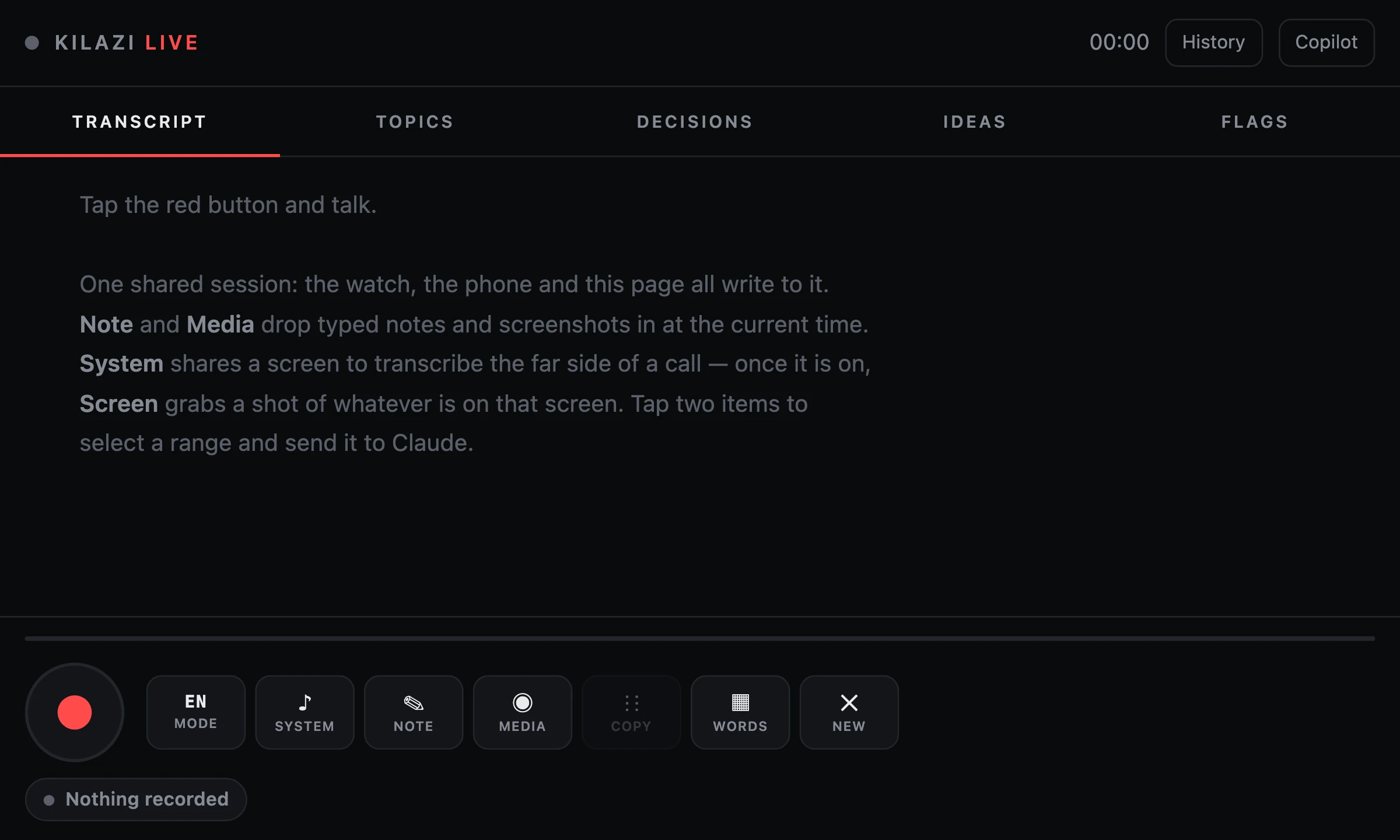 AI agentsLive Call Transcription With an AI Copilot That Writes the MeetingIt started as a terminal nobody looked at. Now it catches every call, translates as it goes, and a Claude Code session writes a page about the meeting while it happens.Read it 2026
 AI agentsEvery Business Needs an AI Brain. Start Building Yours EarlyA website was optional in 1998 and expected by 2008. An AI brain is that, now. It's a long road, which is the whole reason to start early.Read it 2026
 WorkflowWhy I Transcribe Every Client Call (1,367 and Counting)I remember maybe four of my calls. All 1,367 are transcribed, named, tagged and one search away, for less than a dinner a year.Read it 2026