In 1998 there were about 2.4 million websites on the planet. A business without one was normal. Ten years later there were nearly 187 million, and a business without one looked like it had closed.
AI brains are in their 1998. Optional today. A closed sign tomorrow.
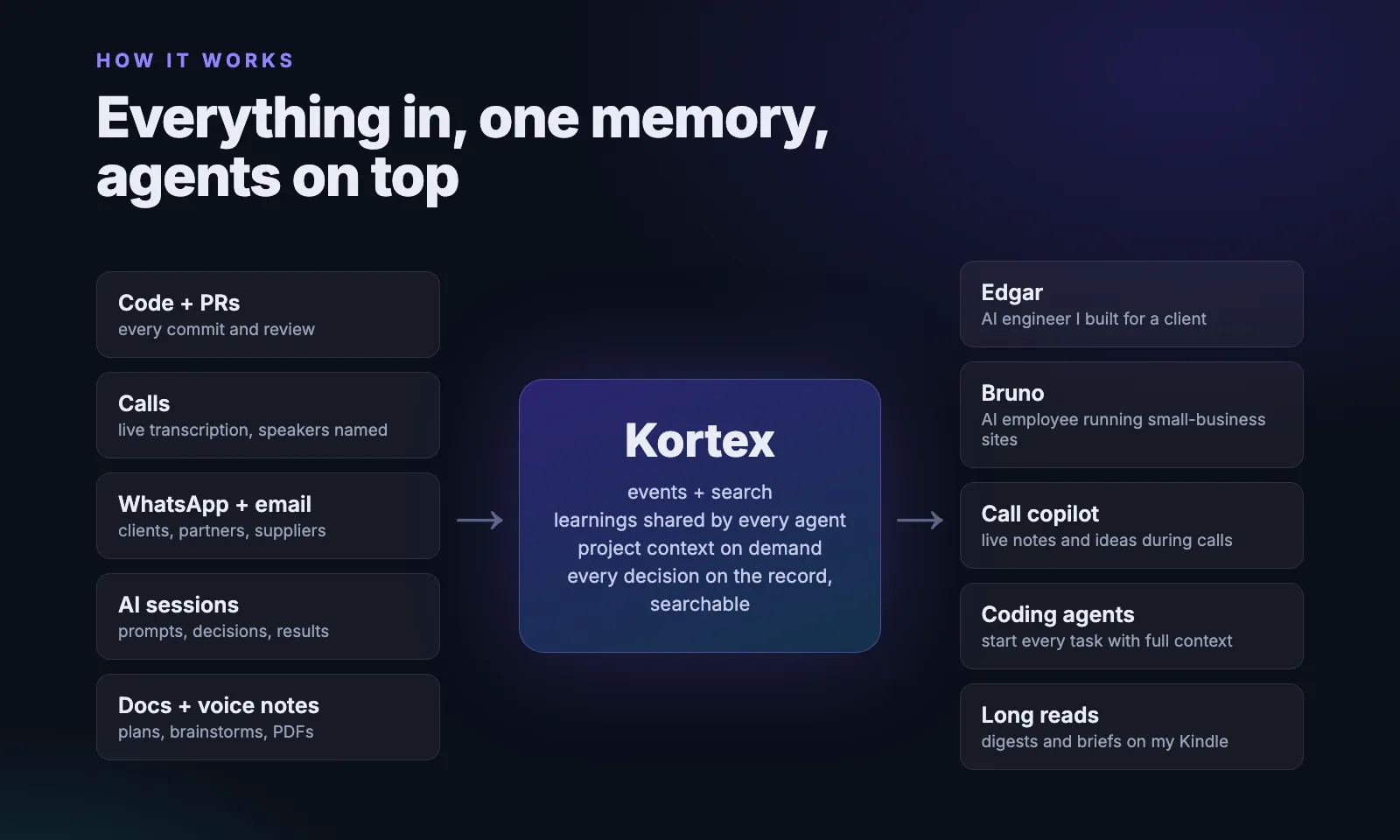
My AI agents write AI agents. All of them run on one thing: Kortex, the brain of my business. It's my own setup: one server that records what my business says, sends and decides, and hands it to every agent before it acts. Every company will need its own. Building one is a long, unglamorous road, which is exactly why you start now.
Why will every business need its own AI brain?
Because everyone rents the same models. You get the same Claude I get. Your competitor is a credit card away from whichever model is smartest.
Nobody can rent your history. Every sales call, every pitch that worked and every one that didn't, every complaint, every decision and why. Feed that to a model and the generic advice stops. You get the thing I'm after: "WOW, how didn't I think about it?"
Every sustainable business will run one, logging every decision: product, engineering, sales, partners, investments. It proposes the next move. You choose what it's allowed to do.
And no, it won't wake up. Not in our lifetimes (longer argument here). It doesn't need to. A website never became conscious either, and it still ate the yellow pages.
What does an AI brain actually do all day?
It remembers, so the agents on top act like they were in the room.
Mine takes in code, calls, WhatsApp, email, AI work sessions, docs and voice notes. On top sit Edgar, an AI engineer I built for a client (335 pull requests merged in 102 days, every one through human review), Bruno, who runs websites for 13 small businesses over WhatsApp, and a call copilot that reads the transcript while I talk.
Two moments that sold me on my own idea:
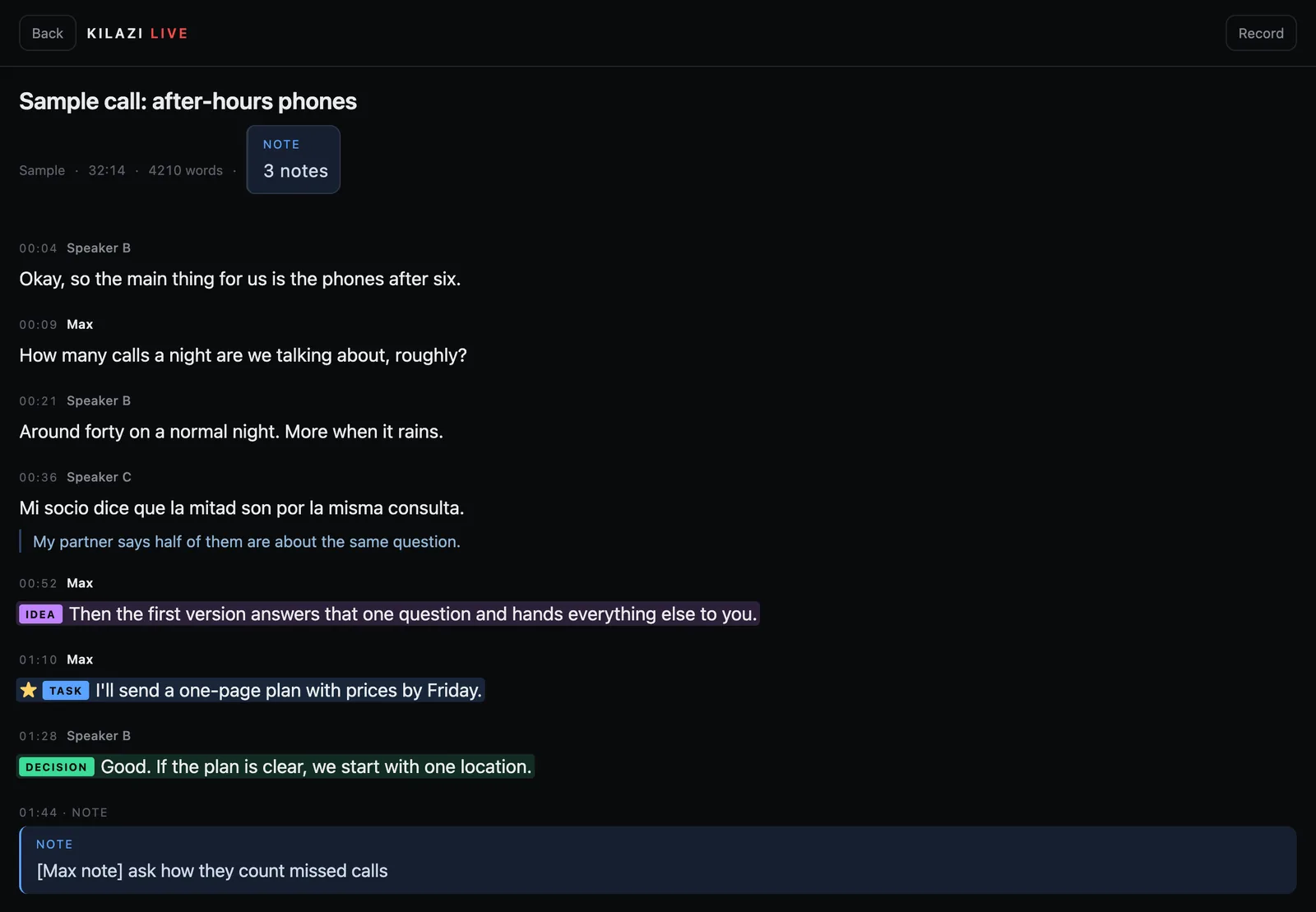
- On a client call, the copilot ran the numbers from real data in the background and had the answer on screen before the question came up. I relayed it. The client: "that's really good."
- On another, an unapproved change turned up live on a client's production system. An agent traced it to the exact pull request in about two minutes. A pull request to undo it was waiting for approval in about fifteen, all while the call was still going.
Edgar and Bruno get names. Kortex doesn't need one: it's not a persona, it's part of my operational brain, the part that doesn't forget. (How the copilot runs on it. Why I needed it so badly.)
Why is it so hard to plug into a real business?
Because a business runs on habits and half-remembered rules. I hit every hard part.
The data is a mess. Of my million-plus events, 955,873 are imported git commits. What matters (calls, decisions, a client's tone in a voice note) is a thin slice on top. Volume is easy. Signal is work.
Your processes were never written down. They live in one person's head. A brain can't learn a rule nobody said out loud, so a big part of building mine was saying things out loud.
Agents need months of correcting. My call copilot's preference file reads like a list of complaints. It treated a garbled name as a real person. The mic caught me explaining the page to my wife, and the copilot put that on the page too. My rule: "better miss something if you are not sure what it is rather than hallucinate." Every rule like that cost a mistake first.
People and consent. Call recording rules vary by state and country, and privacy law wants you to keep only what you need (GDPR's data minimisation). Ask, tell people, strip personal data. (Not legal advice. Check your local rules.)
None of this gets solved in a sprint. Only by being in it long enough. Hence: start early.
Isn't "collect all your data" old advice?
Yes. What's new is that you can finally afford to read it.
"Collect your data" has been on consultants' slides since slides were made of acetate. Everyone nodded. Almost nobody used it, because the analysis was clumsy or very expensive.
Before
Which pitches turned into customers? An analyst, a data warehouse, weeks of tagging and a consulting invoice with a comma in it.
Now
Some fine-tuning and prompting away. Hand the pile to an AI business analyst that never sleeps, and the gaps show up on their own.
The kind of question I mean:
Look at every proposal we sent. Which ones became paying customers, which ones went silent, and what did the winners have that the losers didn't: length, price, a demo link, how fast we replied after the first call?
That used to be a project. Now it's a few prompts. But only if the proposals, the call transcripts and the replies were saved. The analyst is cheap now. The history isn't. You can't go back and record the calls you didn't record.
Draft, Ask or Automate?
Automation as we knew it, a script doing one thing forever, is already in the past. Now every action comes with a setting, and you stop micromanaging.
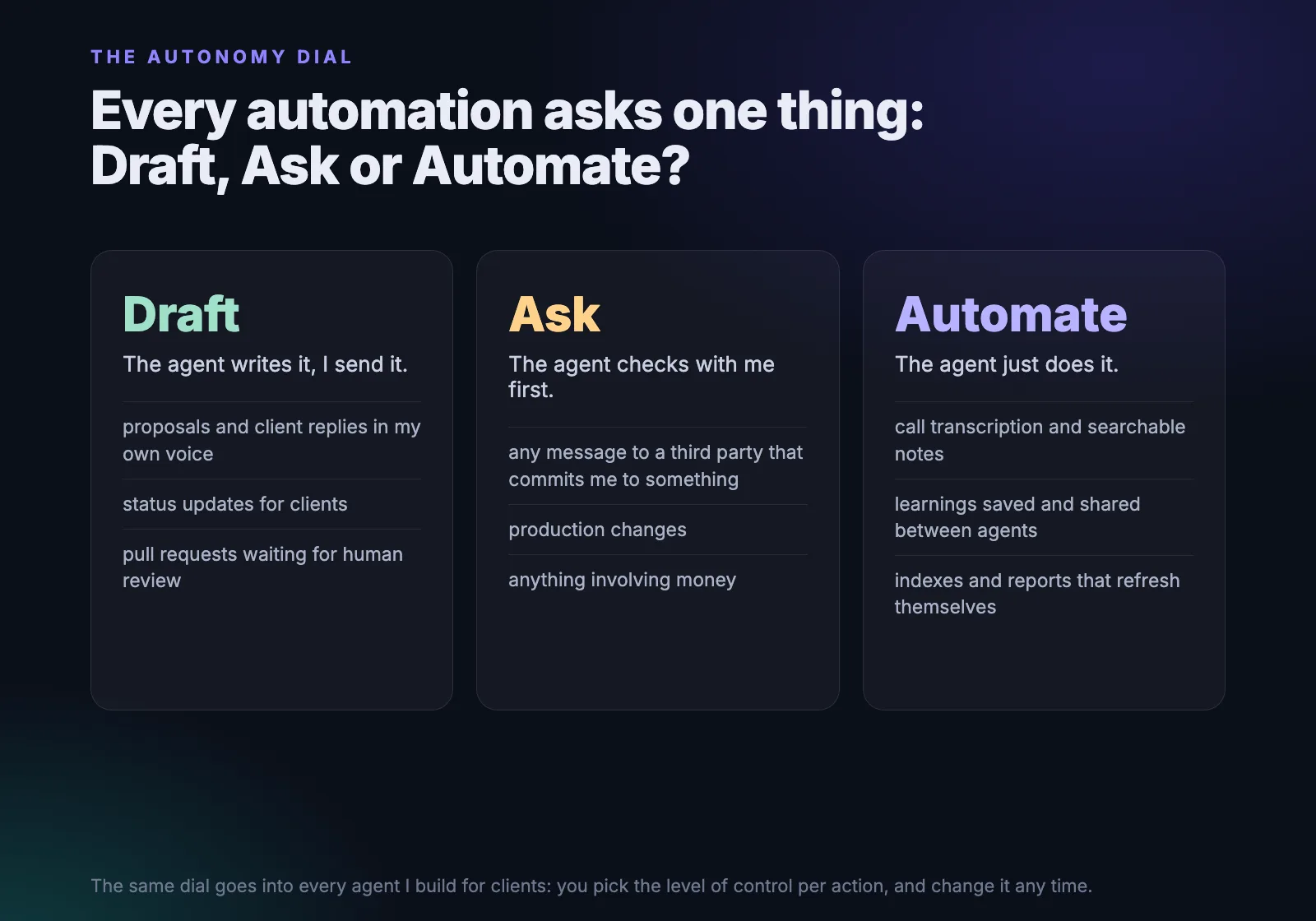
- Draft: the agent writes it, I send it. Proposals and client replies in my voice. Pull requests that wait for a human.
- Ask: the agent checks first. Any message to a third party that commits me to something (a guard blocks it until I say yes), production changes, anything with money.
- Automate: it just happens. Calls get transcribed, lessons get saved and shared between agents, indexes rebuild themselves.
The dial moves. Things start on Draft, earn trust, slide to Automate. Some never leave Ask. Fine. You hand the agent a goal, not a task list, and keep your hand on the knob.
What should you start collecting today?
Everything you'd regret not having, personal data stripped. Hire me or don't, this part is free:
- Transcribe client calls. Every one, with consent. Richest data you produce, and it evaporates when you hang up. (Why I transcribe every client call.)
- Keep email and chat history with clients, partners and suppliers.
- Save every pitch, proposal and deck, winners and losers.
- Keep photos, videos and screen recordings of the work.
- Log your AI sessions. Your prompts are a diary of every problem you solved.
Don't wait for the brain to be "ready." Ask it things now. Early answers will be dumb in instructive ways, and every correction is a lesson it keeps (that's how agents learn while you sleep).
The infra is cheap: one small server, Postgres and rented models (Claude, GPT, some open ones). The expensive part is time, and you can't buy back the year you skipped.
Mine will never be finished. Doesn't matter. It's already remembering today's calls, and one of them will come back as a "WOW, how didn't I think about it?"
Bring your case
Tell me what your business does and I'll sketch your first Kortex with you: what to collect, and what to Draft, Ask or Automate.
Questions people ask
What is an AI brain for a business?
It's a shared memory of the business that AI agents can search and act on: call transcripts, emails, chats, proposals, decisions and work sessions in one place. Instead of starting every task from zero, an agent reads what happened before, follows the rules you've already taught it, and proposes the next step.
How much does it cost to run a company AI brain?
Less than most people expect. Mine runs on one small server with a Postgres database and rented models (the big providers plus some open ones). The real cost is time: deciding what to capture, cleaning it, and correcting the agents until they understand how your business actually works.
Is it legal to record and transcribe client calls?
It depends on where you and the other party are. Many US states allow recording with one party's consent, others require everyone's, and other countries have their own rules. The safe habit is to tell people and ask. Strip personal data you don't need. This is not legal advice; check your local rules.
Will AI agents replace employees in small businesses?
Not wholesale. They take over the repetitive parts: drafting replies, transcribing, reporting, small website edits. People still decide what matters and approve anything that commits the business. A good setup lets you choose, per action, whether the agent drafts, asks first or acts on its own.
What data should a small business start collecting for AI?
Start with what disappears fastest: client calls (transcribed with consent), email and chat history, proposals and pitches, photos and videos of the work, and the prompts you type into AI tools. Remove personal data you don't need. Messy is fine at first; missing is not fixable later.

Max Sergeev. Max builds AI agents and the systems around them: long-term memory, voice, overnight rigs, and the boring guards that make them safe to leave alone. He runs kilazi labs from Buenos Aires. kilazi.com
Sources
Read next
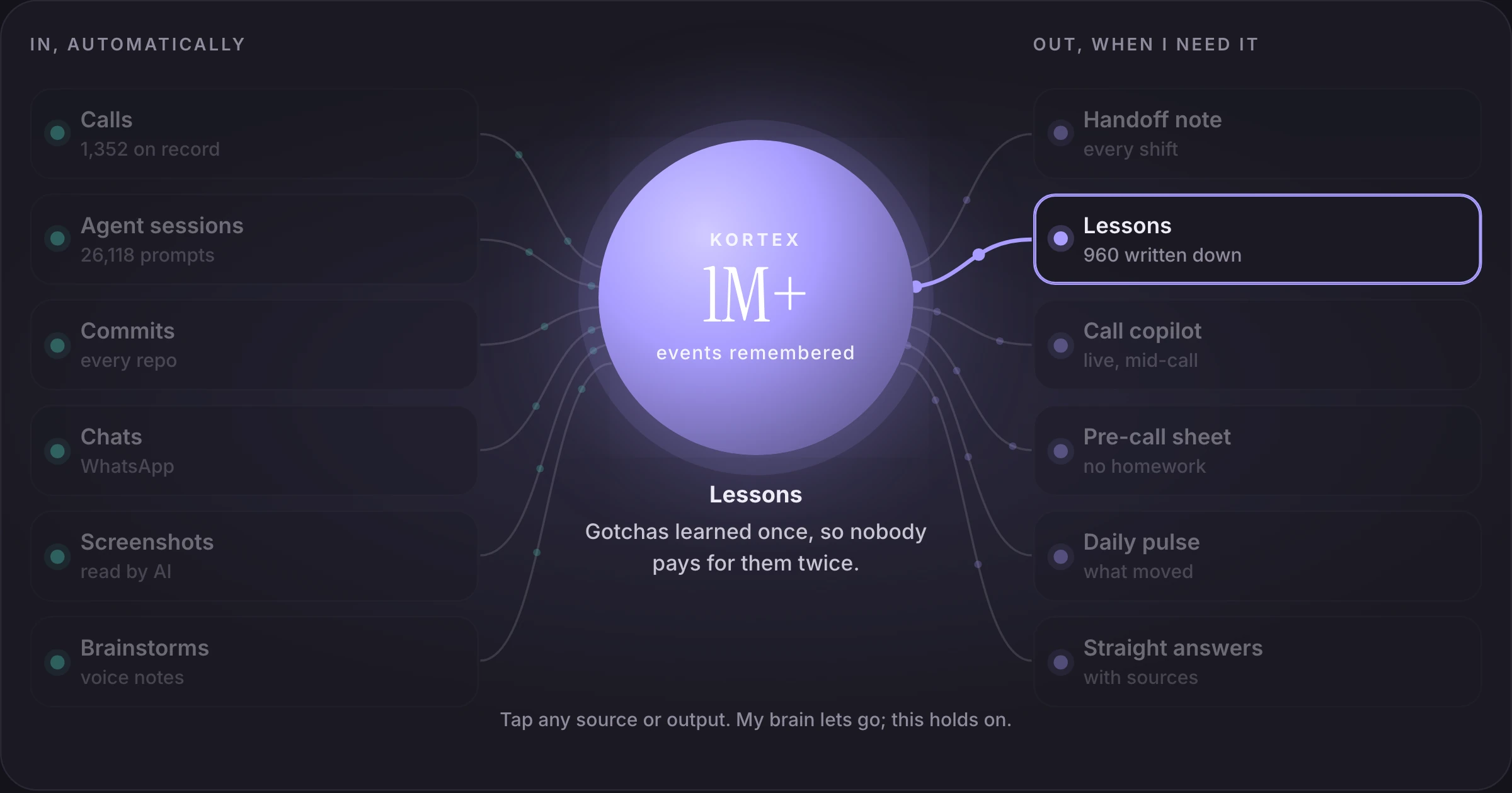 MemoryMy AI Second Brain: How MS and a Bad Memory Built KortexA brain that can't hold state built a system that holds it for him. Now the guy with the worst memory in the room walks in with the best one.Read it 2026
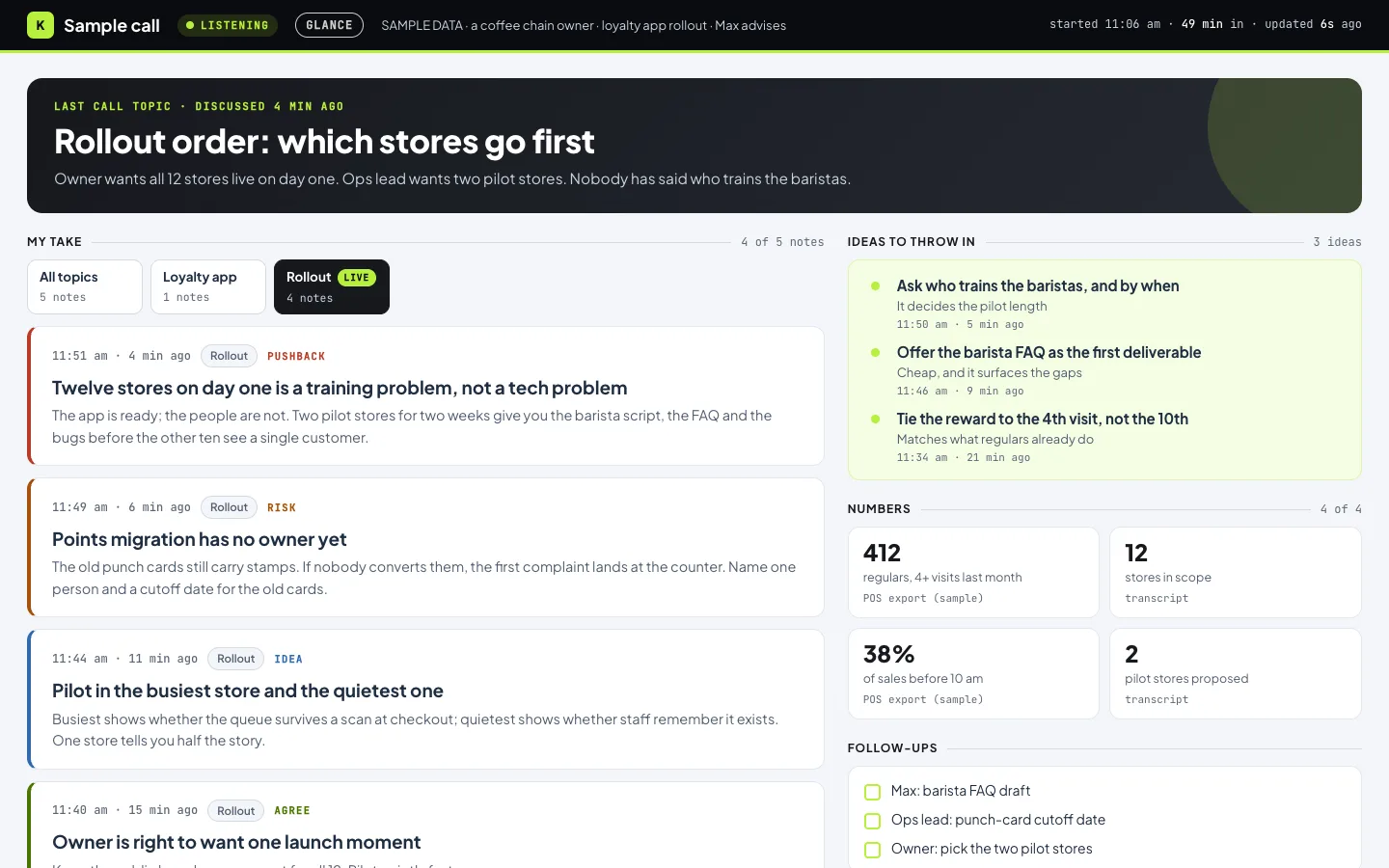 AI agentsMy AI Call Copilot Runs on My Brain, Not a PersonaMost meeting AI is a note-taker with a name tag. Mine is Kortex, my memory, sitting in on the call: it knows what I know, so it argues, predicts, builds and traces fires while we talk.Read it 2026
 WorkflowWhy I Transcribe Every Client Call (1,367 and Counting)I remember maybe four of my calls. All 1,367 are transcribed, named, tagged and one search away, for less than a dinner a year.Read it 2026