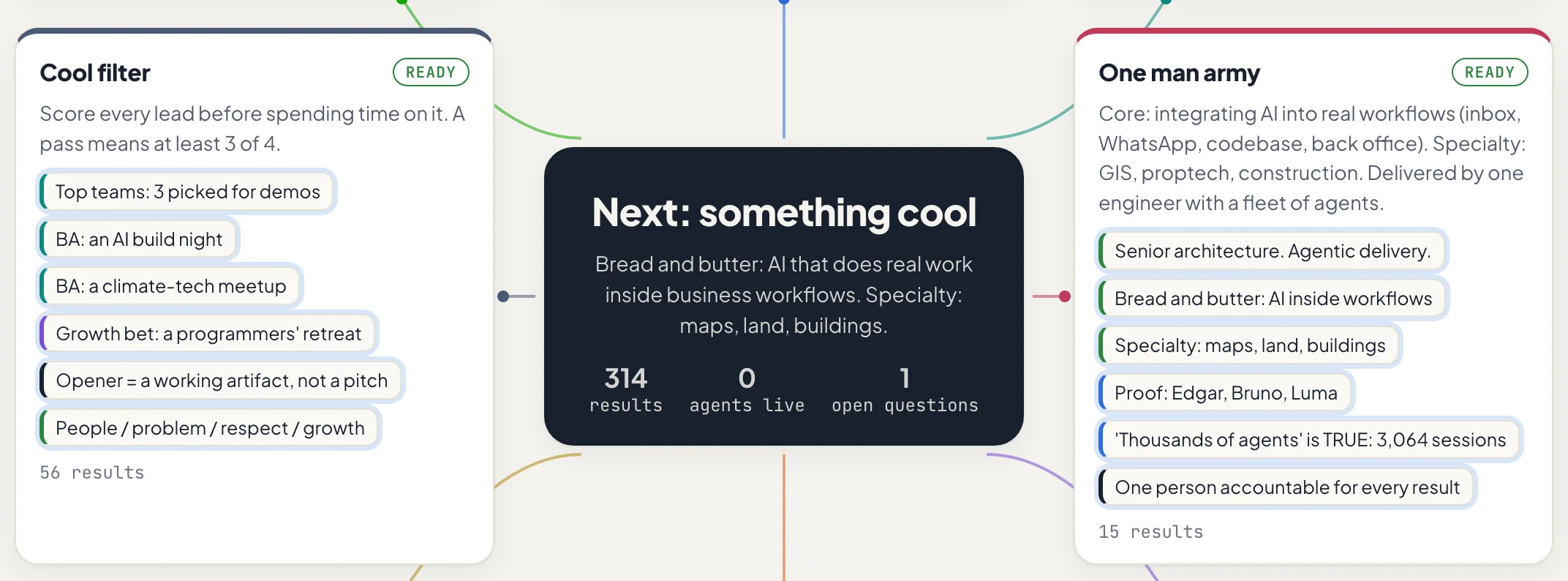
"So look." That's how it started: two words, then a wall of text about the biggest question on my desk. What does my lab do next?
No plan, no doc, no sticky notes. Just me typing the way I talk, dumping everything: the market, my portfolio, my intro video, an agents page with the client names stripped out. Then the line that set the tone. I wanted to be a one-man army, "surrounded by 10 thousand AI agents who research for me, who do the job for me, and I orchestrate all the shit."
Ten thousand was an exaggeration. (The board later counted 3,064 agent sessions on record across my fleet, so it was a slow, cumulative kind of true.) At any one moment, ten was the truth: nine lanes running at the peak, plus the one session conducting them. A lane is one agent doing one job.
A minute later: "make the brainstorm visual." Within ten minutes, four research lanes were running and a live page was filling up. Four and a half hours later, I had a new positioning, two portfolio pages, 30 video clips and 13 working demos for teams I'd love to build for.
I never opened a doc.
What is a live brainstorm board?
A live brainstorm board is a web page an AI session rewrites while you talk: a map of everything on the table, what each agent is researching, the sourced numbers, and the decisions waiting for you, each with a default. You talk. The page keeps score.
Mine has one question in the middle. That day: "Next: something cool." Around it sit eight branches, from the market and my intro video to my maps niche, plus a "cool filter" that scores every lead on the people, the problem, respect and growth.
It refreshes every few seconds. You can also tap answers or leave notes right on the page, and the session reads them next turn.
Why talk instead of typing into a doc? Because my head holds about four things at once. So does yours: Cowan's estimate of working memory is roughly four chunks, for everybody. A brainstorm about where my lab goes next has forty. The page holds the other thirty-six.
How do you run ten AI agents at once without losing the plot?
Give every agent a lane, its own file and a branch on the board, and never let it write to the page. That's the whole trick.
Each lane is one job: scan the market, find proptech targets, inventory my portfolio, build the maps page. Each agent saves its findings as short notes in its own file: which branch, a headline, the source, how sure it is. A small script copies new notes onto the page every 45 seconds.
My own edits live in a separate file, so the script never overwrites them. Agents fill. I curate.
Group brainstorming has a known bug: one person talks, everyone else waits, and ideas evaporate in the queue. Psychologists Diehl and Stroebe called it production blocking, and it explained most of the productivity loss in their experiments. Agents don't queue. Nine of them talk at once, into files.
Drag the clock to watch it happen.
How do you make decisions faster with AI agents?
Make the agent ask, and make every question carry a default. Then a decision is one tap or one line, and nothing waits on you.
The board has a "Questions for you" panel. Each question says why it matters and what the agent will do if I stay silent. I answered seven of them in four minutes, while the lanes kept running. Most answers were one line.
Here are four real ones, lightly trimmed. Read the default first, then tap to see what I actually said.
Tap a question to see my answer.
The defaults matter more than the answers. Silence never blocks a lane; it just picks the safe option and keeps going.
Steering works the same way. Fifteen minutes in, I said what I actually meant: "I want to find COOL." Three minutes later the running lanes had the new brief queued, a "cool people and places" lane was searching, and a "Cool filter" branch had replaced the plain to-do.
That's the part that feels like cheating. In a meeting, changing your mind costs a week. Here it costs a sentence.
How do you copy this with your own agents?
You need four pieces, and none of them is clever.
- One session in charge. It listens, splits the problem into branches and launches one agent per job.
- One file per agent. Each agent writes short findings there, with a source and a confidence. Never the page.
- One page that reads the files. It shows the map, who's working on what, and the open questions. It refreshes itself.
- A default on every question. You answer in a tap or a line; silence means the default.
What goes wrong when you brainstorm with AI agents?
Plenty, and most of it is boring plumbing. Which is good news: boring plumbing gets fixed once.
- I couldn't find my own page. The URL was buried in a status line. I had to ask "wheres my page." Rule now: link first, in bold.
- The board lied about the clock. The agent guessed timestamps; some landed four minutes in the future. The publish script now clamps any future time to "now."
- The server choked. Several sessions shared one small server with no spare memory, and four uploads hung at once. Hard timeouts now.
The scarier failure is a page that sounds sure and is wrong. So every number on the board is meant to carry its source, and big calls get second opinions. On another of my boards that day, two independent models fact-checked the agent's work: they corrected six facts and overturned four of its nine picks. The page shows only the final answer.
It isn't free, either. Anthropic found its multi-agent research setup beat a single agent by 90.2% on its internal eval, and that such systems burn about 15 times more tokens than a chat. I run mine on flat subscriptions (a story of its own).
Can you use this for any big decision?
Yes, if it takes more than a few turns and you'd otherwise lose threads. That same day, three sessions spun boards: this one and status reviews for two of my products, tulocal and tubarrio.
Not for one question: just ask it. Not for live calls either: those get a twin, a copilot page that writes the meeting while it happens.
It also fits the way my head works. I jump between projects all day, and agents holding the context is what makes that survivable. The board is the same idea, pointed at one big decision.
The best play of the afternoon came out of the board itself: build a working demo for a team before you pitch them. The agent proposed it; I replied in capitals with one unprintable word. By evening, 13 demos were built and checked. That one gets its own article.
Ten thousand agents is still an exaggeration. Ten is plenty. You talk, the page keeps score, and your whole job is the tap.
Want AI agents that actually ship?
I build AI agents and the systems around them for businesses: memory, voice, overnight rigs, and the boring guards that make them safe to leave alone.
Questions people ask
Do I need to be a developer to brainstorm with AI agents?
To run parallel lanes like this, mostly yes: you need to be comfortable with a terminal, because the agents are coding agents (Claude Code and Codex) and the board is a small HTML page fed by JSON files. Without that, you can still copy the method in a single chat: ask for a branch map, ask it to list its open questions with a default for each, and answer them in one line.
How much does running ten AI agents at once cost?
It depends on how you pay. Billed per token, multi-agent work is expensive: Anthropic reports its multi-agent research setup used about 15 times more tokens than a chat. I run my lanes on flat Claude and ChatGPT subscriptions instead, so a busy afternoon costs nothing extra, just a share of the weekly usage limit.
How do you stop AI agents from making things up in a brainstorm?
Make every result carry its source and a confidence, and treat anything without a source as a guess. For decisions that matter, get a second opinion from a different model working from the same raw sources. On one of my boards, two independent models corrected six facts and overturned four of nine picks.
Should the AI agents write to the page directly?
No. Let each agent write to its own file, and have one small loop merge those files into the page. Keep your own edits in a separate file the loop never touches. That way ten agents can work at once without overwriting each other or your decisions.

Max Sergeev. Max builds AI agents and the systems around them: long-term memory, voice, overnight rigs, and the boring guards that make them safe to leave alone. He runs kilazi labs from Buenos Aires. kilazi.com
Sources
Read next
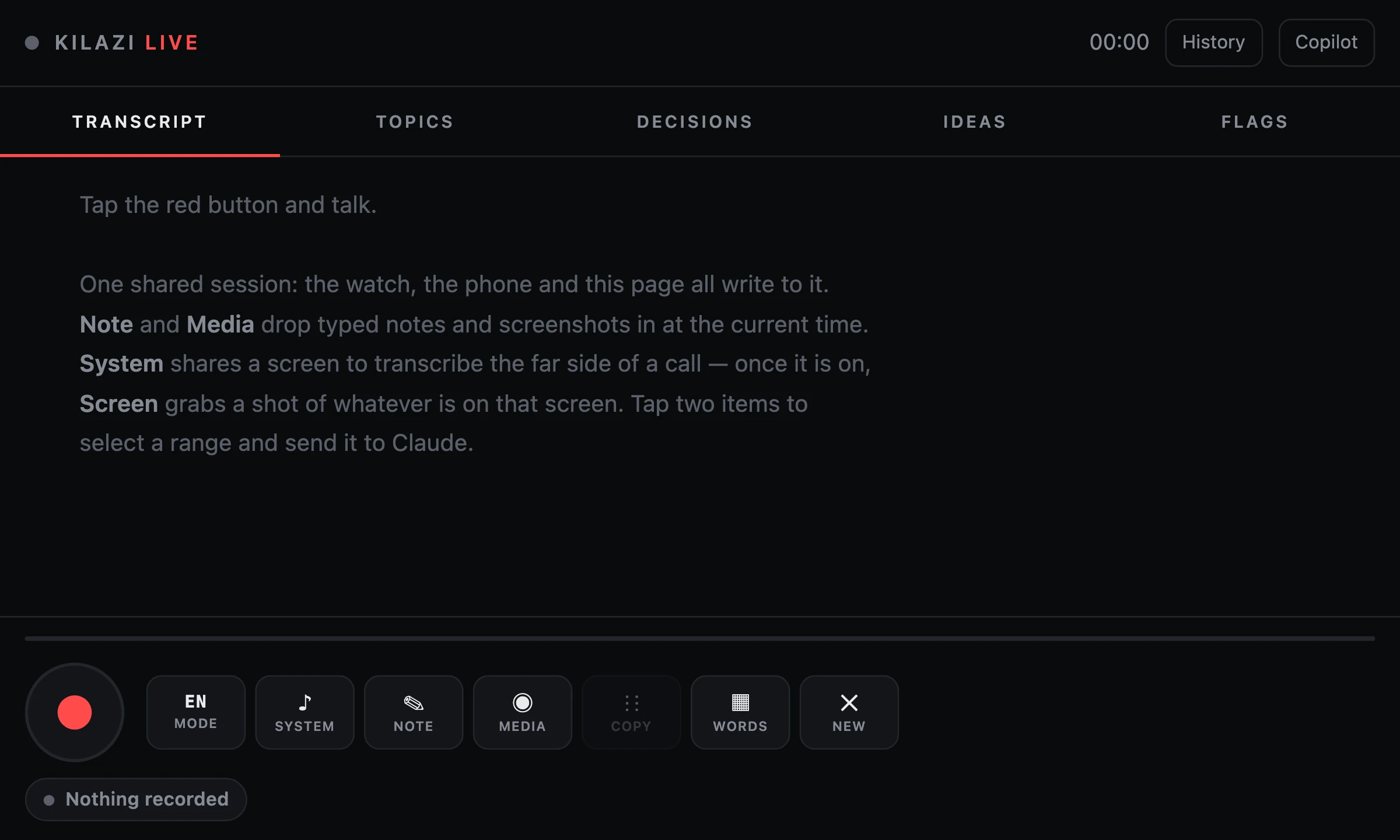 AI agentsLive Call Transcription With an AI Copilot That Writes the MeetingIt started as a terminal nobody looked at. Now it catches every call, translates as it goes, and a Claude Code session writes a page about the meeting while it happens.Read it 2026
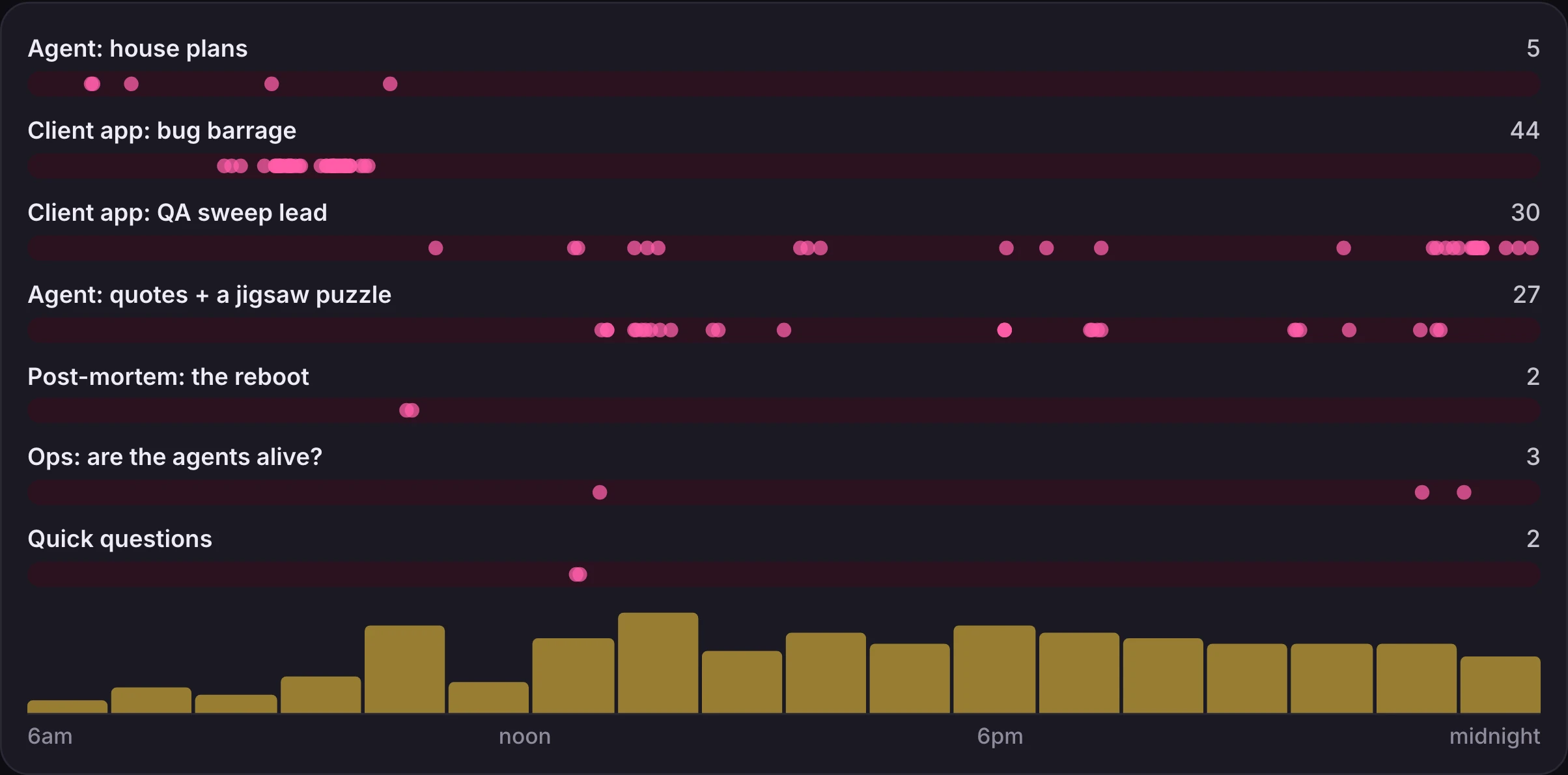 WorkflowMy "ADHD Workflow": Three Projects at Once, and AI Agents Hold the Context113 messages, 8 conversations, 31 jumps in one day. Why focus matters less once agents remember where you left off.Read it 2026