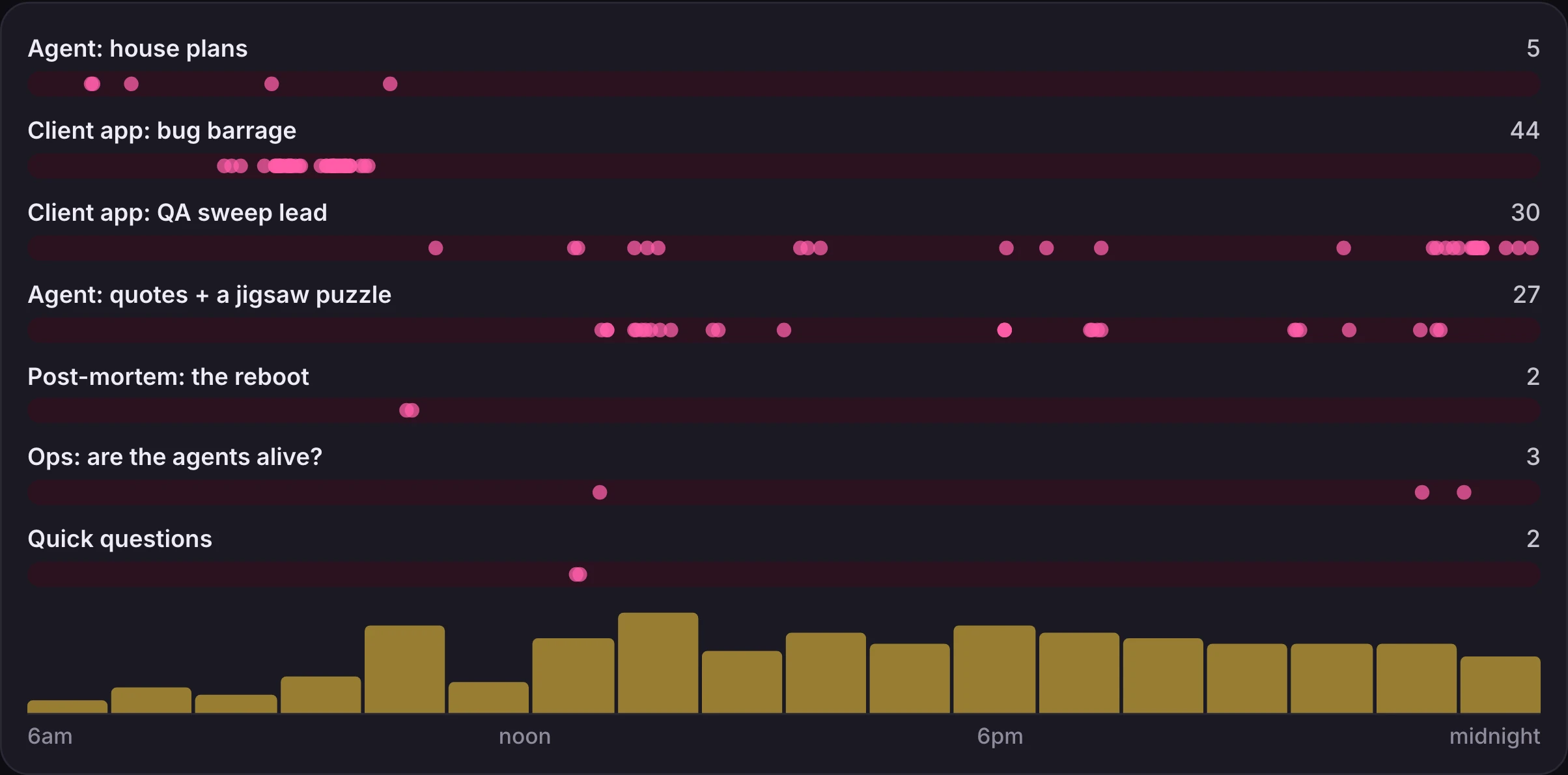
One morning I sent 40 messages into a single AI conversation in about an hour. Screenshots, mostly, each with a caption that sounded like a disappointed uncle: "checkboxes empty state is invisible", "missing hover on the items", "uploading profile photo should give a cropping option."
Then I had Luma, one of my AI agents, chase electricians for quotes on the house and help with a real cardboard jigsaw puzzle at home. I ordered a full QA sweep of a client's app and kept going until almost midnight.
By the old rules, that day should have collapsed. It didn't.
I call it my "ADHD workflow", in quotes. I'm not claiming a diagnosis, and this post isn't one. But if your brain also refuses to sit on one thing for four hours, good news: that matters a lot less than it used to.
Why is switching tasks so expensive for your brain?
Because every switch forces your brain to reload the whole task: the goal, the rules, and where you left off.
In 2001, psychologists Rubinstein, Evans and Meyer timed people jumping between math problems and sorting shapes. Every switch cost time, and the more complex the tasks, the more time it cost. Meyer has said those little mental blocks can eat up to 40 percent of a person's productive time.
That reload runs through working memory, and Nelson Cowan's review puts its capacity at about four chunks. Four. A real project has dozens of open threads.
Worse, part of your attention stays glued to the task you just left. Sophie Leroy calls it attention residue.
What changes when AI agents hold the state?
The reload gets cheap, because the agent holds the state and you only hold the intent.
When I come back to a conversation, the agent already has the files, the half-finished step and the reason we started. I read one status line and fire the next instruction.
When I jump to another conversation, my next message lands there a median of three and a half minutes later.
Here's that day, straight from my logs.
Purple dots: my messages, one per dot. Teal bars: AI sessions working each hour (mine plus the background lanes, up to 16). Two tiny conversations share the last row.
Look at the morning: that dense purple smear is the 40-message hour, pure hyperfocus. Then the afternoon scatters across four conversations. Both modes worked, because none of the context lived in my head.
Leroy and a colleague later found a cheap remedy: a quick "ready-to-resume" plan, jotted down when you're interrupted (where you were, what comes next), cuts attention residue. My agent sessions (I call them lanes) log that note every turn. I just read it.
I wrote more about putting memory outside your head in the Kortex story.
What does a day like that actually look like?
Messy as hell. Here it is hour by hour.
- 6:45amI tell my agent Luma the lagoon is drawn in the wrong spot on the plan of our house lot.
- 8:21amBug barrage starts. Each screenshot becomes a numbered item, and four QA lanes pick them off.
- 10:33amA Mac reboot has killed every lane mid-task. All four respawn from their mission files and keep going.
- 10:34amI type: "so once again you have successfully killed yourself mid-task."
- 12:50pmLuma chases electricians for quotes on the house. "Like 5 more? We need a median price."
- 1:13pm"So look, we are doing a puzzle." Luma spins up two helper workers for it.
- 1:22pm"Now do the full sweep." Two new lanes spawn to click through the whole client app.
- 11:53pmLast message. The lanes keep working without me.
Notice what I never did: re-read a codebase, rebuild a plan, or try to remember which bug was number 37. The machines remembered. I just moved.
How do you run several AI agents without losing the plot?
Give each project its own lane, make every lane leave a resume note, and never wait for an agent to finish before you talk to the next one.
- Fire and switch. Claude Code queues whatever you type while the agent is busy and reads it when its current turn ends. Don't wait. Drop the thought and leave.
- One lane, one project, one ledger. Each lane gets a mission file and a running list. A bug I spot becomes item 41. Nobody has to hold it in their head, me least of all.
- Demand a resume line. I make every lane end its turn with what it did and what's next. That's your ready-to-resume plan, written for free.
- Drive from your phone. 71% of my 982 logged messages came in over WhatsApp. The best ideas show up away from the desk, so the desk shouldn't be the only door.
- Let a different agent check the work. Your attention is the scarcest thing in the system; don't burn it on verification. An independent QA lane re-tests every "fixed" item. More on that rig in the overnight maestros piece.
Switching, the old way
- Hold the plan in your head
- Reload the whole task into a memory that holds about four chunks, every jump
- Feel guilty for "not focusing"
Switching with agents
- The agent holds the plan
- Read one status line, jump back in
- Spend your attention on decisions, not recall
What's the catch?
Three, and none of them small.
The machine breaks before your brain does. That reboot wasn't a one-off. My Mac has 8 GB of memory, and sixteen busy sessions will happily eat every last byte. Now a watchdog kills the easiest lane to rebuild before the whole box goes down.
Agents go quiet. One day Luma said "Fable is redoing" (Fable being one of the models she hands work to) and vanished for two hours. Jumping only works if every lane reports back on a loop, or you come back to silence and have to dig.
You become the bottleneck for judgment. Switching got cheap. Deciding didn't. When eight lanes all want a yes, you're the slowest part of the system. And there's always one more dot to add, which is how a day ends at midnight. I count that as a warning sign.
If you live with a focus disorder, talk to a professional. Agents won't fix your brain. They just stop charging you for the way it already works.
Want AI agents that actually ship?
I build AI agents and the systems around them for businesses: memory, voice, overnight rigs, and the boring guards that make them safe to leave alone.
Questions people ask
Is multitasking with AI agents actually multitasking?
Not in the brain sense. You still think about one thing at a time. The difference is that the work keeps moving in the lanes you're not looking at, and each lane keeps its own state. You do quick bursts of attention across several projects, and the agents do the long stretches.
How many AI agents can one person manage at once?
In my logs, a typical busy day means about five or six conversations I personally drive (eight on the busiest), and on my busiest day, up to 16 sessions working in the peak hour once background lanes count. The limit is less your attention than your machine's memory and how many decisions you can make well in a row.
What is attention residue?
Attention residue is the part of your attention that stays stuck on the task you just left. Sophie Leroy described it in 2009. Her later work found that writing a quick ready-to-resume note (where you were, what comes next) reduces it, which is exactly what a good agent status line does.
Do I need ADHD for this workflow to help?
No. Anyone who juggles several projects pays the same reload cost on every switch. People who naturally jump around just feel it more. If you think you might have ADHD, talk to a clinician; this is a work setup, not a treatment.
What tools do I need to run several AI agents in parallel?
A coding agent that keeps its session state, such as Claude Code, a terminal multiplexer like tmux to keep each lane alive, and one plain text ledger per project. A way to message the agents from your phone helps a lot more than you'd expect.

Max Sergeev. Max builds AI agents and the systems around them: long-term memory, voice, overnight rigs, and the boring guards that make them safe to leave alone. He runs kilazi labs from Buenos Aires. kilazi.com
Sources
- APA: Multitasking: Switching costs (Rubinstein, Meyer & Evans, 2001)
- Cowan (2001), The magical number 4 in short-term memory, Behavioral and Brain Sciences
- Leroy (2009), Why is it so hard to do my work? The challenge of attention residue, OBHDP
- UW Bothell: Sophie Leroy's research on attention residue and the ready-to-resume plan
- NIMH: Attention-Deficit/Hyperactivity Disorder
Read next
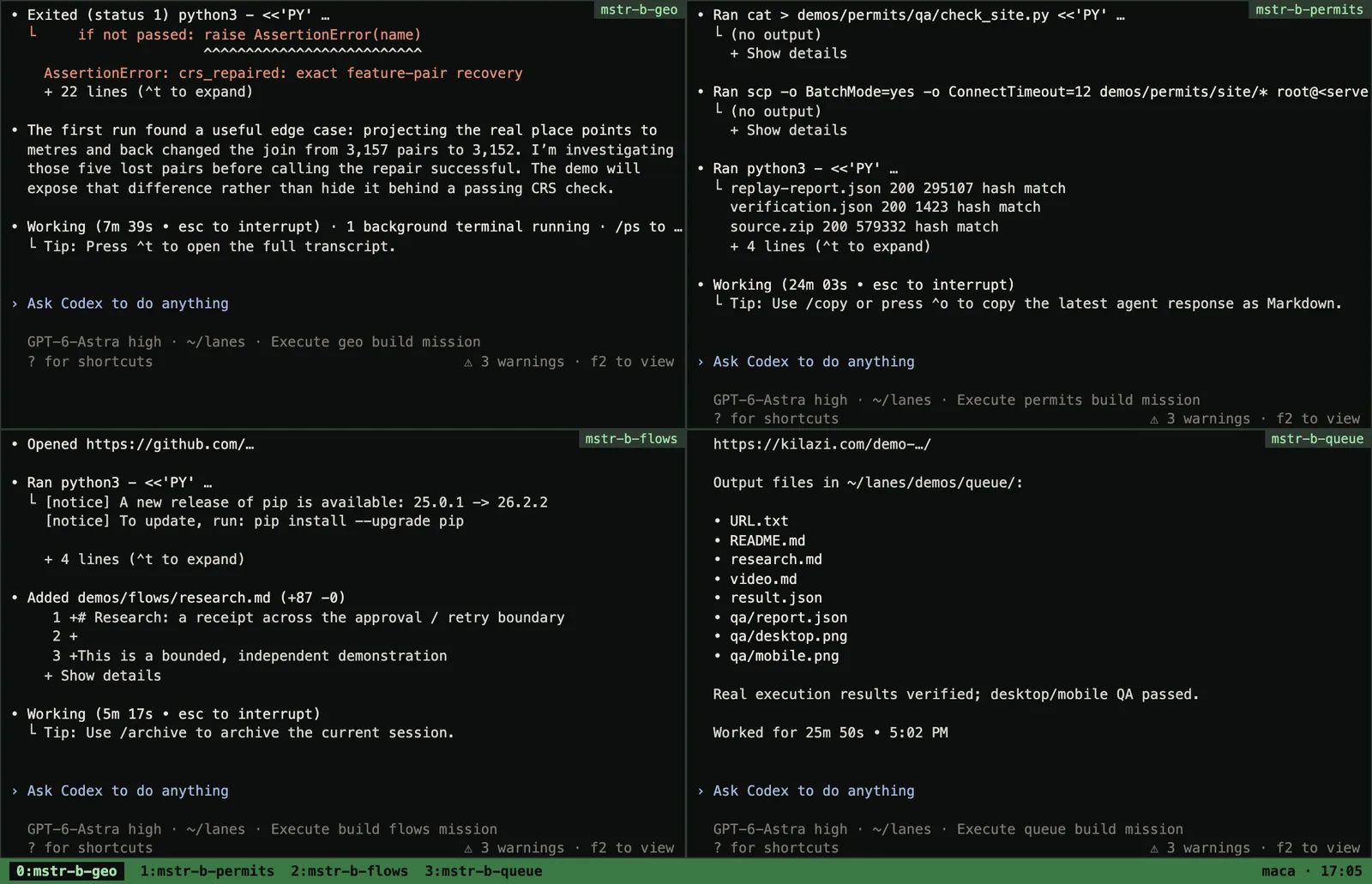 AI agentsReplit Bragged About 200 Minutes. My AI Agents Worked All Night15 lanes, 11 hours, 10,785 tool calls and one shell loop that keeps telling them they're not done.Read it 2026
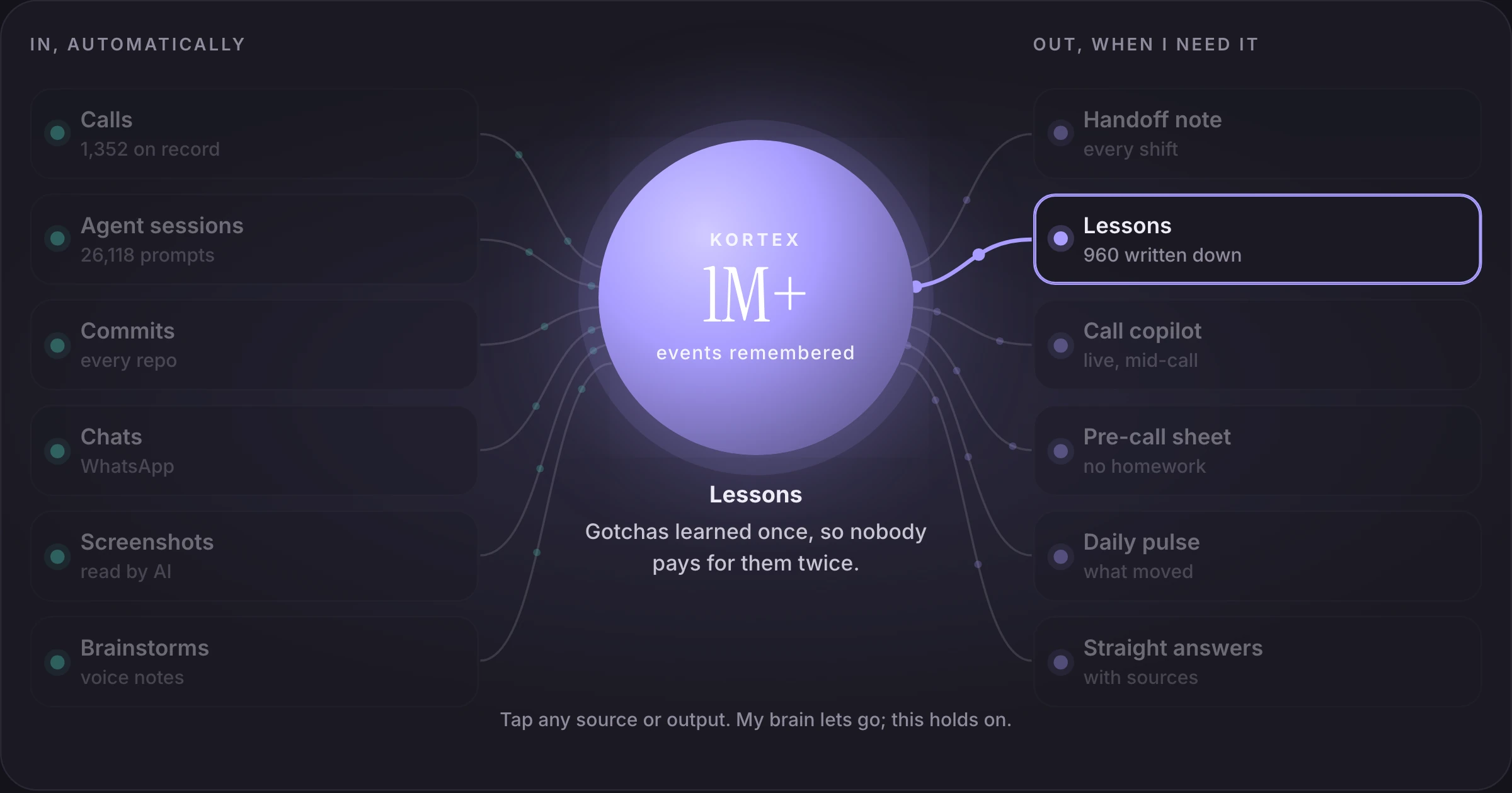 MemoryMy AI Second Brain: How MS and a Bad Memory Built KortexA brain that can't hold state built a system that holds it for him. Now the guy with the worst memory in the room walks in with the best one.Read it 2026
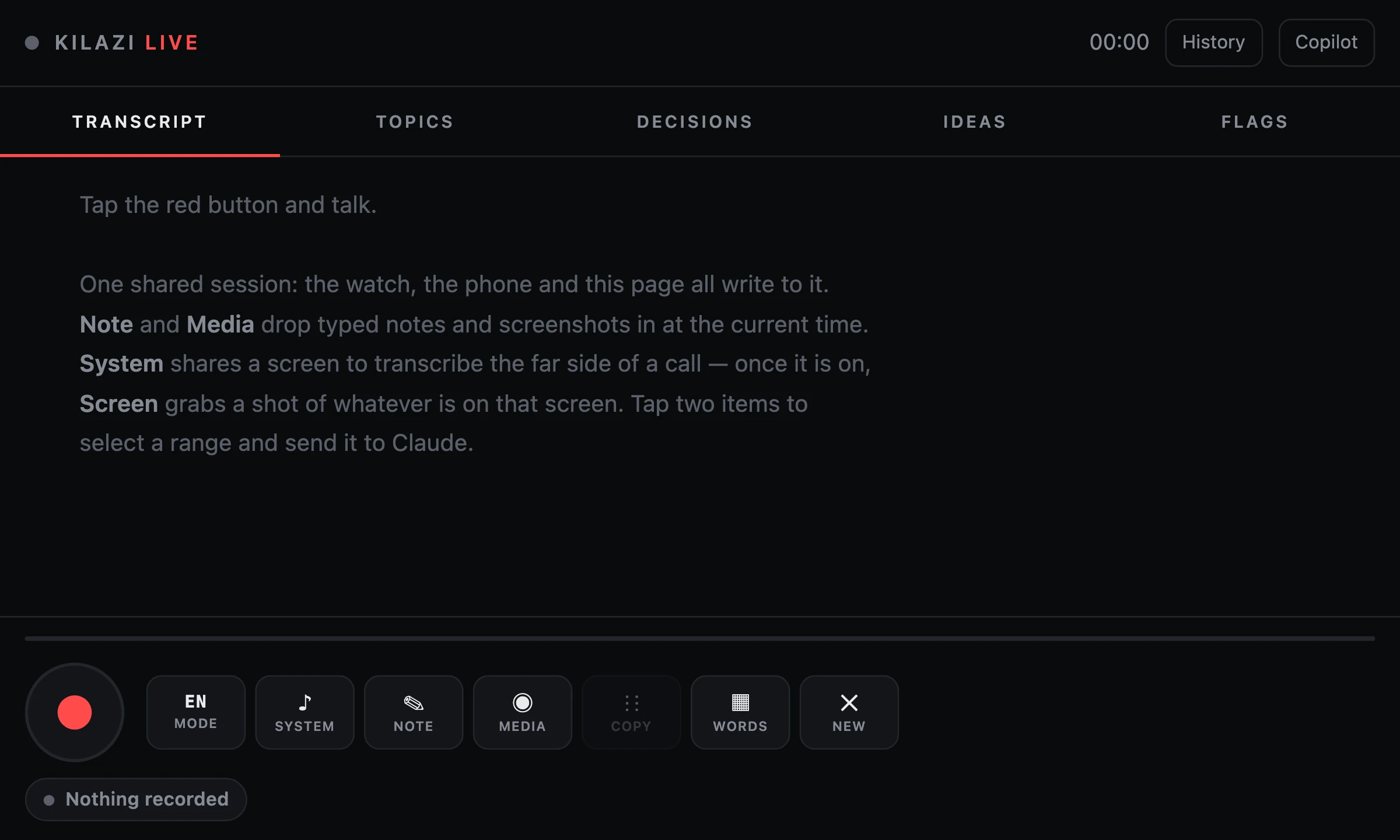 AI agentsLive Call Transcription With an AI Copilot That Writes the MeetingIt started as a terminal nobody looked at. Now it catches every call, translates as it goes, and a Claude Code session writes a page about the meeting while it happens.Read it 2026