A recruiter gives a résumé 7.4 seconds on the first screen. A cover letter, I suspect, gets less. Most deserve less.
So when I spotted a team I'd genuinely love to build for, I skipped the letter. An agent of mine built a working parcel analysis for a geospatial startup, on their own Python SDK (their developer toolkit) and a real Canadian city's open data. Ticket to live page: about 14 minutes. Nobody there asked for it.
That's the whole method. Build the demo before you pitch.
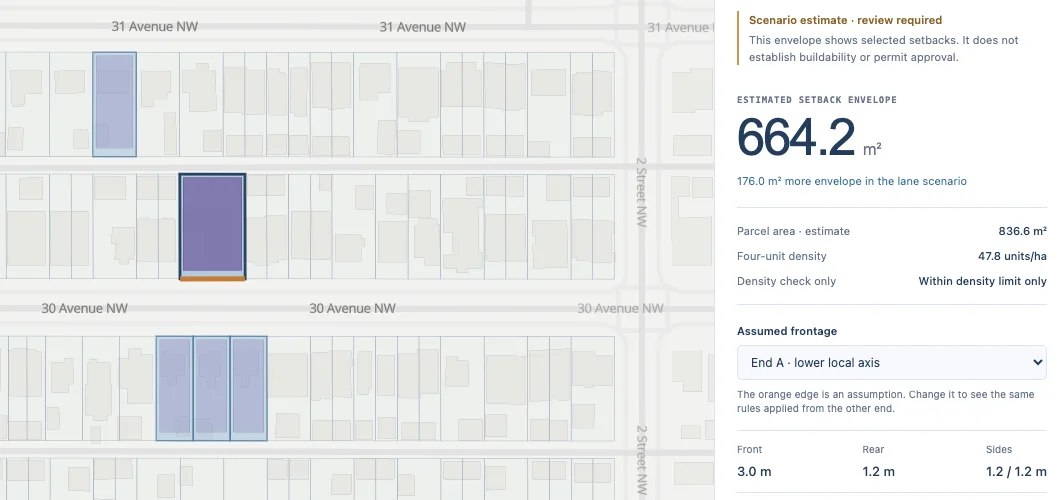
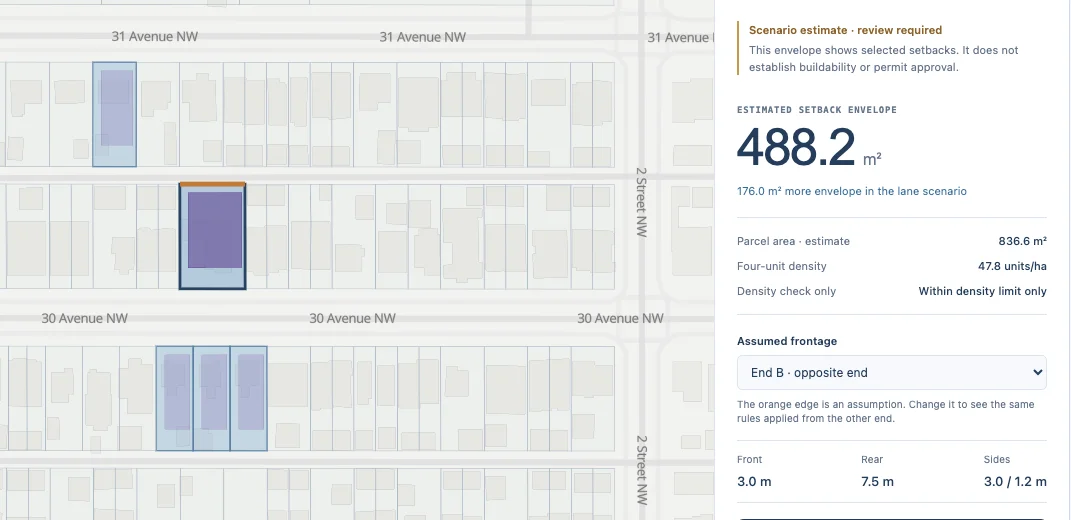
One lot, one toggle. With a back lane (the alley behind the lot), the space you're allowed to build in is 664.2 m². Without one, 488.2 m².
Assume a lane: 664.2 m²
Assume no lane: 488.2 m²
What does "build the demo before you pitch" mean?
It means your first message to a company is a link to something that already works on their problem: small, real, built with their tools on public data they care about. No deck. No "I'd love to explore synergies."
I didn't invent it. Paul Graham calls the ancestor the "Collison installation": when someone agreed to try Stripe, the founders said "Right then, give me your laptop" and set them up on the spot. I just skip the part where anyone agrees first.
When an agent proposed this play, my answer was four words in capitals, one of them unprintable. Cleaned up: I love it.
How do you build a demo for a company you've never talked to?
You read their stack, pick one sharp question their users would ask, and answer it with their own tools. Here's the playbook my agents run.
- Pick the team, not the logo. Every lead gets scored on four things: the people, the problem, respect, growth. A pass is three out of four. I keep a shortlist of 38 teams, each with a one-day demo idea next to it.
- Read their stack like an insider. Docs, SDK, changelog, their users' issues. The demo should look like it came from inside the building.
- Ask one sharp question. One with an answer. "A dashboard" doesn't count.
- Build it small and real. Public data, their own SDK, no logins, nothing faked. Assumptions get labelled.
- Say what it doesn't do. Anyone can draw a pretty map. Limits are what engineers trust.
- Send a link and a 60-second video. Plus one line: what we'd build together in two weeks.
The bar written into every build ticket: it must make their engineers say "wait, he built this for us?"
The proof: a real neighbourhood in 14 minutes
The question: how does a back lane change what you can build on a lot? Two terms first. A setback is the required gap between a building and the lot edge. The envelope is what's left: the most ground you're allowed to build on.
The data: one Calgary neighbourhood from the city's open portal, joined against the zoning map.
Flip "assume a lane" and the envelope changes. On one lot it goes from 488.2 m² to 664.2 m², because without a lane the Calgary bylaw pushes the rear setback from 1.2 metres to 7.5 and widens one side setback to 3.0. Every rule links to its section; every parcel's evidence is downloadable.
It says out loud what it is not: a survey, a footprint or a permit. It also comes as a tool another AI agent could call. The tool itself is plain code, so the zoning check gives the same answer every time. Let language choose the call; let code do the checking.
- 0 minA coding agent gets a written ticket: their SDK, public data only, contact nobody, 90-minute budget.
- 6 minReal parcels downloaded, zoning joined, first results computed with their SDK.
- 14 minPage live, unlisted, with sources and a "what this does not answer" section. I get a link.
- 20 minThe agent's own browser checks pass at phone and desktop width.
I didn't write the code, or even the ticket. One agent wrote the ticket; another picked the question and built it. My part is choosing which teams are worth it, and the final no on anything that gets sent. The zoning instinct comes from years of floor plans, lot maps and bylaw readers.
Does build-first outreach actually work?
The building works. The sending is where it dies. I have receipts.
I've run the same play with tulocal, my free-website product for small businesses: build a small business its full website first, then message the owner: "your site already exists, want it?" A far better opener than "want a free site?"
Then my agents audited the Instagram DMs carrying those sites. My notes call it "requests-folder death." A small account lands in message requests, and nobody opens that folder. Of 39 cold Instagram DMs, 34 were never accepted or even seen, two were seen and ignored, and the only three replies came from bots. A shop with nearly 8,000 followers, a gym with 6,000: unopened. The lesson I wrote down: "Nobody saw the content, so the content was never the variable."
The move that did compound: a plain cold WhatsApp to a gym's own phone. The owner answered in under an hour, then referred people. Seven owners in six days. Same city, same product, different inbox.
Cover letter
Promises skills. Read in seconds, if at all. Proves you can write a cover letter.
A working demo
Shows the skill on their data. Forwardable to the one engineer who matters. Proves you already did the first week.
So the rule for the geospatial demos: send them where engineers actually read. A person, a forum thread, a pull request. Never a cold DM that drops into a folder.
Why didn't everyone always do this?
Cost. A demo like this used to eat an engineer's days per company, which is why nobody sends ten. With agents it's minutes on a flat subscription, plus my judgment.
When building is cheap, the scarce part is taste: the right question, and the nerve to say what your work doesn't do. Neither fits in a cover letter.
Ten demos. If one engineer opens one and says "wait, he built this for us?", that beats every cover letter I ever wrote, combined.
Want AI agents that actually ship?
I build AI agents and the systems around them for businesses: memory, voice, overnight rigs, and the boring guards that make them safe to leave alone.
Questions people ask
Is it worth building a demo for a company that never asked for one?
Only if the demo is small and the team is one you genuinely want. Score each team first (people, problem, respect, growth) and build for the ones that pass. With AI agents a focused demo costs minutes of agent time, so the real cost is your attention, not the build.
What data can I use for an unsolicited demo?
Public data only: open city portals, open datasets, public APIs and the company's own open-source tools. No logins, no scraping behind authentication, no paid APIs, no keys. If something is simulated or assumed, label it on the page in plain words.
Where should I send a build-first demo?
Somewhere a person actually reads: a direct contact, an engineering forum thread, a pull request on their open-source repo, or an existing phone line. Cold DMs from a small social account tend to land in a message-requests folder nobody opens, so the demo is never seen.
What should a build-first demo page include?
The question in the users' own words, the live result, a short how-it-works, a list of what it does not answer, the sources, and one line on what you would build together in two weeks. Add a 60-second video for people who won't click around.
Does a demo replace a résumé or portfolio?
It replaces the cover letter, not the track record. The demo proves you understood their problem this week; a portfolio and references prove you've done it before. Send the demo first and link the rest underneath.

Max Sergeev. Max builds AI agents and the systems around them: long-term memory, voice, overnight rigs, and the boring guards that make them safe to leave alone. He runs kilazi labs from Buenos Aires. kilazi.com
Sources
Read next
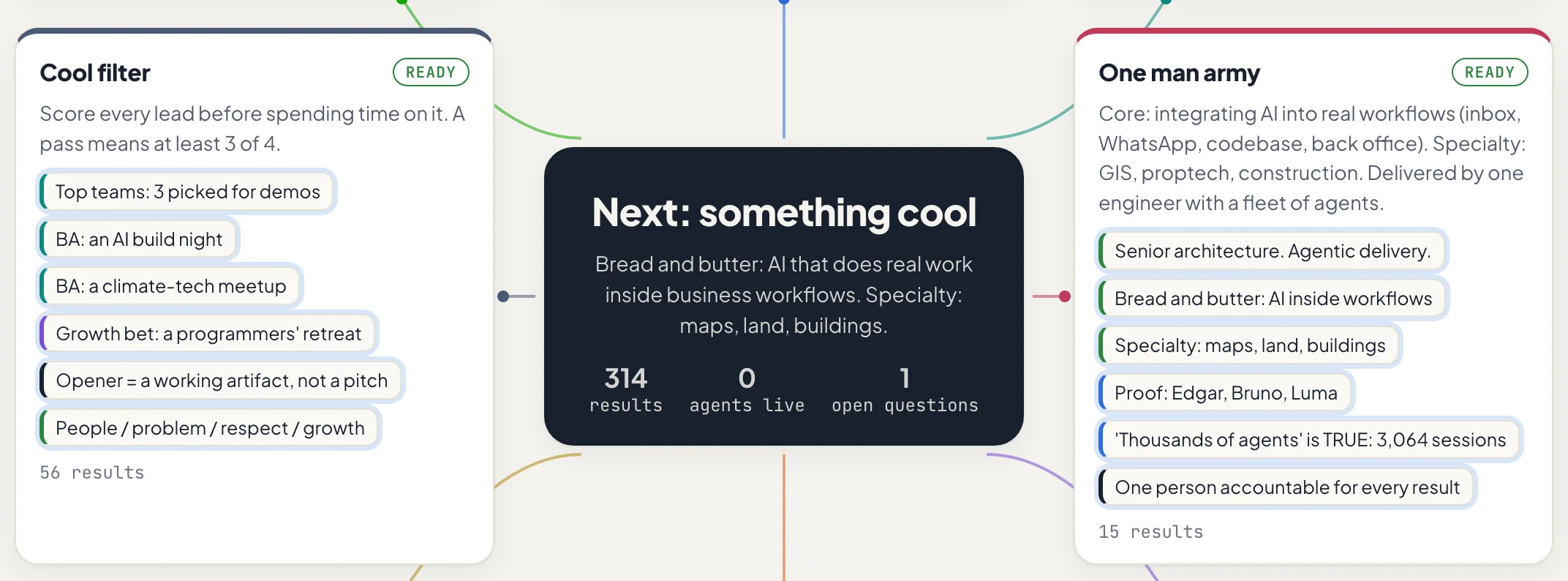 AI agentsThinking Out Loud With Ten AI Agents: My Brainstorm BoardI said the big messy question out loud. Ten minutes later, four research lanes were running and a live page was up. I never opened a doc.Read it 2026
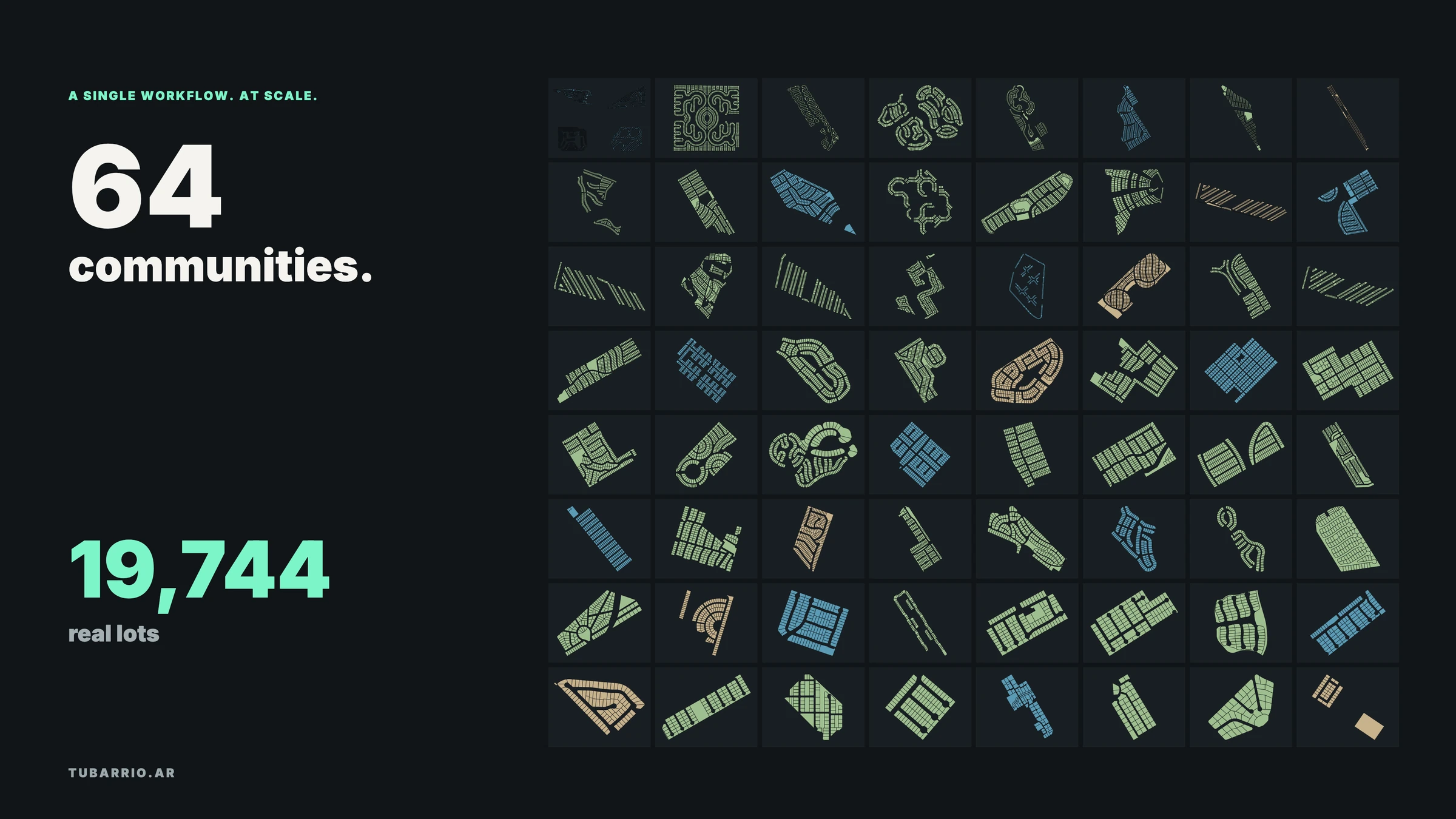 AI agentsFrom hand-drawn floor plans to AI agents that draw mapsFloor plans, zoning bylaws, masterplans: the same craft since 2019. Only the hands on the mouse changed.Read it 2026
 ProductsA free website you manage by WhatsApp voice noteSmall businesses get a site for free. The admin panel is a chat. The loop, the rules, and the numbers that hurt.Read it 2026