Okay, look. I wanted to breathe slower. Not for ten minutes on a cushion; all the time, by default.
So I asked my agent for a watch app that would vibrate the pattern into my wrist. It pushed back first: you can't pace a human all day, the wrist stops noticing, and watchOS won't allow it anyway. Fair. Then it built the thing.
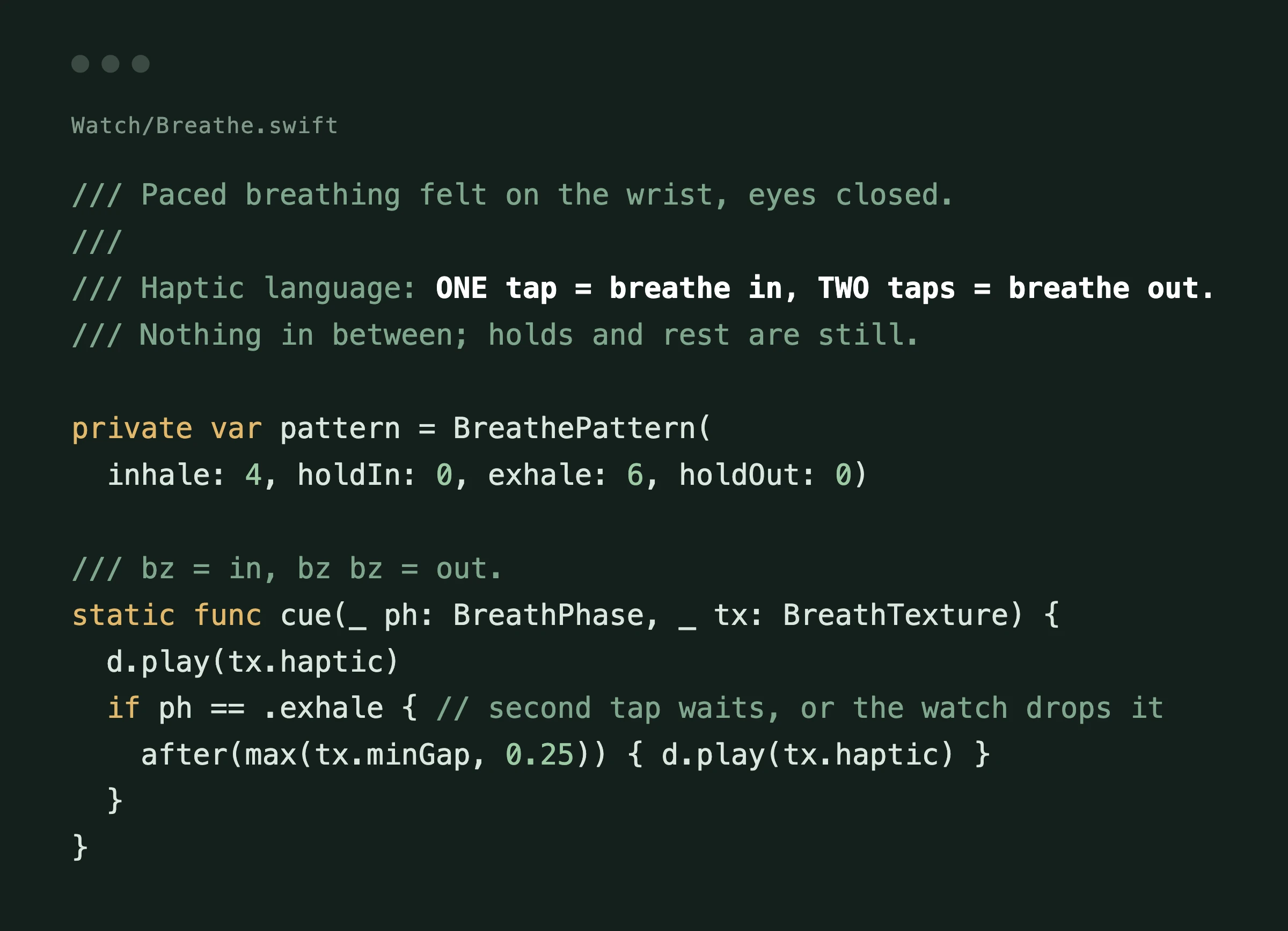
One afternoon, four versions, and one message from me that began "haptics SUCK BALLS mate". What survived is the smallest interface I have ever shipped: one tap means breathe in, two taps mean breathe out.
What is 4-6 breathing?
Inhale through the nose for four seconds, exhale for six, no holds. One breath takes ten seconds, so you land on exactly six breaths a minute.
A resting adult usually breathes 12 to 18 times a minute. 4-6 at least halves that, and puts the extra time on the exhale.
I first asked for "6-4". My agent flagged it: six in, four out leans alert; four in, six out is the calm one. Same rate, opposite mood. Then it shipped version one with my backwards 6-4 as the default anyway.
Try it. Same 4-6 player I built into Neuro Atelier, live:
Why six breaths a minute?
Because that's roughly the speed your heart rhythm likes to swing at. Your heart speeds up a little on every inhale and slows on every exhale; that's respiratory sinus arrhythmia, and despite the name, it's healthy.
Your blood-pressure reflex reacts with a lag of about five seconds, which gives the whole system a natural rhythm of roughly one cycle every ten. Breathe at that speed and the waves line up, so the heart-rate swings get big. Lehrer and Gevirtz: "most studies find that maximum effects usually are achieved when breathing at a rate of approximately 0.1 Hz (six breaths per minute)." In plain words: one breath every ten seconds.
Fine print: your personal sweet spot, the "resonance frequency", sits somewhere between 4.5 and 6.5 breaths a minute for most adults. Six is a default, not your number. Close enough is the point of a default.
The payoff is real and modest. A meta-analysis of 58 controlled trials found a small-to-moderate effect on anxiety, mood and performance. Not magic. A cheap habit with a decent return.
Does a longer exhale actually matter?
For how it feels, yes. For the heart-rate numbers, it's contested.
In one study, people at six a minute felt more relaxed with a short inhale and long exhale than with the reverse. A later study and its replication compared 1:2 against 1:1 at the same rate and found no difference in heart-rate variability.
So the rate does the heart work and the long exhale handles the letting go. I'll take both. A randomised Stanford study found five minutes a day of cyclic sighing (two inhales, one long exhale) lifted mood more than five minutes of mindfulness meditation.
How do you make an Apple Watch tap your breathing?
You make it the first button in an app you already open every day. Mine was Kilazi Vitals, my diabetes logger, which already had a watch app.
Apple's Mindfulness app can pace you at six a minute, but it won't let you set the inhale and exhale separately. I wanted four in, six out. So my agent wrote a Breathe screen, and then I spent the afternoon being its worst user.
- Version 1Rising tap to inhale, falling tap to exhale, a click every second. Default set to 6 in, 4 out, which was backwards.
- Version 2Me: no beeps, make it like Apple's Breathe, "bzz z zz zzzzzzzz". Answer: 31 feather-light taps packed tighter through the inhale, silence on the exhale.
- Version 3Me, roughly: I barely feel the inhale and the exhale is nothing, and make the default 4 in, 6 out. Stronger taps, an exhale that fades, a picker to choose the feel.
- Version 4Me: "one bz to signify breathe in; 2 bz bz to signify breathe out". Done. That's the one that stuck.
Two lessons, both paid for. First, the watch drops a tap if you ask for one while the last one is still playing. That's why version 2 felt like nothing: many of its 31 taps never happened, and the rest were the weakest tap the watch has. Now the second "out" tap waits a quarter of a second, and the stronger feels wait longer.
Second, my watch had already saved "6-4" from version one. Changing the default in the code doesn't touch a setting the watch has already saved. So the app had to forget its old settings and start clean. The watch remembered my mistake better than I did.
The rest is plumbing. The Crown sets each phase in half-second steps, timing runs off the wall clock so a late tick can't drift the rhythm, and a mindfulness session keeps it alive with the screen dark, up to Apple's one-hour limit.
Here's what it feels like, minus the wrist. On Android the phone actually buzzes; elsewhere, watch the ring:
One tap = in. Two taps = out. Nothing in between.
How do I make 4-6 my default breathing?
Practise on purpose so it happens without purpose. Sessions build the pattern; small cues spread it through the day. My agent's routine, which I'd hand you as is:
- Two short sessions a day. Ten minutes each, morning and bedtime, eyes closed.
- One slow exhale on a trigger. Every red light, every meeting start, every time you unlock your phone.
- Nose in, nose out. It keeps the airflow gentle.
- Don't count, follow. Counting is the taps' job. Your brain gets to stop being a metronome.
- No watch? The player above works. The habit is the product; the gadget is optional.
Not built yet: an hourly nudge that taps a one-minute 4-6 when I've been sitting still and stressed. That one is a job for my AI agents that build while I sleep.
My agent was right: you can't pace a person all day. But you can leave a very short note on their wrist.
Bz. Bz bz.
Want AI agents that actually ship?
I build AI agents and the systems around them for businesses: memory, voice, overnight rigs, and the boring guards that make them safe to leave alone.
Questions people ask
Is 4-6 breathing the same as coherent breathing?
Almost. Both run at about six breaths a minute. Coherent breathing is commonly taught as an even split, around 5.5 seconds in and 5.5 out, while 4-6 makes the exhale longer than the inhale. The rate does most of the heart-rhythm work; the longer exhale mostly changes how relaxing it feels.
How long should I practise 4-6 breathing each day?
The studies here used short blocks: five minutes a day for a month in the Stanford trial, and short sessions in the exhale-ratio studies. HRV biofeedback programmes typically ask for practice twice a day. Two ten-minute sessions, morning and evening, plus single slow exhales during the day, is a sensible starting dose.
Can the Apple Watch Breathe app do 4-6?
Not exactly. Apple's Mindfulness app (where Breathe lives) lets you set the rate from 4 to 10 breaths a minute, so you can pick six, but you can't set a separate inhale and exhale length. For a true four in, six out you need a third-party app or one you build yourself.
Is slow breathing safe?
For most healthy adults, slow nasal breathing with no breath holds is low risk. Stop if you feel dizzy or short of air. People with heart, lung or anxiety conditions should ask a clinician first, and nobody should practise breathwork in water or while driving.
Why do Apple Watch haptics sometimes not come through?
In my testing, watchOS dropped any haptic requested while the previous one was still playing, so rapid tap sequences lost most of their taps. Leave a gap, from about a tenth of a second for the lightest tap to half a second for the strongest, and every tap arrives.

Max Sergeev. Max builds AI agents and the systems around them: long-term memory, voice, overnight rigs, and the boring guards that make them safe to leave alone. He runs kilazi labs from Buenos Aires. kilazi.com
Sources
- Lehrer & Gevirtz (2014). Heart rate variability biofeedback: how and why does it work? Frontiers in Psychology
- Shaffer & Meehan (2020). A practical guide to resonance frequency assessment for HRV biofeedback. Frontiers in Neuroscience
- Lehrer et al. (2020). HRV biofeedback improves emotional and physical health and performance: a systematic review and meta-analysis
- Van Diest et al. (2014). Inhalation/exhalation ratio modulates the effect of slow breathing on HRV and relaxation
- Meehan & Shaffer (2024). Do longer exhalations increase HRV during slow-paced breathing?
- Balban et al. (2023). Brief structured respiration practices enhance mood and reduce physiological arousal. Cell Reports Medicine
- Apple Developer: Using extended runtime sessions (watchOS)
- Cleveland Clinic: Vital signs
Read next
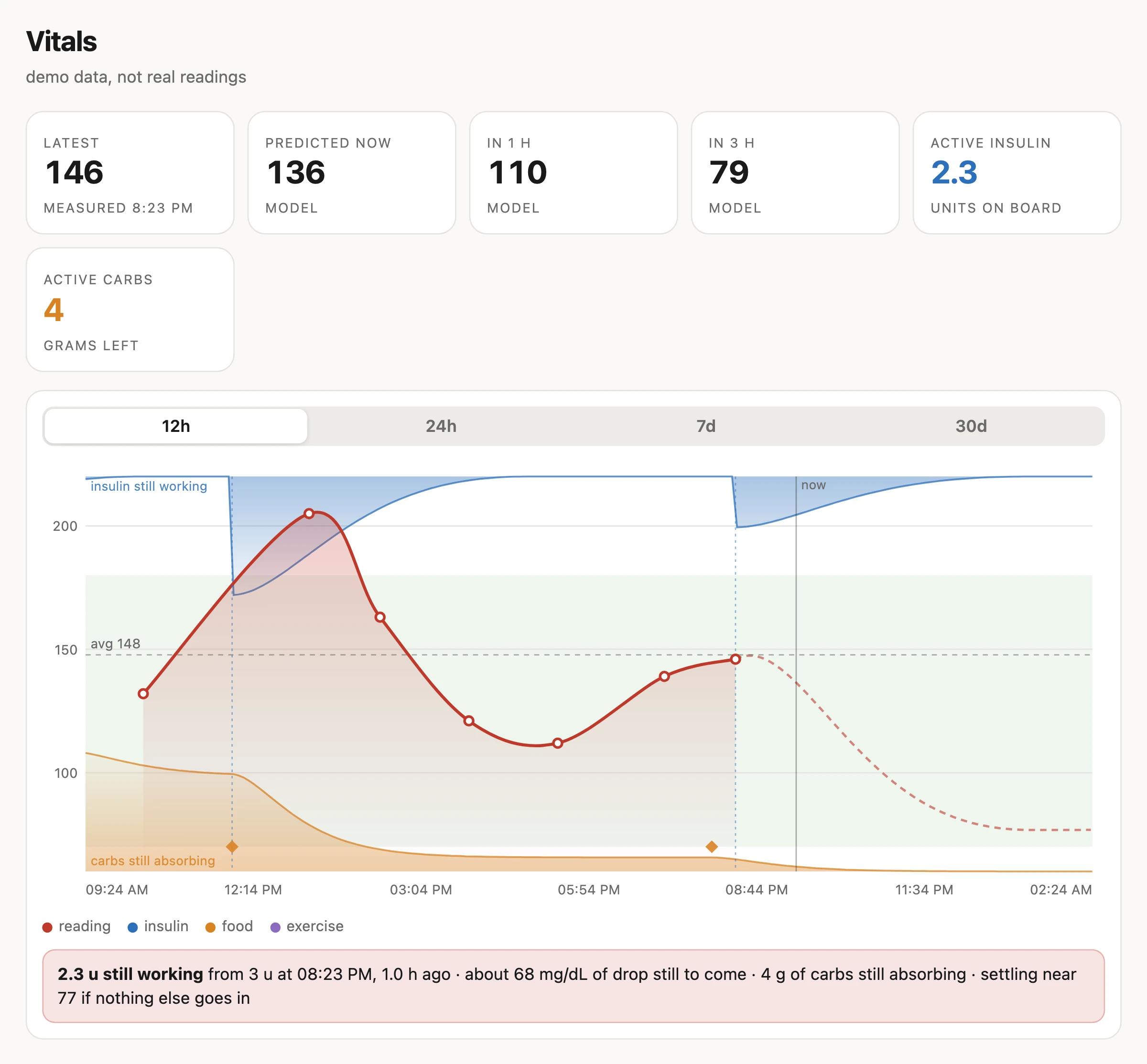 Health"Hey Siri, Sugar Log Insulin": The Diabetes App I Built in a DayTen taps in an app built for everyone, or two sentences to my wrist. How I built Kilazi Vitals, what its forecast gets wrong, and why a CGM is next.Read it 2026
 MeditationMeditation for Character Building: Reps, Not RepairsRepair has a ceiling, and the ceiling is "fine". So my meditation app skips the symptom menu and asks who you're becoming.Read it 2026
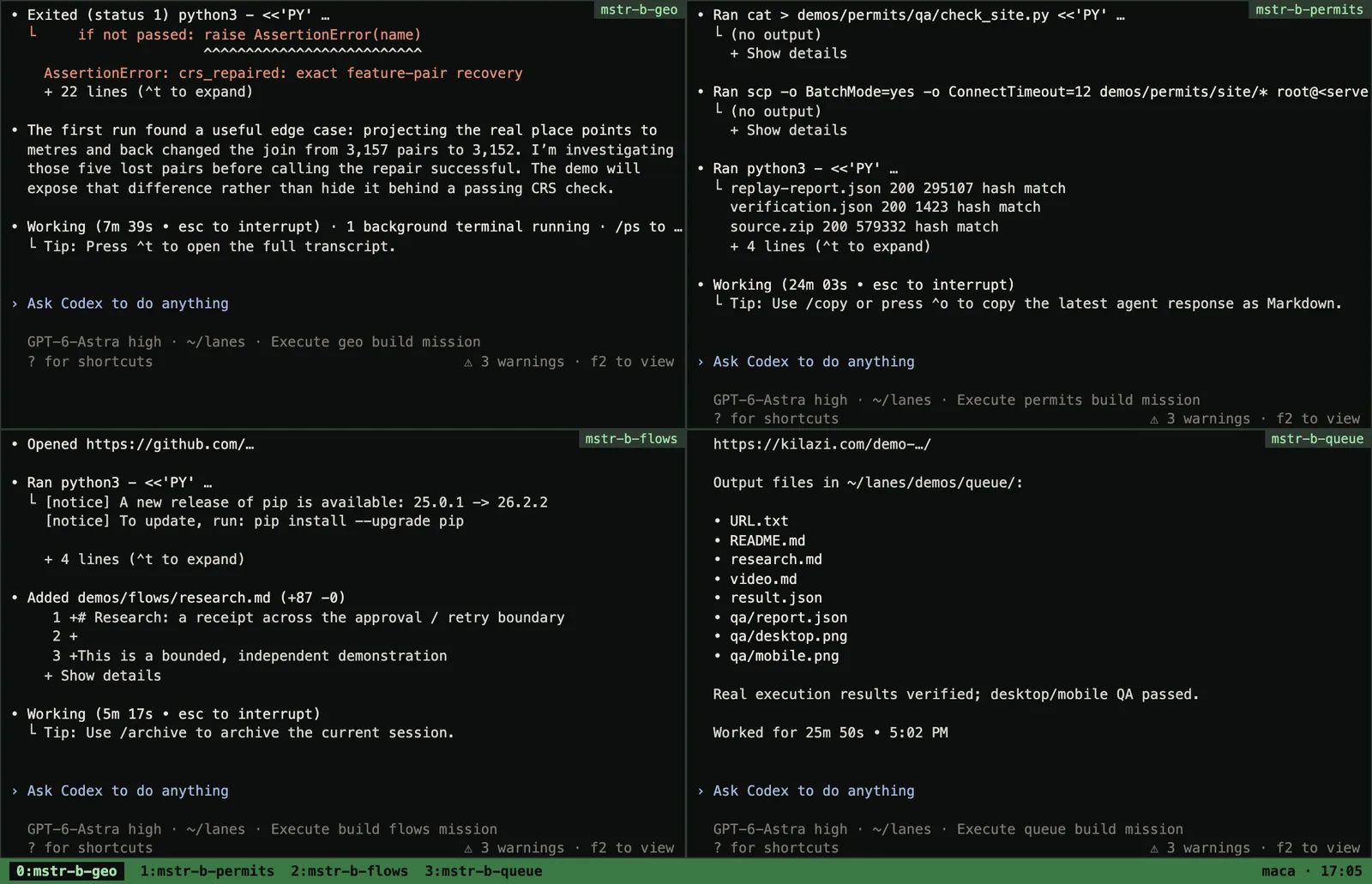 AI agentsReplit Bragged About 200 Minutes. My AI Agents Worked All Night15 lanes, 11 hours, 10,785 tool calls and one shell loop that keeps telling them they're not done.Read it 2026