Okay, look. Open almost any meditation app and the first screen is a menu of what's wrong with you. Can't sleep. Anxious. Stressed. Pick your symptom, press play, return to neutral.
Then something else breaks, and you're back at the menu.
I built Neuro Atelier (atelier: a workshop) on the opposite bet. It never asks what's wrong with you. It asks who you're becoming, then writes you ten minutes of practice at being that person.
One line runs through all of it, from the landing page down to the AI's own instructions: you are not a problem to be solved.
Why treat meditation as character building, not repair?
Because repair has a ceiling, and the ceiling is "fine".
Repair starts at "what hurts" and works back to baseline. Useful, when something hurts. But it quietly trains you to see yourself as a patient: a list of faults, each with its own session.
I'd rather be a project. Same raw material, opposite direction: "less anxious before meetings" turns into "the guy who walks in and holds the room".
Patient mode
- Starts with the symptom
- Goal: back to neutral
- Every session fixes a fault
- Success: the problem goes quiet
Project mode
- Starts with who you're becoming
- Goal: a trait you keep
- Every session is one rep
- Success: it starts to feel like you
Confession: my library still has a "Sleep" shelf and an "Anxiety & calm" shelf. People search for sleep. The shop window speaks patient. Everything behind it speaks project.
How does Neuro Atelier turn a problem into a direction?
It hears the problem once, then turns you around. Two AIs do the work: a guide that talks to you, and a composer that writes the script. The guide gets three turns at most and blunt orders: acknowledge the difficulty, then ask "and if that were not running the show, who would you be instead?"
From an example on the landing page: someone writes "i wake at 3am and my brain opens a meeting nobody called." A repair app hands them a sleep track. The atelier asks who they'd want to be at 3am, and behind the scenes the composer gets this brief:
You are becoming someone who can meet a 3am wake-up with steadiness, self-respect, and a simple next step.
It also gets a warning: don't frame this person as broken. Same 3am. Different person in the bed.
The guide is also told to go concrete: "what would that actually look like on a Tuesday?" beats "what does growth mean to you?" That's close kin to one of the best-tested tricks in goal research, the if-then plan. A meta-analysis of 94 tests found that tying a goal to a specific moment ("when the 3am meeting starts, I...") gives a medium-to-large boost in actually reaching it.
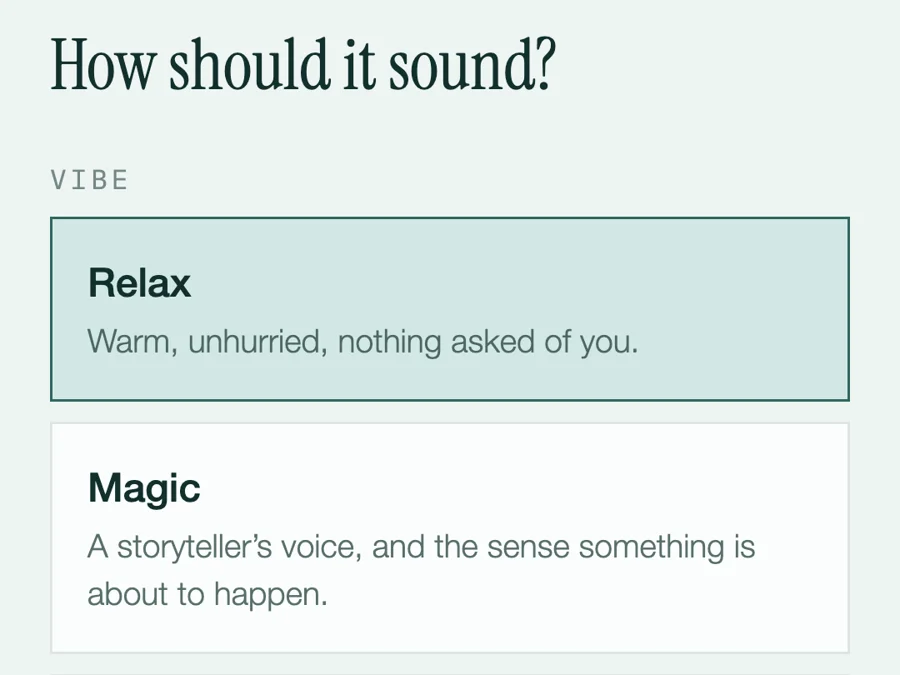
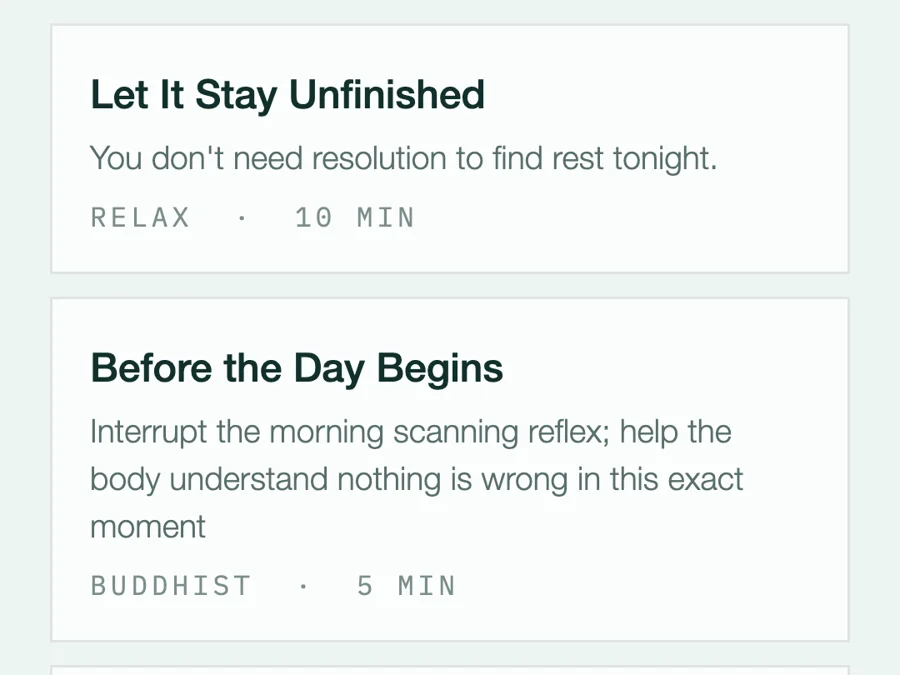
Can you rehearse a character trait like a skill?
Partly, and slowly. Hence the reps.
The cleanest evidence that rehearsal rewires something: a 1995 piano study. One five-finger exercise, two hours a day for five days, and the motor map for those fingers grew. A second group only imagined playing. Their maps changed in a similar way. Your brain takes rehearsal seriously.
Now the cold shower. What its authors called the largest and most rigorously controlled study of its kind scanned 218 beginners, split between eight weeks of mindfulness training, an active control course and a waitlist. The mindfulness group showed no structural brain change versus either control. The authors suspect it takes much longer, or more focused practice. Goleman and Davidson draw the same line in Altered Traits: a session buys you a pleasant state; a lasting trait takes time and the right kind of practice.
So, no ten-minute personality transplant. Good. It's built like a gym, not an ER.
It's also why the pieces are mostly silence: ten minutes, 14 spoken lines, and the rest is you, alone with the instruction. Read a transcript and it's almost boring. "Notice the weight of the body where it meets the floor, and rest." "Allow yourself to claim space, with calm confidence." The words point. The silence is where you do the rep.
What is a path, and why not a playlist?
A path is a group of your meditations aimed at the same trait. The rule I gave the AI that sorts them: "Sleep" is a topic; "the person who can put the day down" is a path.
Every meditation you make lands on a path, so your library reads like a character sheet, not a pharmacy shelf. Two pieces that sound different but practise the same stance get merged. Two calm pieces aimed in different directions stay apart.
Mine are not subtle. Unshakeable: I'm becoming "a man who stays grounded and inspired regardless of circumstances". Claiming Space: taking up room without asking permission. That one is public, ten minutes, and no human wrote the script:
If you've already worked out who you're becoming in Shift, my anonymous AI coach, you can import that file and the meditation starts from there. Between pieces there's free breathwork, like the 4-6 pattern my watch taps into my wrist, because a daily habit needs something free to repeat.
Repair gets you back to fine. Reps take you somewhere you haven't been yet.
Make one for yourself. Skip the menu. Start with who you're becoming.
Who are you becoming?
Say it plainly. Neuro Atelier writes and voices a meditation that rehearses it. Five minutes with a house voice is free.
Questions people ask
Does meditation change your personality?
Slowly, if at all, and not in eight weeks. A large controlled study of eight-week mindfulness training found no structural brain change compared with control groups. Researchers like Goleman and Davidson argue lasting traits come from long practice done well, not just more hours. Treat any single session as a rep, not a transformation.
What is the difference between a meditation state and a trait?
A state is how you feel during and right after a session: calmer, clearer, softer. A trait is what is still there on an ordinary day without the session. Most apps sell the state. Building character means repeating the same direction until the state stops needing the app.
What is identity-based meditation?
It starts from who you want to become instead of what you want to get rid of. You describe the person, tie it to a real situation, and each session rehearses that person handling it. Neuro Atelier writes its briefs that way: 'you are becoming someone who...' rather than 'fix my anxiety'.
Is Neuro Atelier free?
It is free to start, with no subscription. A five-minute piece with a house voice costs nothing, and the handcrafted breathwork is free and unlimited. Longer pieces and studio voices use credits, because each one is written and voiced for one person.
Can an AI-written meditation be any good?
It depends on what the AI is told to aim at. Neuro Atelier's composer gets a direction, a situation and a list of things not to say, then most of the runtime is measured silence. The words are simple on purpose; the practice happens in the gaps.

Max Sergeev. Max builds AI agents and the systems around them: long-term memory, voice, overnight rigs, and the boring guards that make them safe to leave alone. He runs kilazi labs from Buenos Aires. kilazi.com
Sources
- Pascual-Leone et al. (1995). Modulation of muscle responses evoked by TMS during the acquisition of new fine motor skills. Journal of Neurophysiology
- Bernardi et al. (2013). Mental practice promotes motor anticipation: evidence from skilled music performance. Frontiers in Human Neuroscience
- Kral et al. (2022). Absence of structural brain changes from mindfulness-based stress reduction. Science Advances
- Gollwitzer & Sheeran (2006). Implementation intentions and goal achievement: a meta-analysis
- Mindful.org: Lasting Change Through Meditation? (review of Altered Traits)
- Penguin Random House: Altered Traits by Daniel Goleman and Richard J. Davidson
Read next
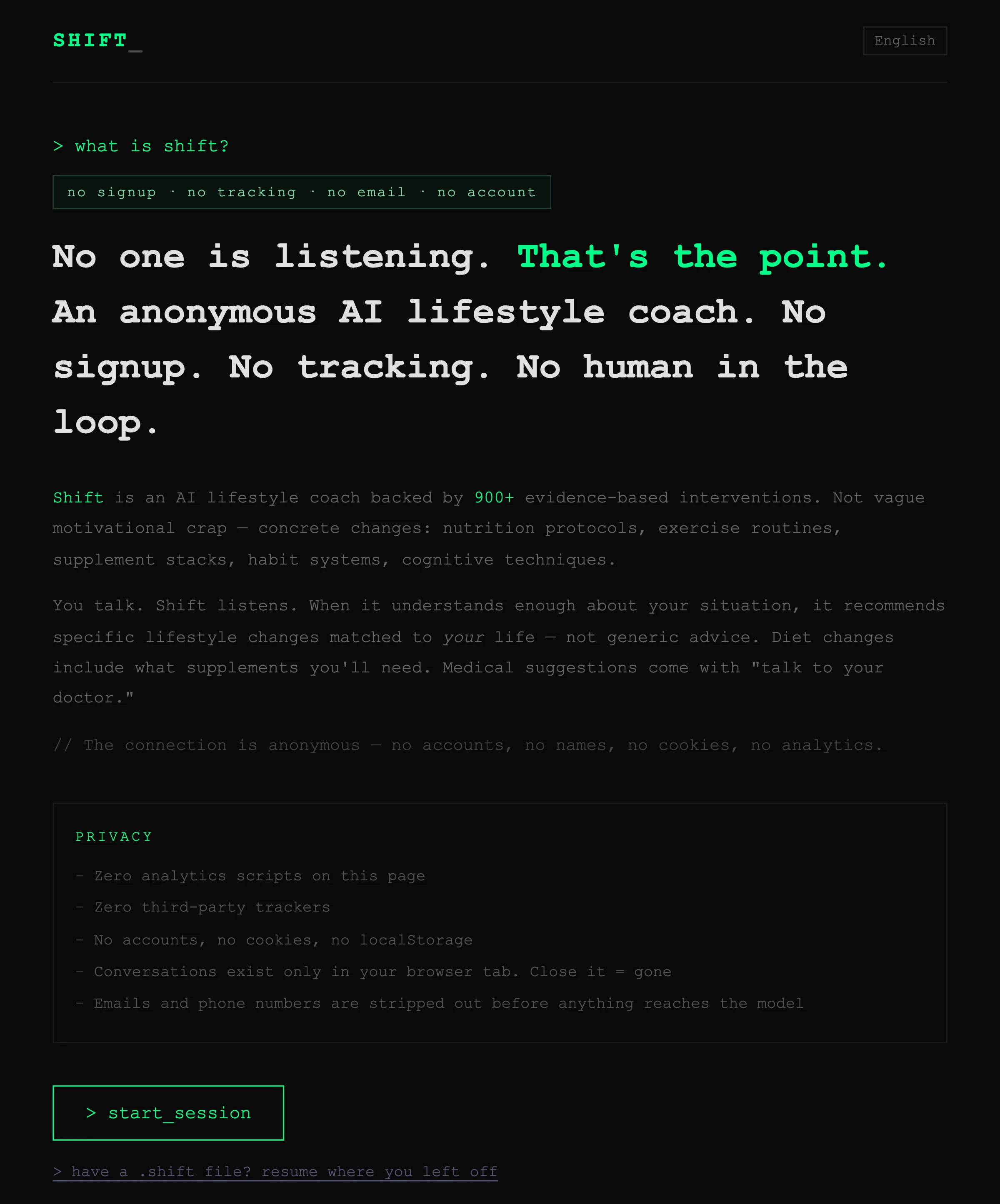 ProductsShift: The Anonymous AI Coach That Forgets You on PurposeI built a coach where nobody is listening, and the only memory of you is a file in your pocket.Read it 2026
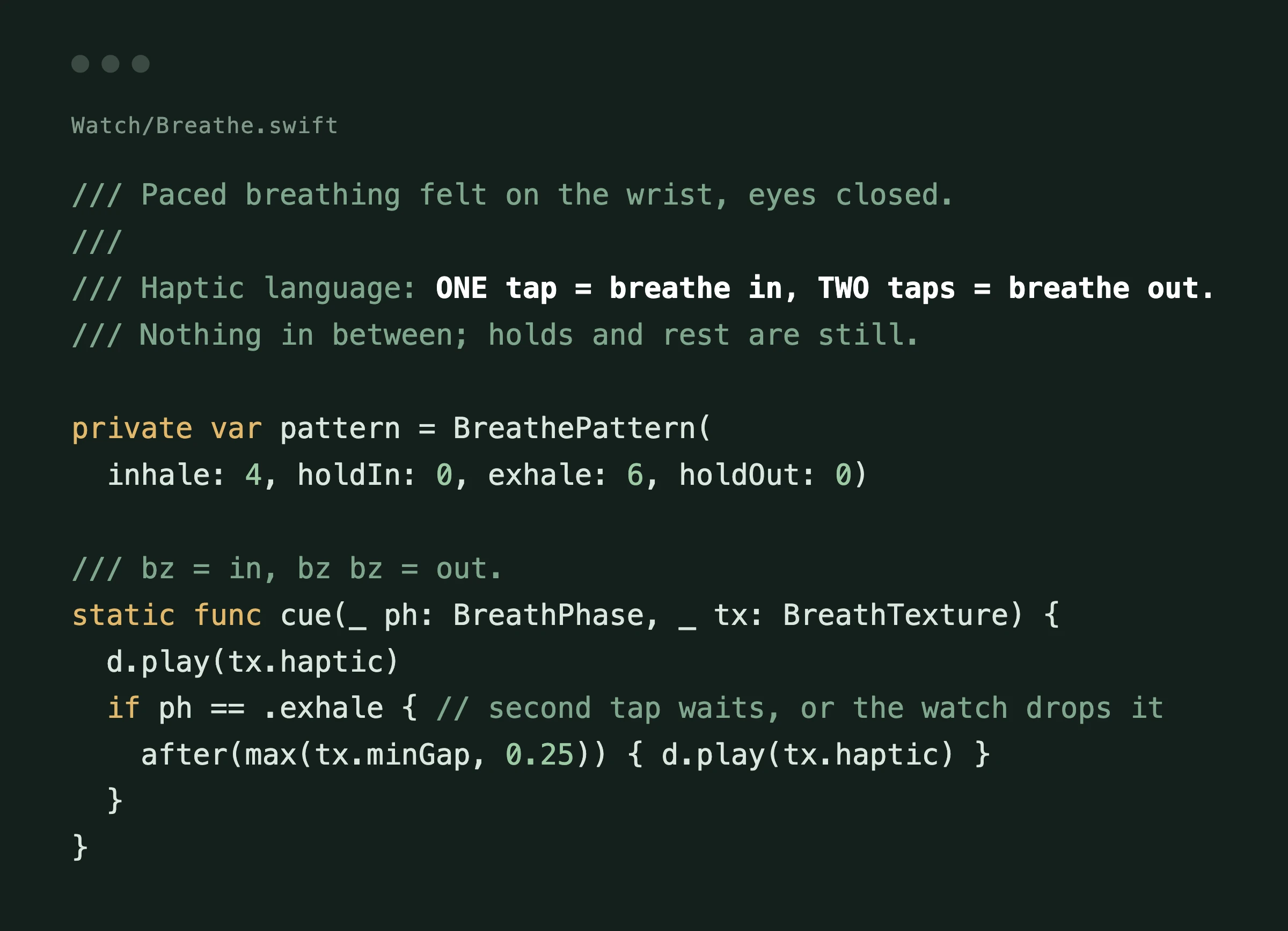 Health4-6 Breathing: I Taught My Apple Watch to Tap It Into My WristFour in, six out: six breaths a minute, the pace your heart rhythm likes. One afternoon, four versions, and a wrist that now says bz, bz bz.Read it 2026
 AI agentsAI Agent Personality vs Rules: 20 Gates, Zero PostsI built the same AI marketer twice. The version made of rules turned into a clerk. The version made of character turned into a partner, and kept the two guardrails that matter.Read it 2026