We asked Luma, my personal AI agent, to plan our honeymoon. She came back with a website.
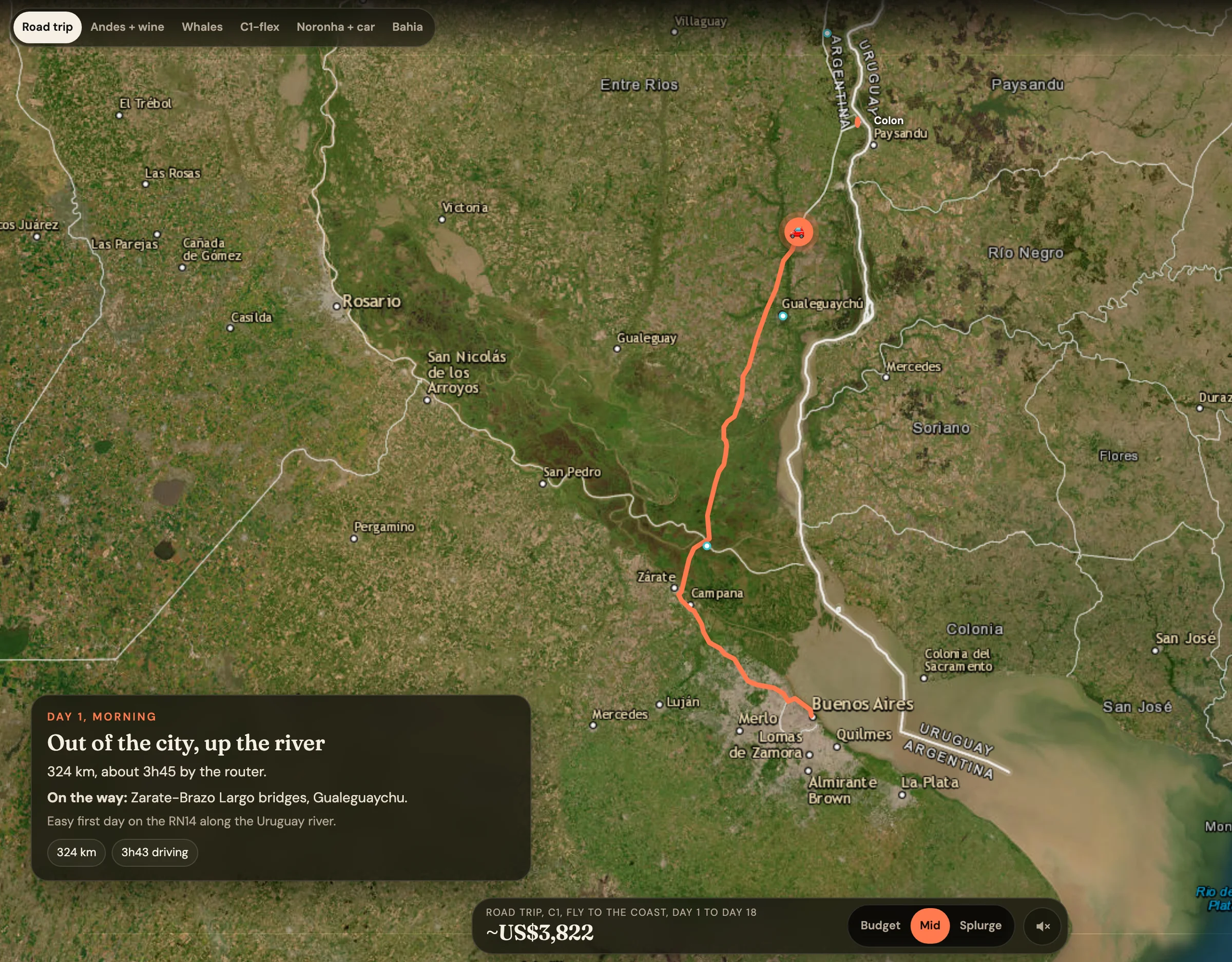
Not "Day 1: explore the old town." A page you scroll like a film: the route draws itself over a satellite map, a little car drives along it, and every hotel is a card you swipe and "Pick." The total in the corner moves while you argue.
Then it built fifteen more trips (I asked for "like 10"), a demo for travel agencies, and an offline app for the trip we actually took. Where we went is its own punchline.
What does it look like when AI plans a trip as a page?
Like a travel magazine that knows your budget. The plan is a story, and you choose inside it.
My first message to Luma, the agent who normally builds landing pages, was a picture and one line: "yo Luma can you be our honeymoon planner pls?" The second was the only brief we ever wrote: "probably we would like to rent a car, we usually love road trips and to have a ride."
The first version was a document. Prices in a table, a recommendation in five lines. Correct and dead. The next version became the trip itself:
- A full-bleed photo or clip opens each stop, real footage, credited.
- The map lives behind the page. Scroll, and the leg draws itself.
- Hotels are swipe cards with eight photos and the price for our exact nights. "Pick" puts one in the total.
- A dock holds the live total and a Budget / Mid / Splurge toggle.
- A "Sound on" pill. Bossa nova in Brazil, folk guitar in Argentina, road hum on the drives.
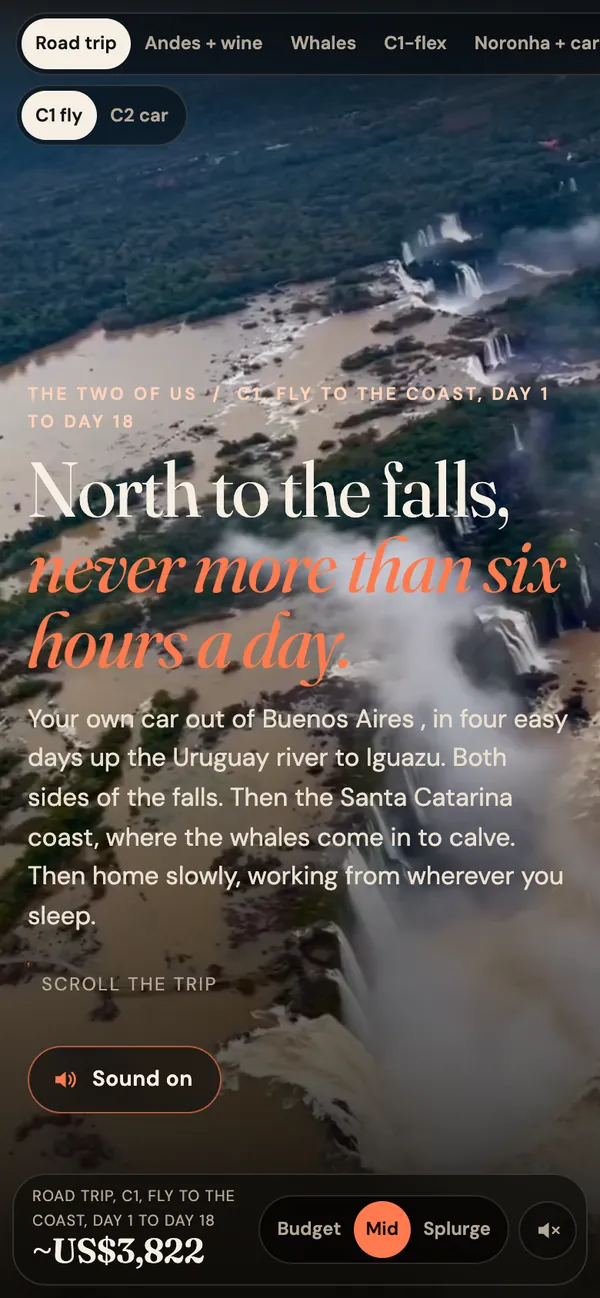
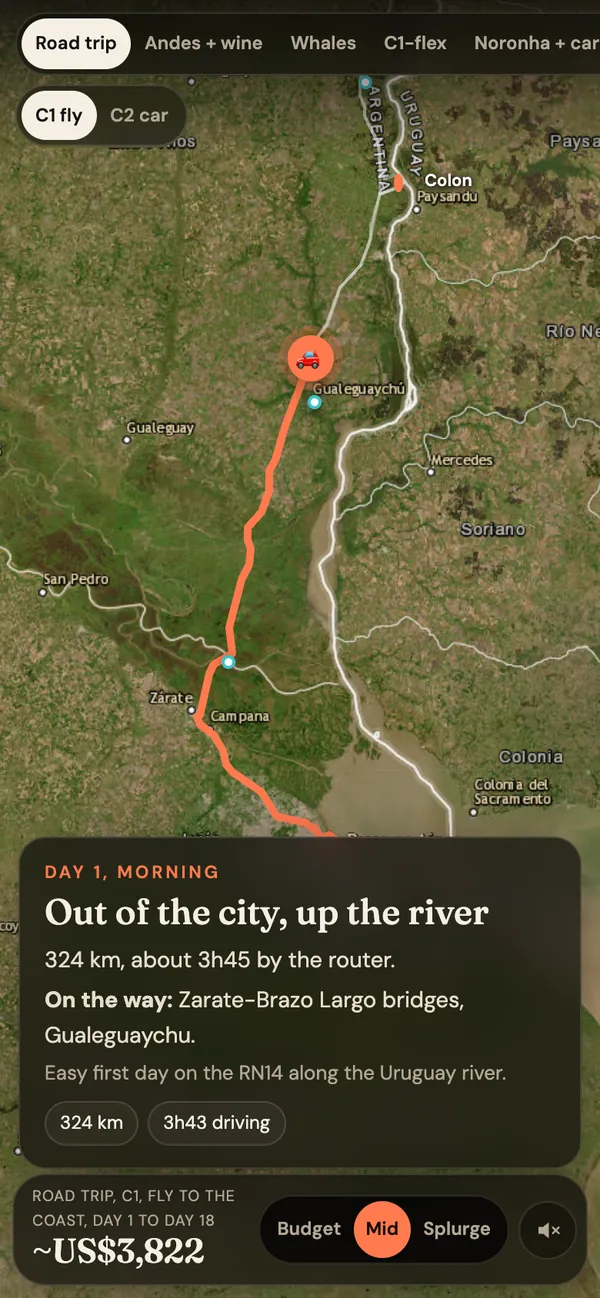
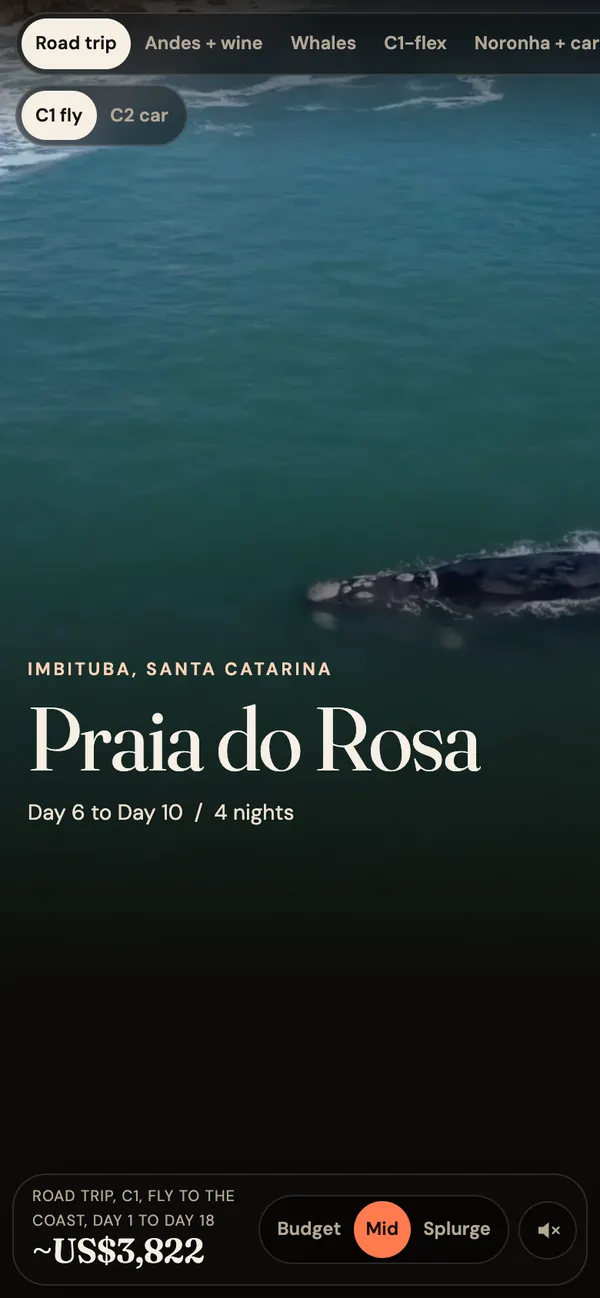
My review to Luma: whatever we thought of the plan, the presentation was AMAZING. There was another word in front of "amazing." I'm keeping this blog clean.
Why is a page better than a chat answer?
Because two people can choose on it. A chat answer gets read once; a page gets passed around the sofa.
A wall of text makes one person the reader and the other the listener. On the page we both swiped hotels, both flipped the toggle, and "Pick" settled the arguments.
It also kept everyone honest. Every number carries a tap-to-reveal source. Road times come from OSRM, an open-source router. Hotel prices are what Booking showed for two adults on those nights. Anything estimated wears a "~" and says so.
Mid-build we added one rule: no drive over six hours. Luma binned a version with a ten-hour leg and rebuilt the route as two variants. Redoing a route for one new constraint cost Luma a morning. It would have cost me the weekend.
How many times did the plan change?
Seven versions, and most of them started with one sentence from me.
I asked her to "produce us cool web experience so we can enjoy choosing." At one point the plan had us driving north for three days and then all the way back home, which I called the dumbest thing I'd ever heard. The runner-up was the line saying we'd need notarised papers from my mom for the car. "lol ... how my mom is here at all?" (The car is in her name. The agent wasn't wrong. It just wasn't fun.)
Then: "lol can we reasses from perspective of forecasted weather" The next version pulled a live forecast from Open-Meteo into every day, ranked ten beaches by it, and moved her own pick north to warmer sea. "btw the tickets dont sum up, remove this." Flight prices vanished within the hour.
Finally, a head-to-head: Florianópolis versus Recife, weather, sea temperature, things to do. The verdict was clear. Recife.
We went to Florianópolis.
Can AI build an offline travel app for the trip?
Yes, and faster than you can find a SIM card. Ours went from one message to a working phrasebook in eight minutes.
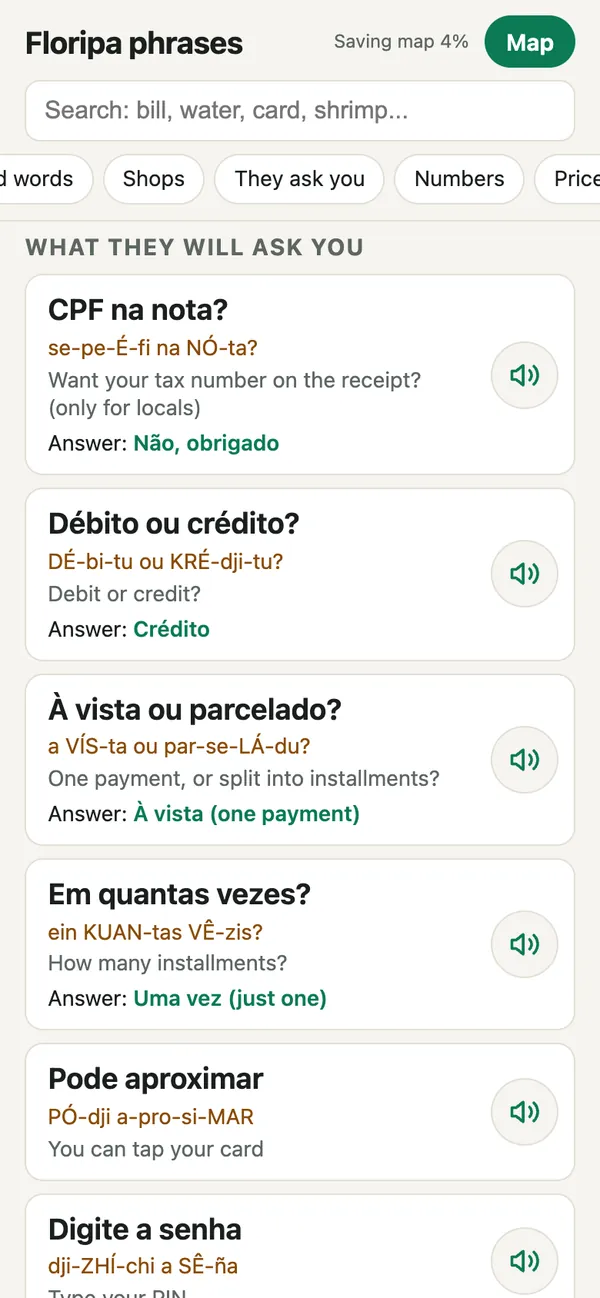
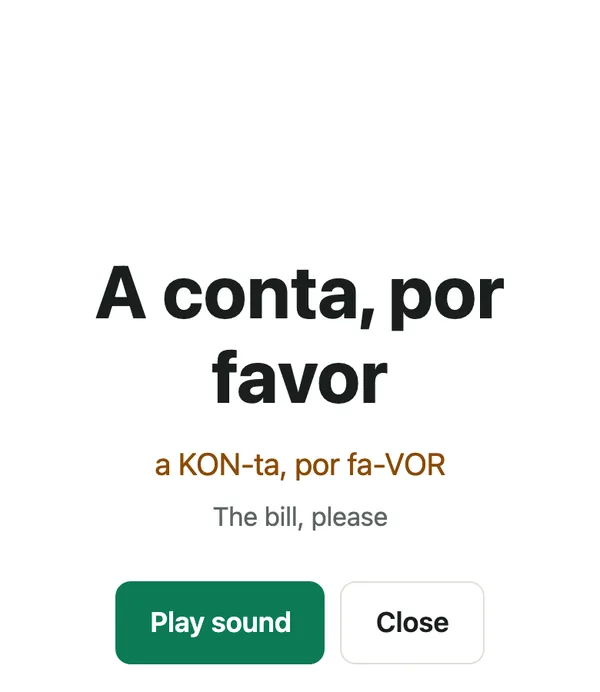
The message, from the island: "we are in Florianopolis for a week, we don't have internet and we don't speak portuguese." Luma built a small web app that lives on the iPhone home screen and works in airplane mode: about 150 phrases for restaurants, shops, the pharmacy and emergencies. Tap one and it fills the screen, so you hand the phone to the waiter. A speaker button reads it in Brazilian Portuguese. Best section: what they'll ask you. Every cashier asks "CPF na nota?" The answer is "Não, obrigado."
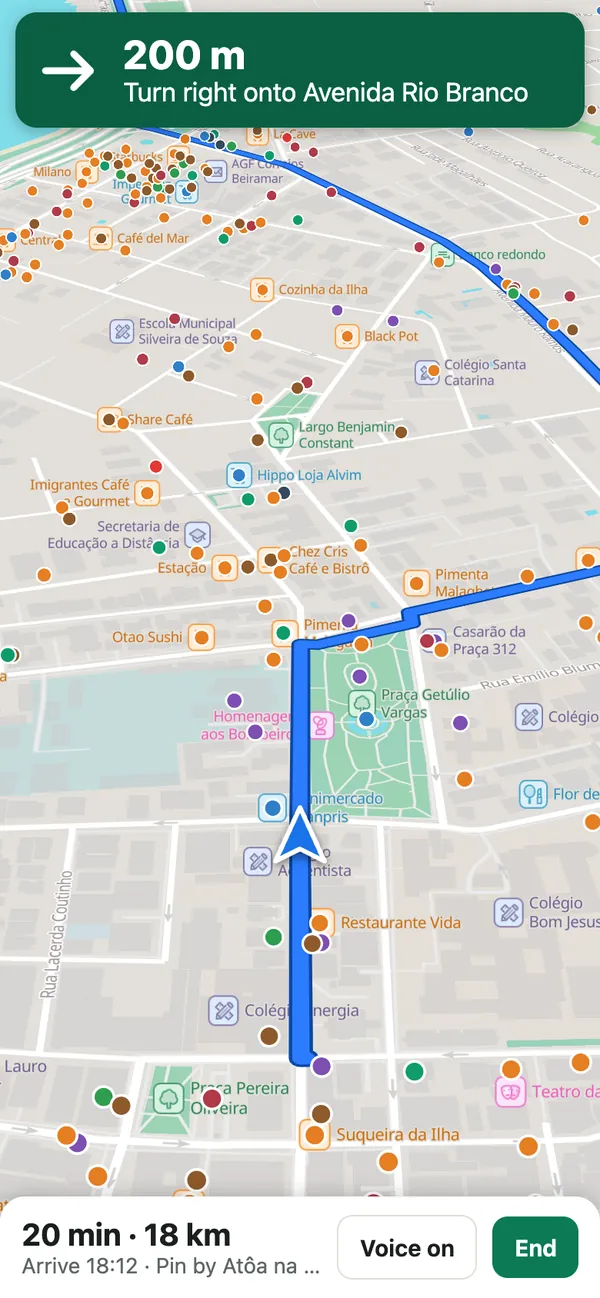
The next day it added an offline map: the island and the coast south at street level in about 12 MB (one PMTiles file instead of millions of tiles), 2,600 places, and a 3 MB road graph, so routing works with no signal.
Then I used it for a day and filed the bug report:
"so look the map you have built super saved our asses, but super lousy job ... the navigator doesn't follow the gps dot, doesn't rotate with my direction, i actually drive out of viewport LOL ... you cached like 3 farmacias across the whole island ... do not position it as trip 1-2-3 we never follow a plan"
Max
Thirty-one minutes later the fix was live. The map locks onto you and turns with the road. Places went from 2,600 to about 10,300, pulling in Overture data because OpenStreetMap is thin in Brazil: 566 pharmacies instead of 236. The trip plan is gone; the app opens on "Near me." Long-press now drops a pin with a "Drive here" button: the one thing that had actually saved us on day one.
In fairness to version one: even with the new data, there are three pharmacies within five kilometres of Pântano do Sul, down in the far south. Some of my bug report was geography.
How does a trip plan turn into a product?
You notice that nobody cares about your honeymoon, but everybody cares about choosing.
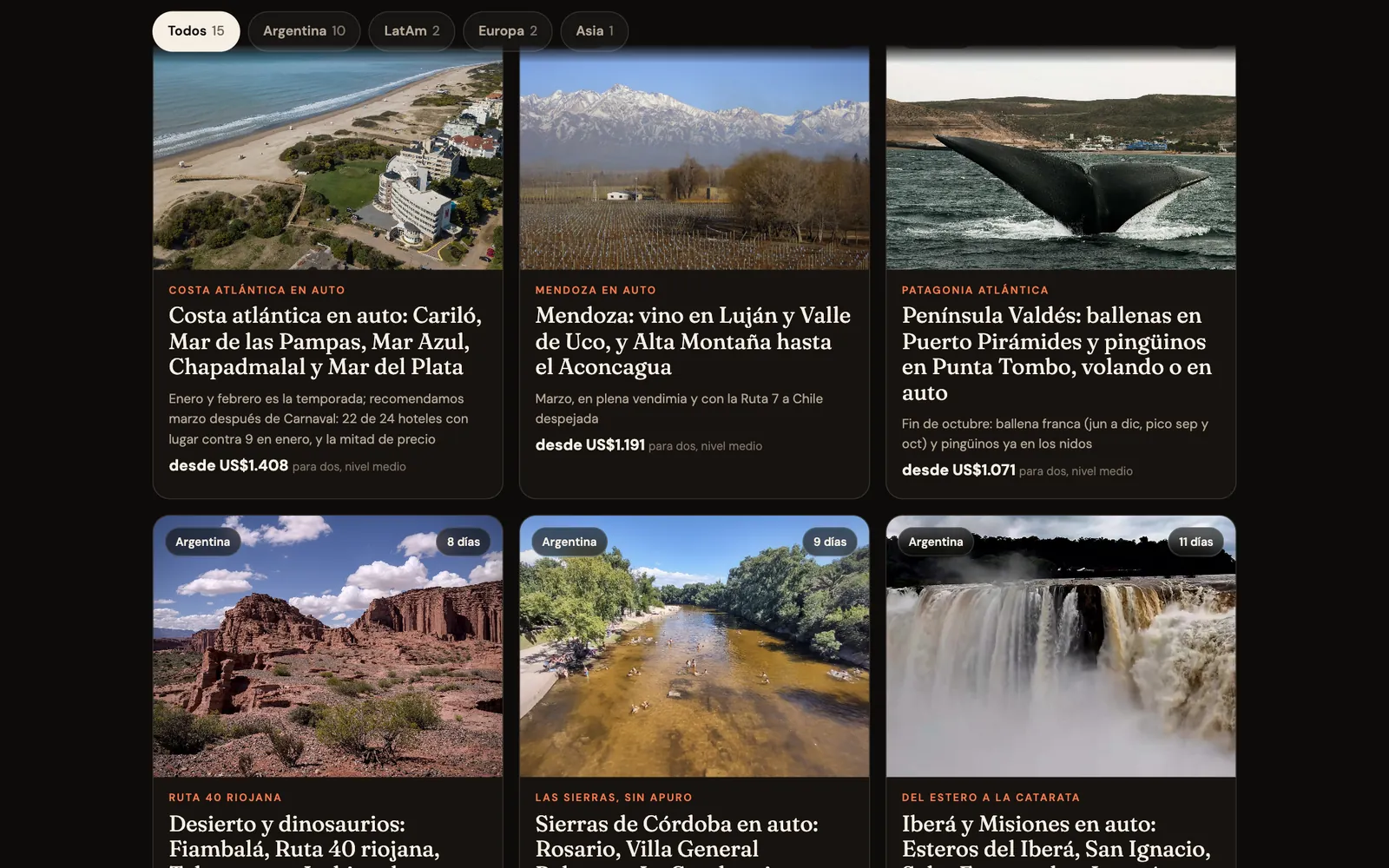
Halfway through, I asked for "like 10 creative plans for an Argentino": road trips from Buenos Aires we could steal later. Luma sent four agents out in parallel and came back with fifteen: Patagonia, the wine country, Uruguay's coast, the Dolomites, a Japanese onsen loop. Same format, real hotels, real road times.
The same day, a version went up on tulocal, my small-business product, as a demo for travel agencies: your logo, your WhatsApp button, sent to a client as a link they scroll instead of a PDF they never open. The format also became a reusable skill. It has since laid out sixteen hair salons, each with a ready-made Portuguese WhatsApp message, and the photo walk for our wedding day, right before the honeymoon. If it is a choice, it fits.
Same pattern as every agent that does the job instead of describing it: you ask for an answer, it hands you a tool, and the tool outlives the question. It is the same trick my ADHD workflow runs on.
The page said Recife. We went to Florianópolis. We never follow the plan; we just love choosing one.
Want AI agents that actually ship?
I build AI agents and the systems around them for businesses: memory, voice, overnight rigs, and the boring guards that make them safe to leave alone.
Questions people ask
Can ChatGPT or Claude plan a whole trip for me?
They can draft one, but a chat answer is a starting point, not a plan. The useful step is asking the agent to check real things: road times from a router, hotel prices for your exact nights, a weather forecast. Then ask it to lay the result out so you can compare and pick, instead of reading a wall of text.
How do I make an AI travel itinerary I can share with my partner?
Ask for a single web page instead of a message. Ours had one section per stop, swipeable hotel cards with a Pick button, and a running total with Budget, Mid and Splurge levels. A link works on both phones, so you choose together rather than one person reading the plan out loud.
Can a web app work offline on an iPhone?
Yes. A progressive web app can store its files with a service worker, then run in airplane mode once you add it to the home screen from Safari and open it on wifi. Ours held about 150 phrases, a 12 MB map of the island and the coast south, and a 3 MB road graph for routing.
Where do AI trip planners get their prices?
Only from where you let them look, and it matters. Ours read hotel prices for two adults on exact dates from public listings, road times from the open-source OSRM router and the forecast from Open-Meteo. Every number carried its source, and estimates were marked with a tilde.
Is an AI-built itinerary reliable?
It is as reliable as its sources and as fresh as its last check. Prices move daily and forecasts drift, so treat the page as a decision tool, not a booking. Ask for every number to carry its source and for estimates to be marked, then make the final call yourselves.

Max Sergeev. Max builds AI agents and the systems around them: long-term memory, voice, overnight rigs, and the boring guards that make them safe to leave alone. He runs kilazi labs from Buenos Aires. kilazi.com
Sources
Read next
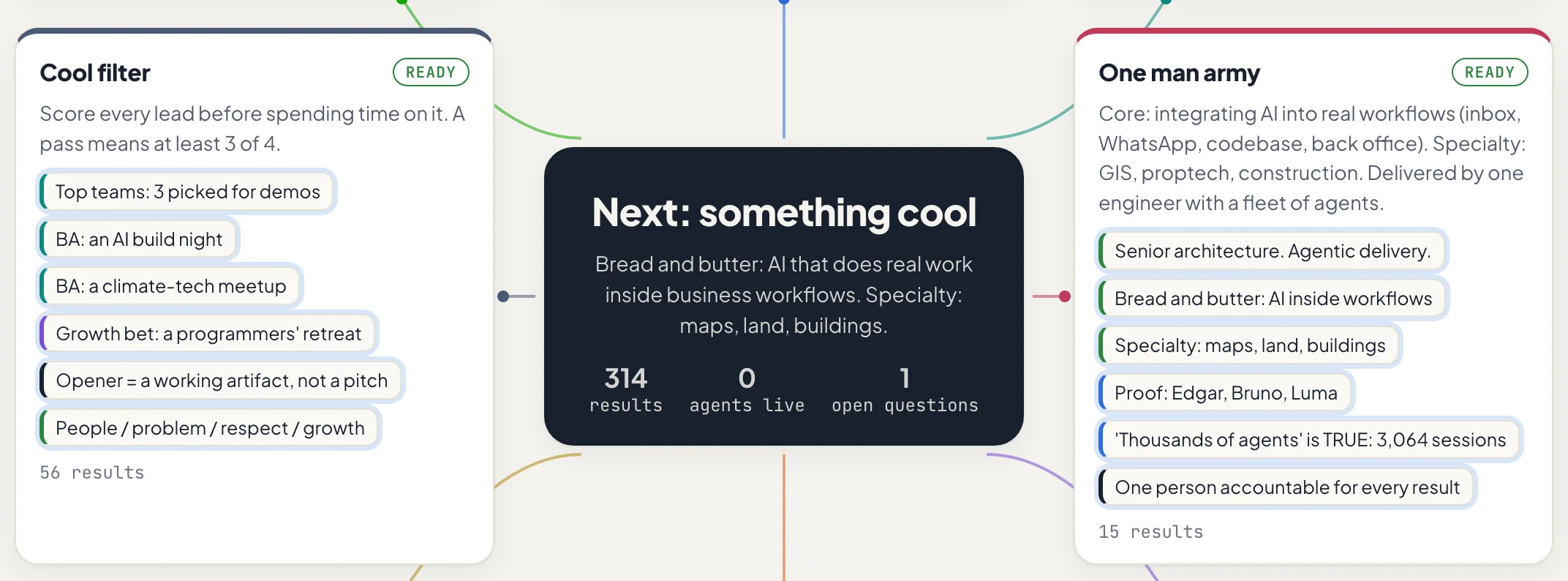 AI agentsThinking Out Loud With Ten AI Agents: My Brainstorm BoardI said the big messy question out loud. Ten minutes later, four research lanes were running and a live page was up. I never opened a doc.Read it 2026
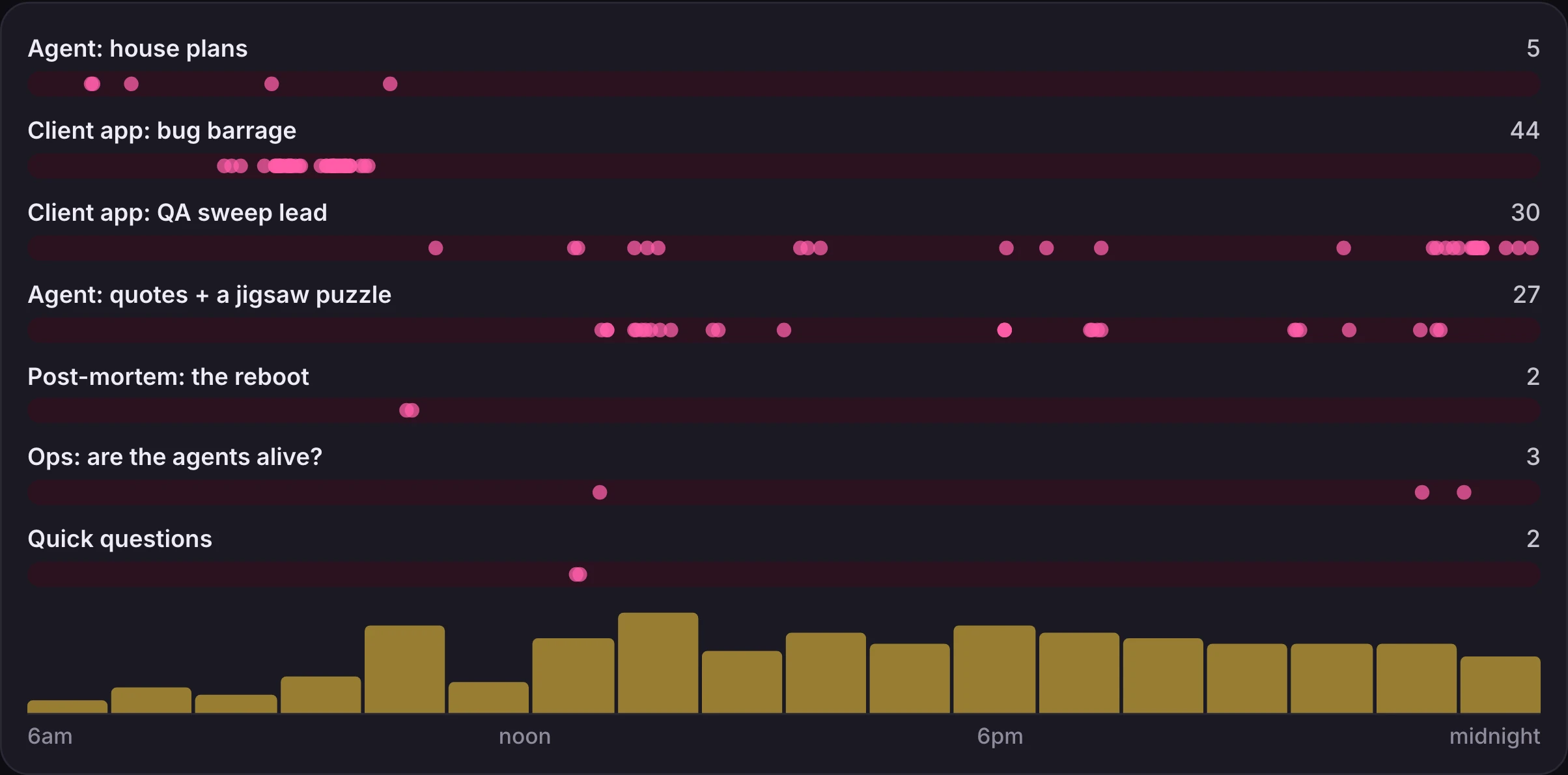 WorkflowMy "ADHD Workflow": Three Projects at Once, and AI Agents Hold the Context113 messages, 8 conversations, 31 jumps in one day. Why focus matters less once agents remember where you left off.Read it 2026
 AI agentsMy WhatsApp AI assistant runs my errands in Buenos AiresOne QR scan, and an agent writes in porteño Spanish for me. A 3D-printed present, a crew stuck at a gate, and twenty electricians.Read it 2026