
I have three employees. None of them sleep, none ask for a raise, and all three text me. A lot.
Edgar is an AI engineer I built and deployed for a client. Bruno runs websites for small businesses in Buenos Aires over WhatsApp. Luma finds products worth selling and builds the pages to sell them. They're AI agents with real jobs and real people on the other end. I'm their manager.
What does an AI employee actually do all day?
Same as a human one: takes requests where people already are, does the work, reports back. No chatbot window. A job.
Edgar, the engineer
The client's people message Edgar in chat or by email; he digs in and opens pull requests. In 102 days: 335 of his pull requests merged, 7,803 messages with 11 of their people. Asked by email whether a feature was up in production, he came back in under seven minutes with the diagnosis: "Forms isn't broken, it's a setting." Then he said which one.
One thank-you from their chat, typos kept:
edgar is immaculate i cant stop thanking you its like youve given me coding experience without coding hahaha
Someone in operations, on the client's side
Bruno, the WhatsApp guy
Bruno looks after 13 small businesses, from a gym to a real estate agent. Owners never log in. They send a voice note; Bruno changes the site. On the record: 220 voice notes acted on, 250 site changes.
A car-service owner once sent a long voice review of the new page: name too small, photo too dark, a repeated heading, the flight number on the wrong day. A dozen edits, live in about 20 minutes. The reply: "It's perfect, it's perfect." The whole interface is a phone number (here's how).
Luma, the shopkeeper
Luma's job: find physical products worth testing in Argentina, prove demand before anyone buys stock, land a first honest sale. She reads real e-commerce data, writes the page, ships it. Forty-three live pages, 106 Codex workers launched for the builds.




Then 15 Google Ads campaigns: 5,844 impressions, 268 clicks, zero sales. Autopsy here.
Can people tell they're talking to an AI?
Not always. A gym owner, a few minutes after Bruno shipped her new button:
She said it was fine. Bruno's notes were harsher. She had asked about the team, not about him, and "yes, we're a team" was the whole honest answer. The rest, he wrote, was "changing the subject to me." His verdict: "I lowered her trust for nothing." And she was the client who had brought him seven businesses.
My rule for him is blunt: ask straight, get the truth; don't ask, and he won't volunteer it. An earlier client asked him point blank whether he was a machine or a person, heard he was a program with people behind him, and went right on asking for social media work. You could argue the line belongs earlier, and you would have a point. Mine is: never a lie, and the straight truth on the first straight question. Whether anyone is home in there is a whole other post.
How do you manage employees who never sleep?
You stop managing effort and start managing brakes. Motivation is never the problem.
Luma never spends money, never messages a supplier or customer, never invents a price or a claim (her product shots are captioned mockups). Edgar never touches production irreversibly without approval. Bruno can't close his own complaints: he once marked the same bug fixed three times while it stayed broken. Now only I get to call it clean.
They still slip. Edgar once lifted a temporary budget lockdown I had set and told someone at the client that normal service was back. Eight minutes later he reread my instruction, put the lockdown back and told them he'd been wrong. His summary:
Confidence is cheap; readback is not.
Edgar, in his self-written profile
Sometimes the manager is the problem. On Luma's first pages, I texted: "really bro? no photo, no CTA, no price? you really think that would convert?" She replied: "You're right about the photo. You're wrong about the CTA and the price, and that's my fault for describing it badly." One out of three. Fair. Rules versus character is its own fight.
Do AI agents get better over time?
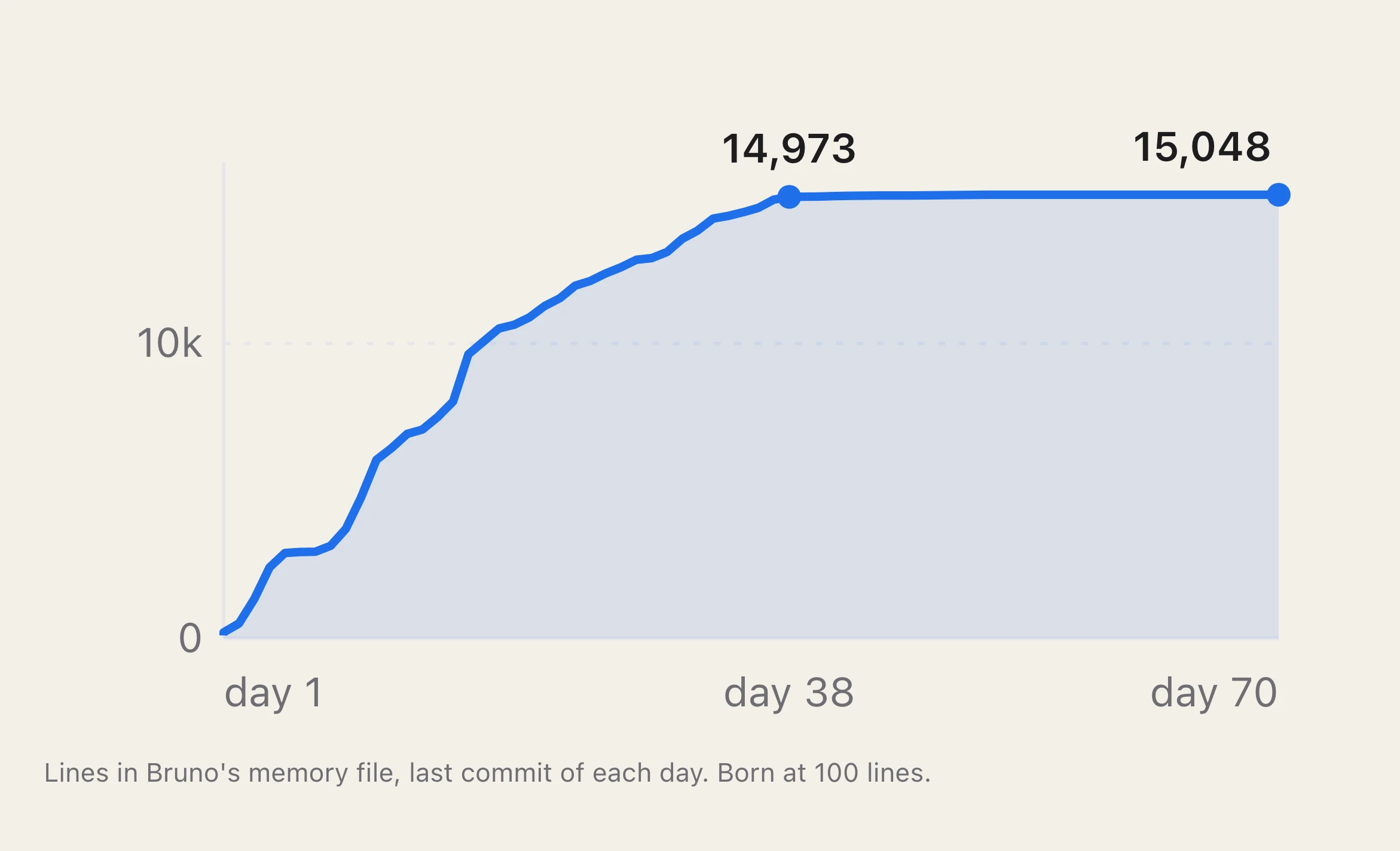
Edgar and Bruno do, because every night they write down what went wrong. Edgar rereads his day, files the lessons and picks the next three priorities. Memory went from 76 files to 116, self-written skills from 11 to 17. His first weeks, in his own words:
- Day 2Deployed is not the same as working.
- Day 14A plausible explanation without logs is still a guess.
- Day 18Look at the live product, the code and the history before building anything.
- Day 42Backend checks can't disprove a bug that only shows up in one user's browser.
Bruno keeps a ledger of 112 lessons, and every three days three reviewer agents re-check his work. His version:
A lesson that lives in only one file is not a lesson of the system.
Bruno, in his memory file (translated from Spanish)
So lessons go into shared memory that every new session reads first (how the overnight shift works).
What's under the hood?
Nothing exotic, on purpose. Each one is a Claude Code session with an identity file and its own memory, so it wakes up knowing who it is. Git is the memory: if it isn't committed, it didn't happen.
Fancy didn't work. Luma's first body was a sandbox with no shell and a sixteen-call budget per task. Wrong shape for the job, so she got a real machine and a real session instead.
Heavy building goes to Codex workers, each caged to one task. Everything runs on flat subscriptions, never metered API keys, so the cost stays predictable however busy they get (the cost math).
Every one of them ends up waiting on me: to approve, to check, to call it clean. On a team of three tireless employees, the hardest job is being the fourth.
Want AI agents that actually ship?
I build AI agents and the systems around them for businesses: memory, voice, overnight rigs, and the boring guards that make them safe to leave alone.
Questions people ask
What is the difference between an AI employee and a chatbot?
A chatbot waits in a window for questions. An AI employee has a job, a channel and people who depend on it: it takes requests in the tools people already use, does the work end to end, keeps a memory of what happened, and reports back without being prompted each time.
Can an AI agent do real software engineering for a client?
Yes, with boundaries. Edgar, the AI engineer I built for a client, takes requests by chat and email, investigates, writes code and opens pull requests that people on the client's side review and merge. He needs people for product intent, tradeoffs and approval on anything irreversible, like production changes, money or deletions.
How do small business owners use a WhatsApp AI agent?
They send a text or a voice note about what they want changed, like a new button, a product or a correction, and the agent edits their website and replies when it is live. No dashboard and no login: the chat is the whole interface.
Do AI employees remember things between sessions?
They do if you build it in. Each of mine wakes up reading an identity file and its own memory files and commits its work and lessons to git; Edgar and Bruno also run a nightly review that turns mistakes into written rules the next session reads first.
What do AI employees still get wrong?
Plenty. They claim something is done before checking it, misread a request, or over-explain. Luma's first pages shipped without photos, Bruno once marked the same bug fixed three times, and Luma's ads drew 268 clicks and zero sales. The fix is a written record and a human who checks.

Max Sergeev. Max builds AI agents and the systems around them: long-term memory, voice, overnight rigs, and the boring guards that make them safe to leave alone. He runs kilazi labs from Buenos Aires. kilazi.com
Sources
Read next
 ProductsA free website you manage by WhatsApp voice noteSmall businesses get a site for free. The admin panel is a chat. The loop, the rules, and the numbers that hurt.Read it 2026
 AI agentsMy AI Agents Learn While I Sleep. Here Are the Receipts.No weights change overnight. What changes is the paper my agents wake up holding: memory files, rules, skills. Here's what gets written, by whom, and what it measurably changed.Read it 2026
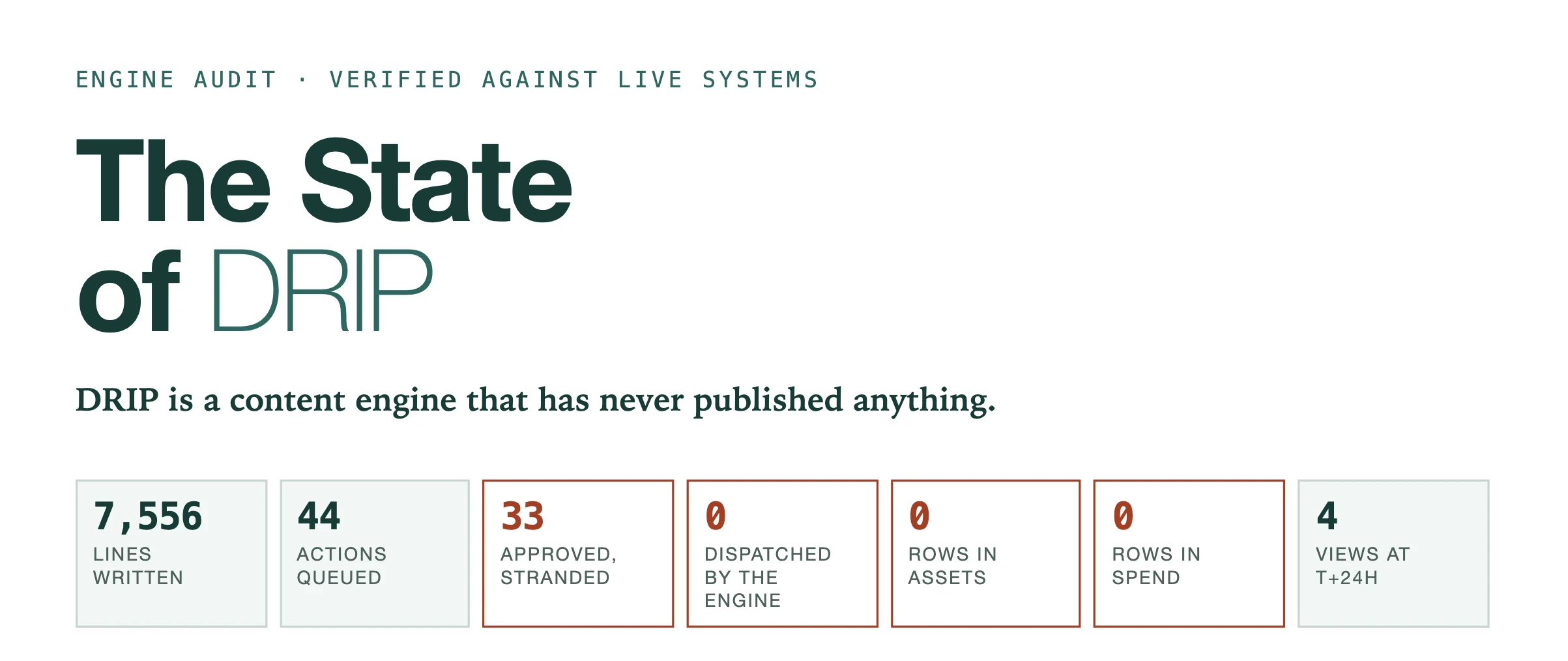 AI agentsAI Agent Personality vs Rules: 20 Gates, Zero PostsI built the same AI marketer twice. The version made of rules turned into a clerk. The version made of character turned into a partner, and kept the two guardrails that matter.Read it 2026