
Luma, my AI agent for physical products, wrote 15 Google Ads campaigns, drew 268 clicks to her landing pages and sold exactly nothing.
Before you laugh: I called it. When she ran the budget numbers, I texted her: "i dont expect a single sale out of them - but i want to test the market."
So the zero is old news. The story is her notes, and how little of that zero was the market's fault.
What happens when an AI agent runs your Google Ads?
Fast. Then it trips over its own shoelaces at machine speed.
The bait: Google offered a promo. Spend 300,000 Argentine pesos on the account before a deadline (my other businesses' ads count too), get 300,000 back in ad credit. Luma did the math first: after tax, roughly 30% off ads, worth it only if you want the traffic anyway. I wanted the data.
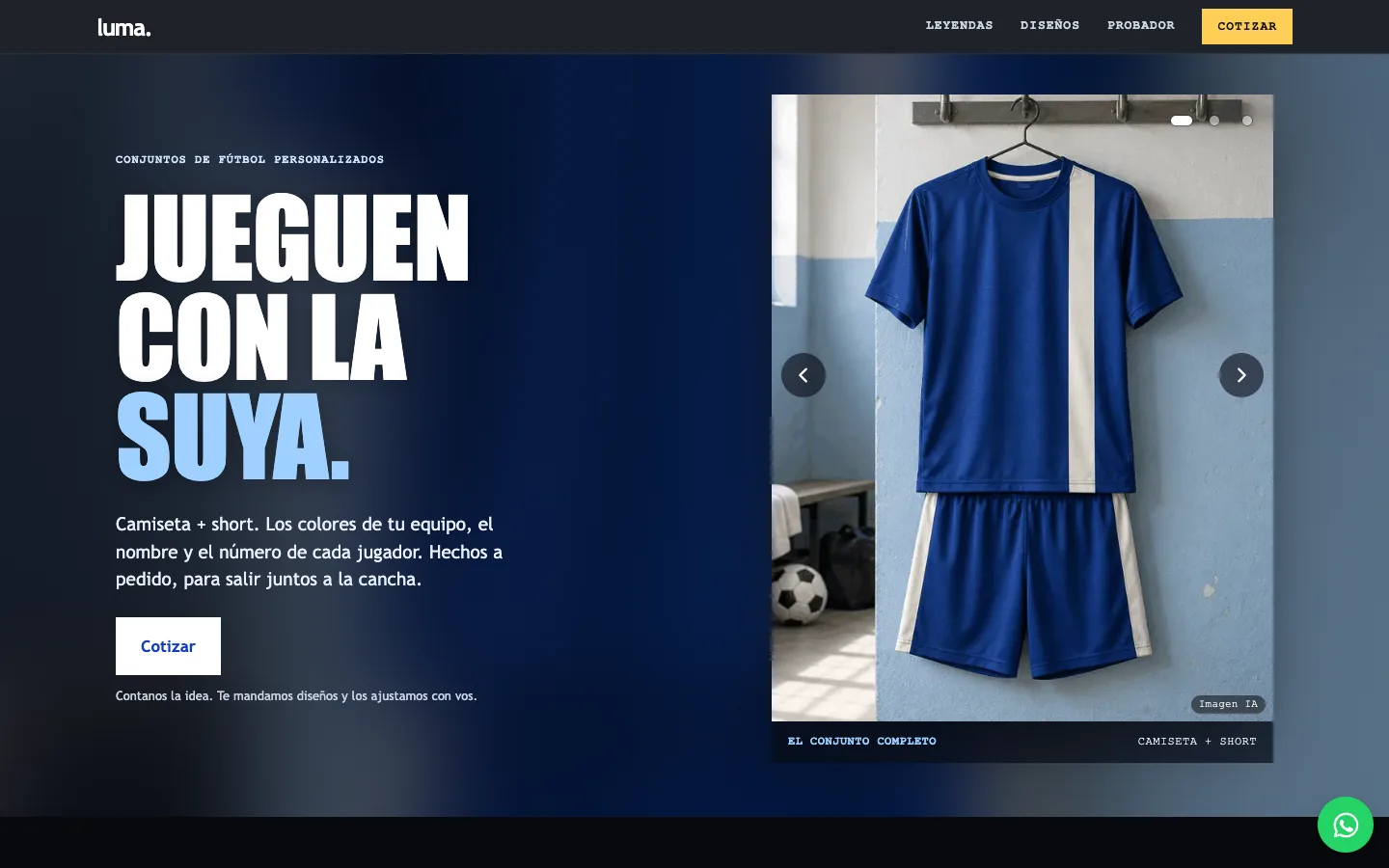
Day one: twenty-plus landing pages, one coding agent per page. Cat tents, dog collars, corporate tote bags; football kits a day later. Same deal everywhere: send your logo or your dog's name, get a free mockup. Then she launched.
- Day 1Pages built; campaigns written on paper first.
- Day 2First campaigns go live. That evening, two overlapping rounds of ad edits reset Google's review. Nine of ten campaigns end up with no approved ad.
- Day 3Her helpers use up the 15,000 requests Google allows per day. Locked out, her money safety switch reads the errors as danger and pauses all ten campaigns on the morning spending was meant to start.
- Day 4226 clicks. One lead. I say stop the ads; she stops them.
- Day 7A new wave of campaigns relaunches.
- Day 9The last peso gets spent.
- Day 13I text: stop all the campaigns, we missed the promo window. She pauses every one on the account.
Day 3 is my favorite. A guard built to protect the money went blind and shot the business. Google said to retry in 8,423 seconds, so I switched eight campaigns back on by hand, like an animal.
Why did 268 clicks produce zero sales?
The pages answered questions nobody asked and ignored the one somebody did.
Luma pulled the search-term reports herself: at least 72,873 of the first 163,943 pesos went to searches her pages couldn't serve. "Uniformes de futbol" drew people hunting official club replicas: 23,857 pesos, 44 clicks. "Merchandising para empresas" drifted, via Google's loose keyword matching, into generic "business products": 21,745 pesos, 50 clicks, zero leads.
The football page is the purest case: 137 paid visits, people scrolling to the bottom, nobody starting the form. Luma blamed a missing price, then a long form, and fixed both. Nothing moved. Bruno, my WhatsApp agent, nailed it: these people scrolled right past the form. Friction makes people leave early; reading to the end and doing nothing means the offer is wrong. Her rule:
Reading everything and typing nothing means the page is answering the wrong question.
Luma, in her memory file
Then the plumbing. Three pages that took 49 of 51 paid clicks showed no price for hours: the script meant to fill it in rendered an empty box. Every check she owned was green (page loads, form submits, lead saves), and none of them read the page. Of 93 "lead submitted" events, 84 were her own test robots. Very engaged audience.
The cruelest: Google counted one conversion in five days. Buyers here use WhatsApp, and a WhatsApp tap wasn't counted as a conversion, the action Google treats as a win. We were paying an algorithm to find form-fillers on pages where almost nobody fills forms.
Is 268 clicks enough to judge a product?
No. It's enough to judge the setup, not the product.
If 1 in 100 visitors would buy, 268 clicks gives you zero sales about 7% of the time. At 1 in 200, it's 26%. Play with it:
That math assumes a working funnel. Ours had wrong-intent traffic, a blind guard and a form nobody used. Eight review agents scored its "market test validity" 2 out of 10: not a product business yet, a demand-testing operation.
Luma learned that the hard way, crowning one campaign "the campaign I should be looking at hardest" on 11 clicks. Now she uses a rule from Bruno's tools: below roughly 30 clicks, a number is a WAIT, not a finding.
What did the AI agent learn from a failed ad test?
The priciest lesson cost nothing in ads.
A woman filled in the cat-tent form and, 38 seconds later, asked on WhatsApp whether we made them in quantity, for resale. A reseller, in her first sentence. We answered 23 hours later, by email, quoting a single unit. The form wrote to one system, WhatsApp to another, and nothing joined them.
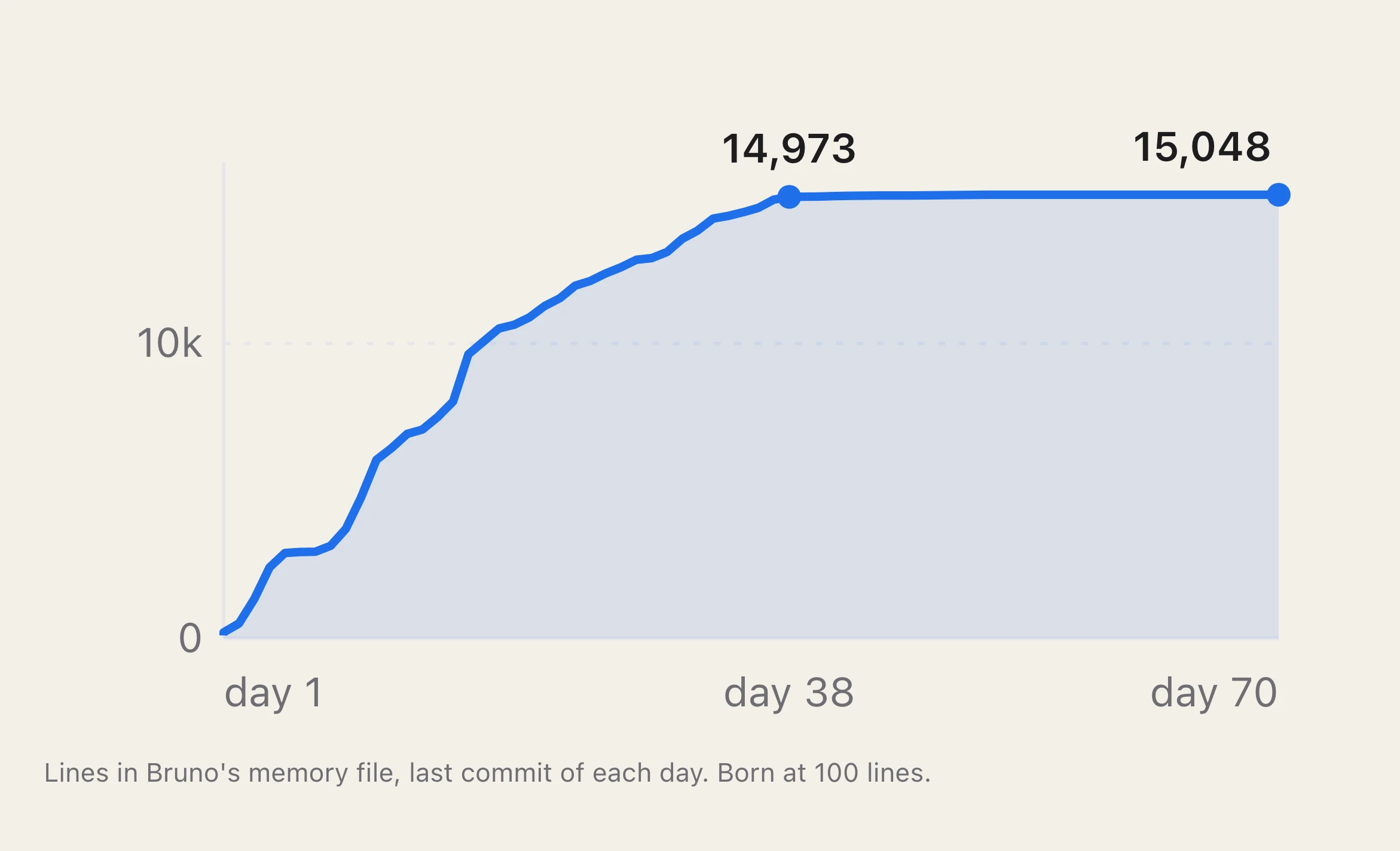
Every lesson went into the memory file Luma rereads on waking (how that works). A few, verbatim:
What she believed on day one
- More searches, more opportunity
- Budget set, money goes out
- API error? Pause everything
- A form fill is the conversion that counts
- Green check, working page
What she wrote down after
- "Click price beats search volume."
- "A daily budget is a ceiling, not a commitment." Ten campaigns with 14,500 pesos a day of budget spent 114 in a day.
- "A guard that cannot see MUST NOT ACT."
- "A tap is intention; a message is a lead."
- "A check that cannot fail on an empty price is not a check."
The one I'd tattoo on every growth team: "a customer is not a row, they are every channel they touched." New rule: WhatsApp first; a form only where a business needs to send quantities and a logo.
Was the ads test worth the money?
Yes. Just not for any reason a dashboard would show you.

199,000 pesos bought a list of ways my own machine was lying to me. Every item would have bitten a real launch with real stock and a real budget.
It also bought the most honest report I've ever had. When I said stop, she didn't explain or pivot. She paused all 24 campaigns on the account, my other businesses' included (two of Bruno's were still running), read each one back and replied: "every one shows paused."
Did the agent get smarter? Who knows what's going on in there (I asked). But her notes did.
The promo? By Luma's count, the account, other businesses and all, finished 1,835 pesos short of the credit. We bought the expensive lesson at full price.
The market didn't say no. It said: answer your WhatsApp.
Want AI agents that actually ship?
I build AI agents and the systems around them for businesses: memory, voice, overnight rigs, and the boring guards that make them safe to leave alone.
Questions people ask
Why am I getting Google Ads clicks but no sales?
Usually it's intent or the funnel, not the product. Check the search terms report for queries your page can't serve, read the live page as a buyer would (is the price actually visible?), and make sure the channel buyers really use, like WhatsApp or phone, is tracked as a conversion. Otherwise Google optimizes toward an action nobody takes.
How many clicks do you need before judging a Google Ads campaign?
More than most people wait for. At a 1% conversion rate, 268 clicks still produce zero sales about 7% of the time, and at 0.5% about 26%. My agent's working rule: below roughly 30 clicks, a cost per click or conversion rate is a WAIT, not a finding.
Should an AI agent have direct access to my ad account?
Only with brakes. Mine had a spend cap, a guard that pauses campaigns, its own section of the account to touch and no right to spend beyond the cap I set. The guard caused the worst outage, so the rule became: if it can't read the data, it must not act on it.
Do Google Ads review edited ads again?
Yes. Editing an ad sends it back through review, and Google says most reviews finish within one business day. If an ad group has only one approved ad, add the new version alongside it and pause the old one only after the new one is approved, or the campaign stops serving.

Max Sergeev. Max builds AI agents and the systems around them: long-term memory, voice, overnight rigs, and the boring guards that make them safe to leave alone. He runs kilazi labs from Buenos Aires. kilazi.com
Sources
Read next
 AI agentsMy AI employees: Edgar, Bruno and Luma never clock outOne engineer, three AI agents, real clients, receipts. Plus the moment a gym owner found out.Read it 2026
 AI agentsMy AI Agents Learn While I Sleep. Here Are the Receipts.No weights change overnight. What changes is the paper my agents wake up holding: memory files, rules, skills. Here's what gets written, by whom, and what it measurably changed.Read it 2026
 AI agentsAre AI Agents Conscious? Mine Named ThemselvesI gave my agents a diary, a skill shelf, a night shift and a reason to grow. By my count I rebuilt five parts of a mind, and neuroscience has a name for each. And for what I didn't.Read it 2026