244 of 261 checks verified. My agents had spent the whole night making a web app match its Figma design: parallel fixer agents, an independent tester, two AI reviewers. The morning report was a wall of green.
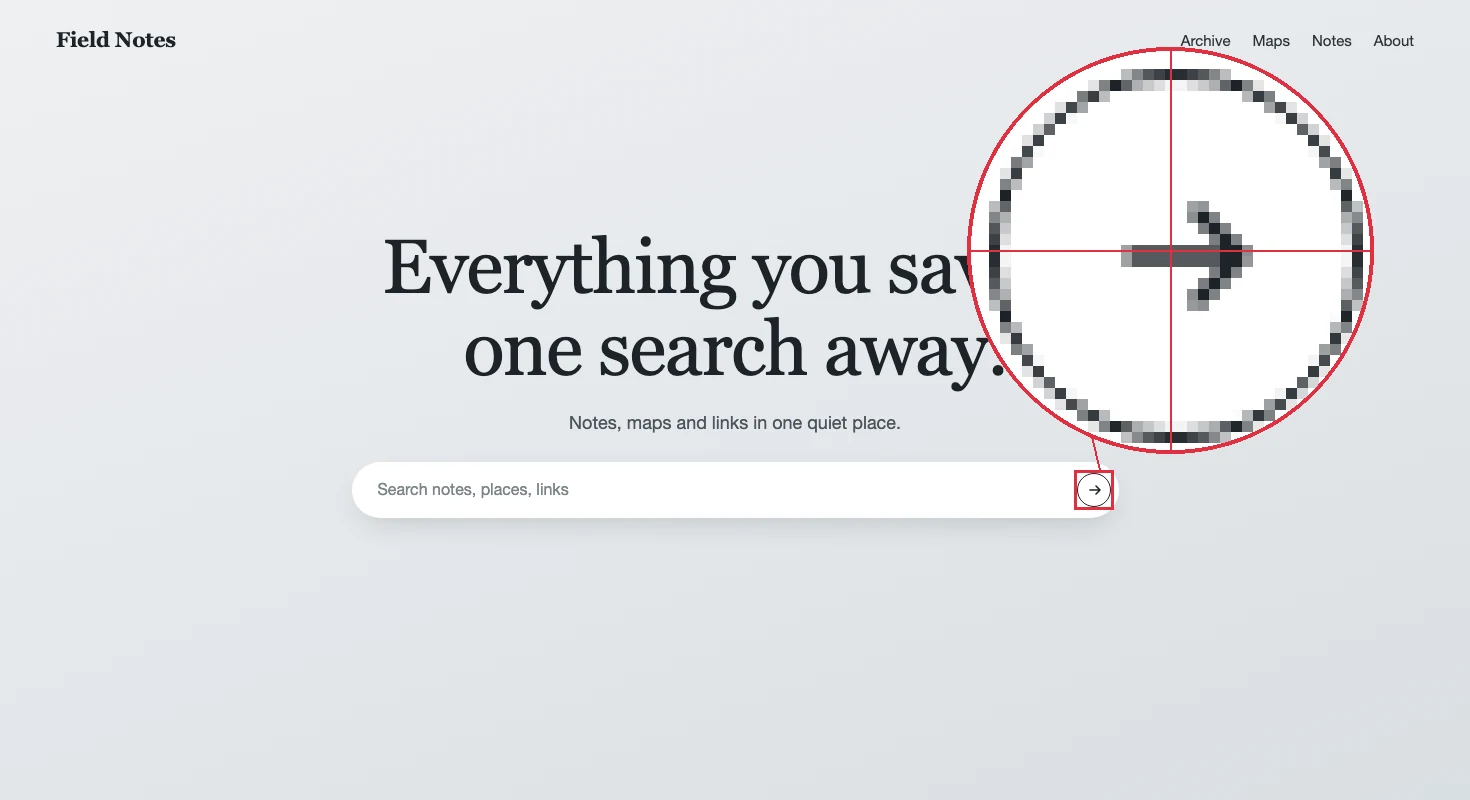
Then I opened the homepage on my laptop and typed one line: "i think search button is not centerted; the arrow inside circle".
It wasn't. Nothing in the rig had flagged it.
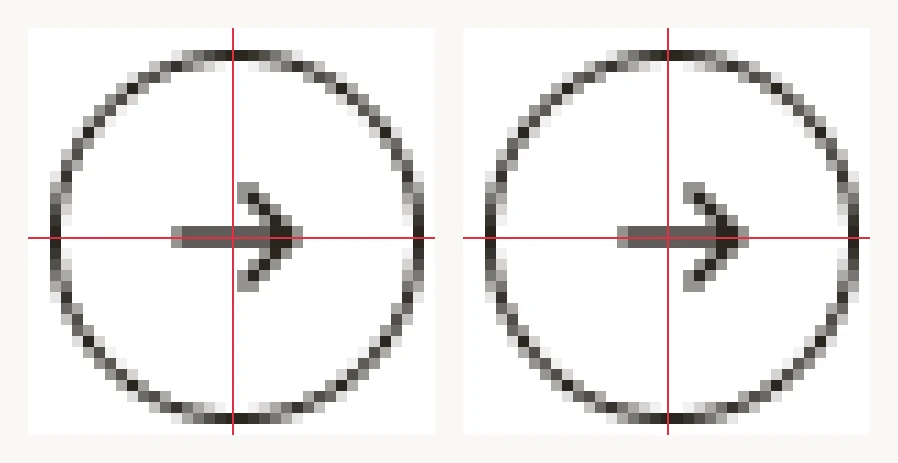
So I rebuilt the crime scene: lookalike pill, same 34 px button, arrow nudged one pixel right. Then I ran the kind of pixel diff my rigs use.
A 99.997% match. Shipped. Wrong.
Why do AI agents miss obvious visual bugs?
Because they don't look at a page. They read a shrunken copy in tiles, then describe it to themselves in words.
The screenshot gets shrunk. Claude, the model most of my agents run on, reads images in 28 by 28 pixel patches and downscales anything over its limit: 2,576 px on the long edge at its sharpest tier. A long landing page easily runs 9,000 px tall. Squeeze that to fit and my one-pixel offset becomes a third of a pixel inside a single patch. Good luck.
Seeing isn't saying. Researchers gave four leading vision models seven tasks a child could do: do two circles overlap, which letter is circled. They averaged about 58%. The image encoders held enough information to answer; the detail died somewhere between pixels and words. Another study found image pairs plainly different to a person and near twins to the model.
The browser lies too. The real pill, an odd 767 px wide, sat centred in an even-width hero, so its button landed on half a pixel. Safari snapped the arrow to a whole pixel and drew the ring at the half. Every check ran in Chrome. Every check said fine.
What did my AI design rig actually miss?
Plenty. That night was already the rematch. A few days earlier, a design sweep had reported "every public page compared" to the design. Then I clicked through the live site myself and logged about 46 issues, which became the night's to-do list.
Four only showed on a real laptop-height window, like a hero that didn't fit the screen. About 7 were visible in the sweep's own screenshots, marked MATCHES. My favourite: a carousel that "matched the frame" while its arrows did nothing.
The hall of fame:
- The 3% diff. A section reported done at a 3% diff. Two buttons sat 28 px outside their cards; one icon had lost its background circle. My review: "how do i make you notice obvious shit?"
- The test that couldn't fail. A "can the user reach every card?" check said 19 of 19. On the old, broken build: also 19 of 19. A test that scrolled like a finger: 2 of 19.
- The fix that broke big screens. A collage fix, verified from phone width to 1440. Above that, one photo wandered off: 222 px further from its friends on a 2560 monitor.
- The label said twice. A new version of the design added a caption; my rig's own rule already stamped a chip with the same words right above it. Both were in the spec, so every checker passed both.
Then the taste misses: white text on a busy photo, and a page so generic I called it "AI blip -- too much text, 4 different types of text and no logic on that".
Can AI agents get a design pixel perfect?
Closer than you'd think, never all the way on their own. Measurement closes the gap; a smarter reviewer doesn't. Each rule below was paid for by a miss above:
- Never quote the diff number. Use it as a heatmap to find where things changed, then check each element. An average forgives everything.
- Measure, don't describe. Bounding boxes and computed styles against the design's own numbers. Crop each element at native size; never review a thumbnail.
- Two engines. Chromium and WebKit, every time. Half pixels are where the bodies are buried.
- Make the test fail first. Re-inject the broken CSS and watch it go red. A check that can't fail verifies nothing.
- Above and below the design width. 390, my real laptop window at 1470 by 800, and 2560.
- One reviewer with no spec. Just the screen and one question: would a person see anything odd, doubled or cluttered?
One gate is now a form the agent fills in before I see anything. Item six: "Would Max, opening this on his phone, find anything to swear about?" It helps. But it's still the agent grading its own homework, which never ends well, and a written rule bends exactly when it matters (the lesson of rules versus personality).
What the checks said
- 99.997% pixel match
- Every page compared at 1440
- Screenshot "matches the frame"
- Spec compliance: pass
What a human saw
- An arrow off-centre
- A hero cut off on a real laptop
- Carousel arrows that do nothing
- The same label, twice
Why is the human eye still the best visual QA?
Your eye catches a misalignment of a few arcseconds, finer than the spacing of the cones in your retina. The fancy word is hyperacuity.
At arm's length from a laptop, one CSS pixel is roughly twenty times the smallest offset a person can catch. That's why I saw the arrow before I'd read the page. Not talent. Biology.
Your turn. One is off by a single pixel.
Tap the button whose arrow is one pixel off. Real size.
How do you hire people by API?
You treat a human eye as a function call. My first instinct was the old way: hire a front-end engineer to "make it pixel perfect, give special love to details". Then it hit me: my agents type fine. I didn't need hands. I needed eyes, on call, one question at a time.
So that's the last gate I'm adding to the rig. I haven't run it at scale yet; here's the design. The agent crops zoomed shots at three widths in two browsers and posts one narrow question to a crowd-work service through its API: "Is the arrow centred in the circle? Yes or no. Tap where it's wrong." Three strangers answer, the agent takes the majority, and nothing reaches me until they agree it's fine.
People fail too. The researchers who wired a crowd into a word processor put it as a rule of thumb: roughly 30% of open-ended answers are poor. Their fix maps onto agents: find, fix, verify. A human finds the defect, an agent fixes it, a different human verifies. Narrow questions, three voters, no essays.
Pixel perfect turned out to be a people problem. The smartest model I can rent can't see one pixel. A stranger with a phone can, and now my agents can call one.
Want AI agents that actually ship?
I build AI agents and the systems around them for businesses: memory, voice, overnight rigs, and the boring guards that make them safe to leave alone.
Questions people ask
Can GPT or Claude review a UI screenshot for design bugs?
They are good at taste: clutter, weak hierarchy, text on a busy photo, a layout that looks templated. They are bad at small geometry: a 1 px offset, a 2 px gap, two buttons of slightly different height. Use them for the first kind of review, and measure the second kind with code: bounding boxes, computed styles and zoomed crops.
Is pixel diffing enough for visual regression testing?
No. A diff percentage averages the whole page, so a broken icon weighs the same as a few pixels of font smoothing. My 1 px arrow shift changed 38 of 1,176,000 pixels. Use the diff only to locate changes as a heatmap, then check each changed element by eye or by measurement.
Why does a page look right in Chrome but wrong in Safari?
The engines round fractional positions differently. When an element lands on a half pixel, Safari can snap an inline SVG to a whole pixel while it draws the CSS border at the half, so an icon drifts off-centre inside its ring. Test in WebKit as well as Chromium, and draw the icon and its ring in the same SVG.
How many human reviewers do you need for a visual check?
More than one. Crowd research gives a rule of thumb: roughly 30% of answers to open-ended tasks are poor, so one reviewer is a coin with a bias. Ask three people a narrow question, take the majority, and have a different person verify any fix. Find, fix, verify, each by a different pair of eyes.

Max Sergeev. Max builds AI agents and the systems around them: long-term memory, voice, overnight rigs, and the boring guards that make them safe to leave alone. He runs kilazi labs from Buenos Aires. kilazi.com
Sources
- Rahmanzadehgervi et al., Vision Language Models Are Blind (arXiv 2407.06581)
- Tong et al., Eyes Wide Shut? Exploring the Visual Shortcomings of Multimodal LLMs (CVPR 2024)
- Anthropic, Vision documentation: resolution, patches and downscaling
- Wolfe et al., Sensation & Perception: hyperacuity essay
- Bernstein et al., Soylent: A Word Processor with a Crowd Inside (UIST 2010)
Read next
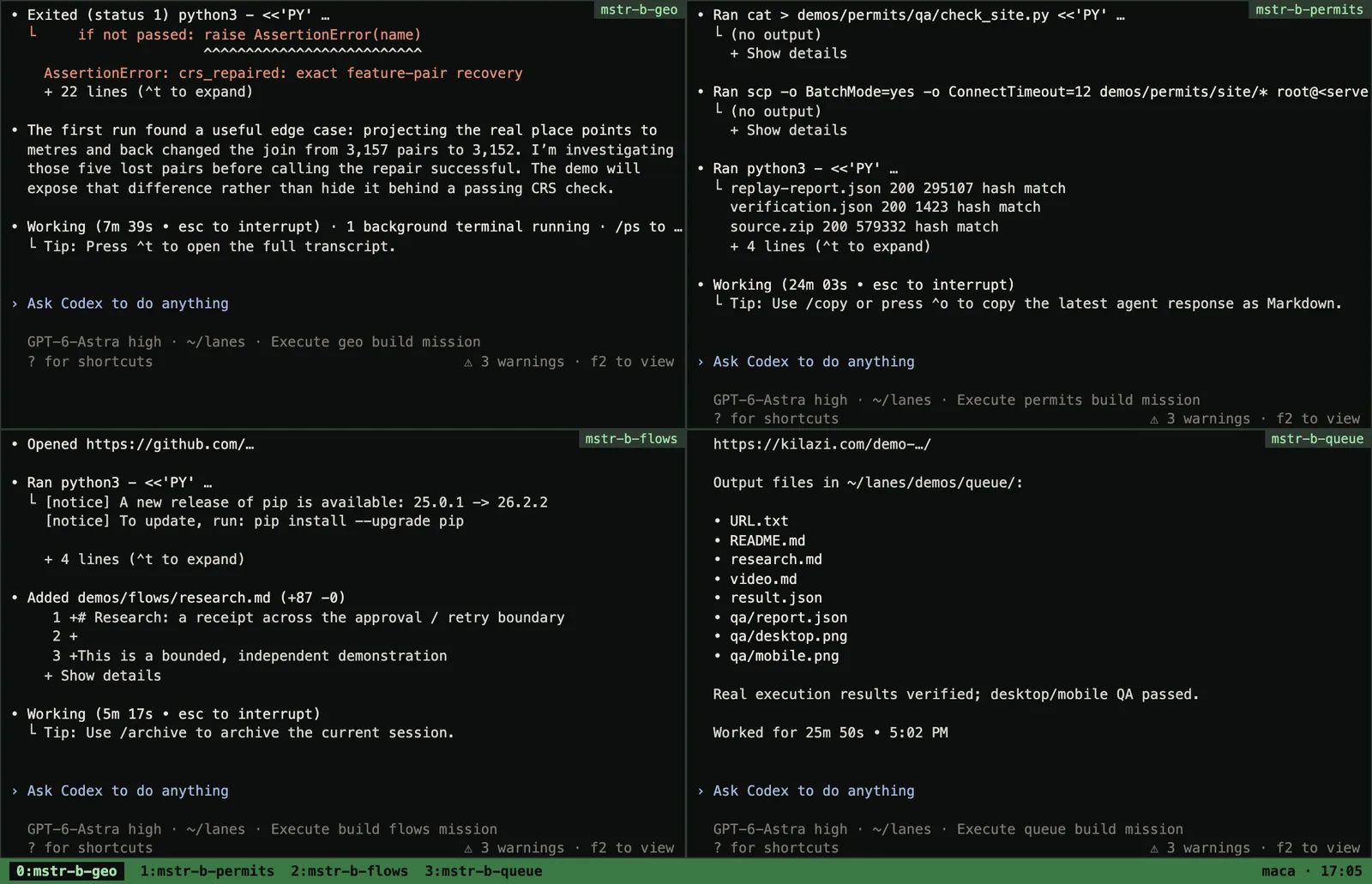 AI agentsReplit Bragged About 200 Minutes. My AI Agents Worked All Night15 lanes, 11 hours, 10,785 tool calls and one shell loop that keeps telling them they're not done.Read it 2026
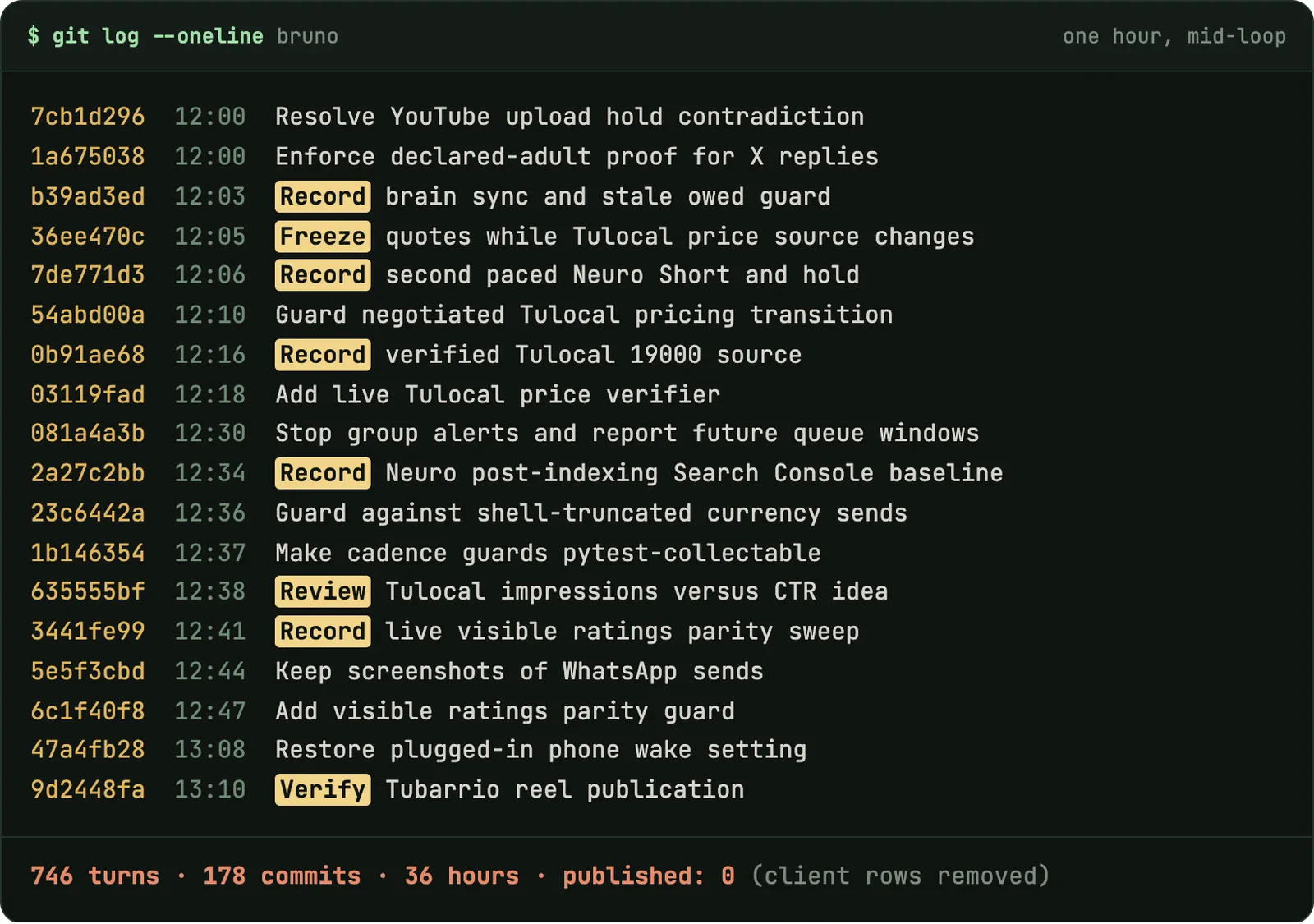 AI agentsMy AI Agents Need a QA Department (Bruno Checked Himself for 36 Hours)746 turns, 178 commits, nothing published. What goes wrong when agents grade their own homework, and the boring department that fixes it.Read it 2026
 AI agentsAI Agent Personality vs Rules: 20 Gates, Zero PostsI built the same AI marketer twice. The version made of rules turned into a clerk. The version made of character turned into a partner, and kept the two guardrails that matter.Read it 2026